Van Cliburn

Classical
Classical Crossover
Chamber Music
 Viberate Rank: 198668
 Viberate Rank: 198668
 Monthly ListenersFollowers
 Subscribers
 Followers
 Followers
 FansTop Spotify Songs
| Track | 7-Day Streams | |
|---|---|---|
1 | 1.86K | |
2 | 943 | |
3 | 939 | |
4 | 750 | |
5 | 734 |
Top YouTube VideosMonthly ListenersFeatured in Playlists| Playlist | Followers | |
|---|---|---|
1 | markouniki | 11.51K |
2 | PIANO MASTERS Filtr Classical | 2.94K |
3 |  Madmen playlist rtmagee75 | 2.52K |
4 | Classical Romantic Piano Cristian D. Cimpianu | 2.20K |
5 | Mental for Instrumentals (Top Songs Without Words from All Genres) Junichi Semitsu | 2.10K |
Audience| City | Monthly Listeners | |
|---|---|---|
1 |  | 1.82K |
2 | | 1.62K |
3 |  | 1.33K |
4 |  | 1.29K |
5 | | 1.19K |
See full performance history, audience data, playlist activity, rankings, comparisons, and more in Viberate music analytics. Start with a free trial, then continue with a paid plan.
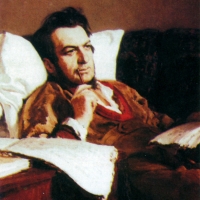
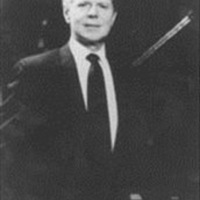
Van Cliburn’s Spotify BioKairos is a word used by ancient Greek writers to signify "the right point of time...the exact or critical time..." of action, a favorable planetary conjunction, or otherwise. Cliburn's career was an illustration. In the tensest days of the Cold War -- of Civil Defense, air raid sirens, bomb shelters, atomic angst, and the launch of the Soviet satellite Sputnik that put the Russians first into space -- handsome, lanky 6'4", 23-year-old Van Cliburn, with his Southerner's air of innocent modesty and tremendous keyboard technique, in April 1958 carried off the Gold Medal at the International Tchaikovsky Competition in Moscow with a transcendent performance of Tchaikovsky's Piano Concerto No. 1. Timing -- kairos -- and talent combined to make his triumph symbolic, heroic, and permanently memorable; the recording he made of it soon after, with Kiril Kondrashin conducting the RCA Victor Symphony Orchestra, is warmly glowing with an incomparable magic that has kept his performance competitive… with later interpreters decade after decade. But such moments do not happen without preparation. Cliburn's mother, who had studied with Liszt pupil Arthur Friedheim, was his first teacher. He gave his first recital at 4, played with the Houston Symphony at 13, and at 14 was heard in Carnegie Hall. Appearances, prizes, and awards followed in a regular spate without amounting to public recognition or a genuine career. At 17 he had begun studies with Rosina Lhévinne at the Juilliard School -- taken with his mother's Liszt/Friedheim connection, he became an unselfconscious inheritor of the grand Romantic tradition. And it was Rosina Lhévinne who prompted his entrance to the Tchaikovsky Competition. Following his win, of course, Cliburn enjoyed a major career, and the recordings he made in the succeeding decade possess a large-scale grandeur. He was at his best in Romantic repertoire -- Liszt, Chopin, Schumann, Grieg, MacDowell, Rachmaninov -- though his Mozart and Beethoven can seem academic. And with the years, the grand manner devolved into careless mannerism as the public clamored for a reprise of the Tchaikovsky Concerto No. 1. He founded the Van Cliburn International Piano Competition in Fort Worth, Texas, in 1962, to which he devoted more time than to his own career as a performing artist. His return to the concert scene after a ten-year sabbatical was hardly noticed. In August 2012 it was announced that Cliburn was suffering from advanced bone cancer, and he passed away at home in Fort Worth in February 2013 at the age of 78. But the legend, the peculiar kairos that realized itself through him, remains imperishable.
Viberate is a music analytics platform built for A&Rs, artist managers, labels, booking agents, marketers, and artists.
It helps music professionals track artist growth, analyze audience data, monitor playlist activity, compare artists, follow song performance, and identify opportunities across the music market.
Public artist pages provide a free preview of selected artist data. Paid plans provide access to deeper analytics, historical data, charts, comparisons, playlist tools, exports, alerts, reports, and additional professional features.
Yes. Public Viberate artist pages provide selected artist analytics and music data for free.
Viberate also offers a 7-day free trial of the full platform. A credit card is required to start the trial. The trial includes access to the complete product so users can test deeper artist analytics, historical views, playlist insights, comparisons, charts, exports, alerts, and reporting features before choosing a paid plan.
Viberate provides artist analytics across streaming, playlists, social media, video, radio airplay, songs, and audience markets.
Users can analyze Spotify performance, Spotify and Apple Music playlists, YouTube activity, TikTok and Instagram growth, radio spins, song performance, audience locations, demographics, rankings, and overall artist momentum.
Artist profiles also connect to music charts, similar artists, and comparison tools, helping users benchmark performance and evaluate artists in context.
Viberate updates key artist and track data daily.
For followed artists and tracks, selected data is refreshed multiple times per day. This helps teams monitor playlist changes, streaming movement, audience growth, releases, and campaign performance with more current data.
Update frequency can vary depending on the metric and data source.
Yes. Viberate lets users compare up to five artists side by side across streaming, social media, audience, and engagement metrics.
Users can compare fanbase growth, audience demographics, locations, Spotify performance, social metrics, and other artist data over selected time periods.
Artist comparison can be used for A&R scouting, benchmarking, booking decisions, campaign planning, and evaluating artists with similar audiences or market positions.