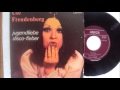
Ute Freudenberg

Pop
Mainstream Pop
Schlager
 Viberate Rank: 71356
 Viberate Rank: 71356
 Monthly ListenersFollowers
 Subscribers
 Followers
 Followers
 FansTop Spotify Songs
| Track | 7-Day Streams | |
|---|---|---|
1 | 21.66K | |
2 | 12.97K | |
3 | 9.07K | |
4 | 8.89K | |
5 | 7.34K |
Top YouTube VideosMonthly ListenersFeatured in Playlists| Playlist | Followers | |
|---|---|---|
1 |  Schlager Hits | Best Of – Die größten Party Klassiker & Deutschen Popschlager ICH FIND SCHLAGER TOLL | 51.90K |
2 |  STEREOACT - REMIXE stereoact_official | 39.00K |
3 |  This Is Stereoact Spotify | 25.79K |
4 | Deutsche 80er Hits Popkultur.de | 20.37K |
5 | DDR Kulthits luise | 20.27K |
Audience| City | Monthly Listeners | |
|---|---|---|
1 | | 15.95K |
2 | | 8.51K |
3 | | 6.66K |
4 | | 6.05K |
5 | | 5.46K |
See full performance history, audience data, playlist activity, rankings, comparisons, and more in Viberate music analytics. Start with a free trial, then continue with a paid plan.
Ute Freudenberg’s Spotify BioBest known for the song "Jugendliebe," German pop singer Ute Freudenberg was one of her country's most popular vocalists in the early '80s, but her career stretched from the '70s to the 2000s. Born in Weimar in 1956, Freudenberg was discovered at age 15 and studied at the Franz Liszt Academy of Music from 1972 to 1977. During her studies there, she was a founding member of the rock band Elefant and appeared on the albums Jugendliebe from 1981 and the following year's Alles Oder Nichts. After Elefant disbanded in 1983, Freudenberg moved to Düsseldorf and worked as a session vocalist. She also performed as Heather Jones in the Netherlands and on cruise ships, and recorded the song "This Was the Last Time" as Heather Jones for a 1988 episode of the television crime drama Tatort. Two years later, she returned to her given name to record "Ein Tag Wie Heut," a German-language version of Whitney Houston's hit "One Moment in Time"; she had another hit in 1992 with "Zwei Alte Freunde." In 1994,… Freudenberg returned with her first solo album, Und da Fragst du Noch; by 1996, she had moved back to Weimar and founded the Ute F. Live Band, with whom she recorded the following year's Land in Sicht. In 1998, Freudenberg won the Golden Henne for Music. During the 2000s, she remained busy with her music and television careers, releasing albums such as Träumerland and Puppenspieler. In 2008, Freudenberg received the Federal Cross of Merit from German President Horst Kohler for her work with the McDonald's Children's Aid Foundation. Freudenberg planned to release another album in spring 2009. ~ Heather Phares, Rovi
Viberate is a music analytics platform built for A&Rs, artist managers, labels, booking agents, marketers, and artists.
It helps music professionals track artist growth, analyze audience data, monitor playlist activity, compare artists, follow song performance, and identify opportunities across the music market.
Public artist pages provide a free preview of selected artist data. Paid plans provide access to deeper analytics, historical data, charts, comparisons, playlist tools, exports, alerts, reports, and additional professional features.
Yes. Public Viberate artist pages provide selected artist analytics and music data for free.
Viberate also offers a 7-day free trial of the full platform. A credit card is required to start the trial. The trial includes access to the complete product so users can test deeper artist analytics, historical views, playlist insights, comparisons, charts, exports, alerts, and reporting features before choosing a paid plan.
Viberate provides artist analytics across streaming, playlists, social media, video, radio airplay, songs, and audience markets.
Users can analyze Spotify performance, Spotify and Apple Music playlists, YouTube activity, TikTok and Instagram growth, radio spins, song performance, audience locations, demographics, rankings, and overall artist momentum.
Artist profiles also connect to music charts, similar artists, and comparison tools, helping users benchmark performance and evaluate artists in context.
Viberate updates key artist and track data daily.
For followed artists and tracks, selected data is refreshed multiple times per day. This helps teams monitor playlist changes, streaming movement, audience growth, releases, and campaign performance with more current data.
Update frequency can vary depending on the metric and data source.
Yes. Viberate lets users compare up to five artists side by side across streaming, social media, audience, and engagement metrics.
Users can compare fanbase growth, audience demographics, locations, Spotify performance, social metrics, and other artist data over selected time periods.
Artist comparison can be used for A&R scouting, benchmarking, booking decisions, campaign planning, and evaluating artists with similar audiences or market positions.