Ursula Mamlok

Classical
Classical Crossover
Orchestral
 Viberate Rank: 940792
 Viberate Rank: 940792
 Monthly ListenersFollowers
 Subscribers
 Followers
 Followers
 FansTop Spotify SongsTop YouTube VideosMonthly ListenersFeatured in Playlists
| Playlist | Followers | |
|---|---|---|
1 |  🎶 Creadoras de la Historia de la Música (@svmusicology) Sakira Ventura | 3.67K |
2 |  Alex Ross's The Rest is Noise aidanosu | 2.70K |
3 |  365 Days of Music by Women Chords & Queens | 2.42K |
4 |  Ultimate Dark/Sad Classical brilliantos | 1.20K |
5 | Classical music that isn't composed by white men Sarah Nalty | 392 |
Audience| City | Monthly Listeners | |
|---|---|---|
1 |  | 5 |
2 | | 5 |
3 | | 4 |
4 | | 3 |
See full performance history, audience data, playlist activity, rankings, comparisons, and more in Viberate music analytics. Start with a free trial, then continue with a paid plan.
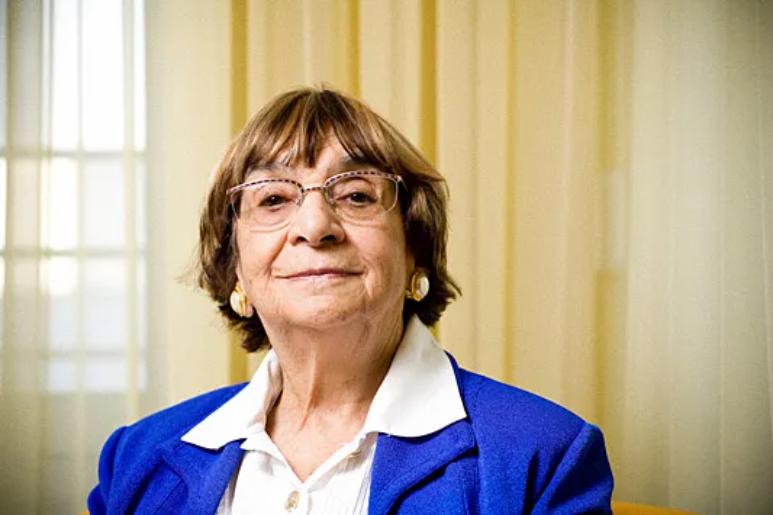
Ursula Mamlok’s Spotify BioComposer Ursula Mamlok generally remained a little-known figure on the concert scene owing to the challenging nature of her music, which showed the influence of the Second Viennese School. Typically, her works were small-scale (she wrote a spate of chamber and solo piano compositions), and generally her music was subdued. Though she made some headway in the 21st century before her death in 2016 at the age of 93, she remained a relatively minor composer, albeit one who was highly respected. What may have impeded her career was her relatively late start: she was still a student in the late '50s, and her most important works came after 1955, when she was well into her thirties. Mamlok's discography grew after the late '90s, with recordings appearing on Bridge, CRI, Naxos, Centaur, and smaller labels.
Ursula Mamlok was born in Berlin, Germany, on February 1, 1923. She was a talented child, studying both piano and composition in Berlin. Her family fled Germany for the U.S. in 1938, but was… forced to settle in Ecuador for a short time owing to American immigration quota policies. Following her 1941 arrival in New York, Mamlok enrolled at Mannes, where she studied under famed conductor George Szell (1942-1946). Her formal education was interrupted for a decade: she studied with Vittorio Giannini at the Manhattan School of Music from 1956-1958, obtaining both bachelor's and master's degrees.
Though Mamlok's earliest significant work was the 1950 Concerto for String Orchestra, her music did not start to gain international attention until the 1960s, with works like the 1962 String Quartet No. 1. In that decade Mamlok also began teaching, joining the faculty at New York University in 1967, where she remained until 1976. During this stint, she took on two more teaching posts, the first at Kingsborough Community College from 1972-1975, and the second at the Manhattan School of Music, where she became a faculty member beginning in 1974. That was also the year Mamlok received the first of two grants from the National Endowment for the Arts. The second came in 1981, and a Fromm Foundation Grant was awarded to her in 1994. From the mid-'70s Mamlok also began attracting prestigious commissions, including from the Koussevitzsky Foundation and Eastman School of Music. Mamlok remained active both as a composer and teacher into the new century. In 2009 Music of Ursula Mamlok, Vol. 1 was released on the Bridge label and included the 1985 Concertino, for orchestra. Several additional volumes were issued during the following years, with Vol. 4 arriving in 2013 in celebration of the composer's 90th birthday.
Viberate is a music analytics platform built for A&Rs, artist managers, labels, booking agents, marketers, and artists.
It helps music professionals track artist growth, analyze audience data, monitor playlist activity, compare artists, follow song performance, and identify opportunities across the music market.
Public artist pages provide a free preview of selected artist data. Paid plans provide access to deeper analytics, historical data, charts, comparisons, playlist tools, exports, alerts, reports, and additional professional features.
Yes. Public Viberate artist pages provide selected artist analytics and music data for free.
Viberate also offers a 7-day free trial of the full platform. A credit card is required to start the trial. The trial includes access to the complete product so users can test deeper artist analytics, historical views, playlist insights, comparisons, charts, exports, alerts, and reporting features before choosing a paid plan.
Viberate provides artist analytics across streaming, playlists, social media, video, radio airplay, songs, and audience markets.
Users can analyze Spotify performance, Spotify and Apple Music playlists, YouTube activity, TikTok and Instagram growth, radio spins, song performance, audience locations, demographics, rankings, and overall artist momentum.
Artist profiles also connect to music charts, similar artists, and comparison tools, helping users benchmark performance and evaluate artists in context.
Viberate updates key artist and track data daily.
For followed artists and tracks, selected data is refreshed multiple times per day. This helps teams monitor playlist changes, streaming movement, audience growth, releases, and campaign performance with more current data.
Update frequency can vary depending on the metric and data source.
Yes. Viberate lets users compare up to five artists side by side across streaming, social media, audience, and engagement metrics.
Users can compare fanbase growth, audience demographics, locations, Spotify performance, social metrics, and other artist data over selected time periods.
Artist comparison can be used for A&R scouting, benchmarking, booking decisions, campaign planning, and evaluating artists with similar audiences or market positions.