Tony Levin

Rock
Progressive Rock
Smooth Jazz
 Viberate Rank: 55349
 Viberate Rank: 55349
 Monthly ListenersFollowers
 Subscribers
 Followers
 Followers
 FansTop Spotify Songs
| Track | 7-Day Streams | |
|---|---|---|
1 | 16.53K | |
2 | 9.46K | |
3 | 7.96K | |
4 | 4.68K | |
5 | 3.93K |
Top YouTube Videos| Video | 7-Day Views | |
|---|---|---|
1 | 240 | |
2 | 183 | |
3 | 108 | |
4 | 82 | |
5 | 80 |
Monthly ListenersFeatured in Playlists| Playlist | Followers | |
|---|---|---|
1 |  Bottoms Up Spotify | 168.33K |
2 | BEST GUITAR SOLOS OF ALL TIME t.riccardo | 95.19K |
3 | POP Vibes 2020 ANCProductions | 46.31K |
4 | New Age Piano Top 100 Brian Crain | 23.26K |
5 |  New Age Music Channel Albert Sater | 22.99K |
Audience| City | Monthly Listeners | |
|---|---|---|
1 |  | 190 |
2 |  | 181 |
3 |  | 158 |
4 |  | 106 |
5 | | 92 |
See full performance history, audience data, playlist activity, rankings, comparisons, and more in Viberate music analytics. Start with a free trial, then continue with a paid plan.
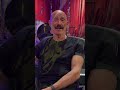
Tony Levin’s Spotify BioFamed for his work with Peter Gabriel and King Crimson, bass virtuoso Tony Levin was born in Boston on June 6, 1946. At age ten, he began studying upright bass, also playing tuba in his high-school marching band and even forming his own barbershop quartet; as a member of a local youth orchestra, Levin additionally performed at the White House for President John F. Kennedy. After attending the Eastman School of Music, he appeared with the Rochester Philharmonic, but over time turned away from classical music to play rock and jazz, relocating to New York City in 1970 to join Aha!, ex-Mothers of Invention keyboardist Don Preston's band.
A busy session career followed, with fluid, expressive work on classic LPs, including Lou Reed's Berlin, Kate & Anna McGarrigle's self-titled debut, and Paul Simon's Still Crazy After All These Years. After collaborating with Peter Gabriel on his eponymous 1977 debut, Levin joined the ex-Genesis frontman's touring unit, during which time he honed his skills… on the Chapman Stick, a unique 10-stringed instrument in which the strings are not plucked but tapped, a process allowing the individual to play notes with both hands and create complete multi-part arrangements.
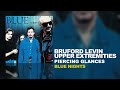
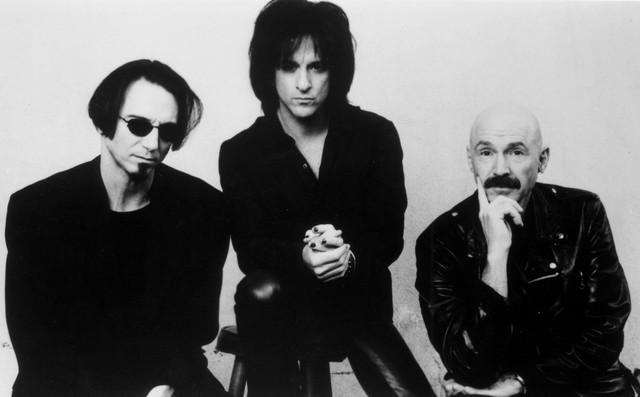
In 1978, Levin settled in Woodstock, NY, serving in the short-lived L'Image; a year later, he played on Robert Fripp's solo effort Exposure, soon thereafter agreeing to join the guitarist in new a incarnation of his groundbreaking progressive unit King Crimson, and remaining a member of the group for over two decades. (His tour experiences subsequently yielded a 1984 book of photographs, Road Photos.) While working on Gabriel's 1986 smash So, Levin developed Funk Fingers, essentially chopped-off drumsticks designed to hammer on the bass strings; he later sold Funk Fingers through his own Papa Bear Records label as well. Sessions with everyone from Robbie Robertson (his 1987 self-titled solo debut) to Laurie Anderson (1989's Strange Angels) to Yes (1991's Union) followed, and in 1996, Levin finally made his solo debut with World Diary. From the Caves of the Iron Mountain, recorded with bamboo flute master Steve Gorn and drummer Jerry Marotta, appeared a year later and in 1998, he formed Bruford Levin Upper Extremities (B.L.U.E.) with longtime King Crimson drummer Bill Bruford, guitarist David Torn, and trumpeter Chris Botti.
Waters of Eden, Levin's Narada label debut, followed in the spring of 2000. Pieces of the Sun was released in 2001 (an expanded edition came out a year later on Pony Canyon), with many of the same tracks also included on his 2002 record, Double Espresso. Prime Cuts, a compilation of his work on sessions led by other artists on the Magna Carta label during the '90s, was issued in 2005. A bona fide new solo effort, Resonator, followed the next year, for the first time featuring Levin as a singer/songwriter as well as a bassist. ~ Jason Ankeny, Rovi
Viberate is a music analytics platform built for A&Rs, artist managers, labels, booking agents, marketers, and artists.
It helps music professionals track artist growth, analyze audience data, monitor playlist activity, compare artists, follow song performance, and identify opportunities across the music market.
Public artist pages provide a free preview of selected artist data. Paid plans provide access to deeper analytics, historical data, charts, comparisons, playlist tools, exports, alerts, reports, and additional professional features.
Yes. Public Viberate artist pages provide selected artist analytics and music data for free.
Viberate also offers a 7-day free trial of the full platform. A credit card is required to start the trial. The trial includes access to the complete product so users can test deeper artist analytics, historical views, playlist insights, comparisons, charts, exports, alerts, and reporting features before choosing a paid plan.
Viberate provides artist analytics across streaming, playlists, social media, video, radio airplay, songs, and audience markets.
Users can analyze Spotify performance, Spotify and Apple Music playlists, YouTube activity, TikTok and Instagram growth, radio spins, song performance, audience locations, demographics, rankings, and overall artist momentum.
Artist profiles also connect to music charts, similar artists, and comparison tools, helping users benchmark performance and evaluate artists in context.
Viberate updates key artist and track data daily.
For followed artists and tracks, selected data is refreshed multiple times per day. This helps teams monitor playlist changes, streaming movement, audience growth, releases, and campaign performance with more current data.
Update frequency can vary depending on the metric and data source.
Yes. Viberate lets users compare up to five artists side by side across streaming, social media, audience, and engagement metrics.
Users can compare fanbase growth, audience demographics, locations, Spotify performance, social metrics, and other artist data over selected time periods.
Artist comparison can be used for A&R scouting, benchmarking, booking decisions, campaign planning, and evaluating artists with similar audiences or market positions.