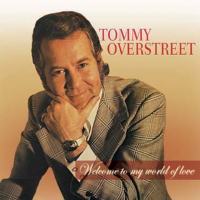
Tommy Overstreet

Country
Americana/Alt Country
Christian Music
 Viberate Rank: 244652
 Viberate Rank: 244652
 Monthly ListenersFollowers
 Subscribers
 Followers
 Followers
 FansTop Spotify Songs
| Track | 7-Day Streams | |
|---|---|---|
1 | 2.51K | |
2 | 469 | |
3 | 435 | |
4 | 344 | |
5 | 329 |
Top YouTube VideosMonthly ListenersFeatured in Playlists| Playlist | Followers | |
|---|---|---|
1 |  Digging in the Crates: Rare Grooves + Samples Tim Noakes | 4.67K |
2 | Jillian Xavier | 3.32K |
3 |  Crate Diggin' - Hip Hop Samples (266hr+) Yung Rando | 2.75K |
4 | 70's county hits harvey.ray | 1.60K |
5 | 70s, 80s and 90s Country of the Best pepzi_5000 | 1.36K |
Audience| City | Monthly Listeners | |
|---|---|---|
1 |  | 196 |
2 | | 194 |
3 |  | 168 |
4 | | 163 |
5 | | 145 |
See full performance history, audience data, playlist activity, rankings, comparisons, and more in Viberate music analytics. Start with a free trial, then continue with a paid plan.
Tommy Overstreet’s Spotify BioTommy Overstreet was a countrypolitan-styled singer who achieved his greatest success in the early '70s, although he probably gained his most significant exposure as a frequent guest on the program Hee Haw. He was born on September 10, 1937, in Oklahoma City, and an early interest in music was encouraged by his cousin Gene Austin, a singer who had garnered some fame in the 1920 with records like "My Blue Heaven" and "Ramona." In his teens, he began performing pop music on radio stations in the Houston, TX, area and appeared in a musical titled Hit the Road. While studying broadcasting at the University of Texas, he began playing in local clubs under the name Tommy Dean From Abilene and toured frequently with Austin.
After a stint in the Army, Overstreet moved to Los Angeles in the early '60s to begin a songwriting career, contributing material to pop crooner Pat Boone. He also signed a recording deal, although none of his studio work from the period was ever issued. After returning to… Texas, he began appearing on the TV program The Slim Willet Show and formed his own group to play club dates. In 1967, he moved to Nashville, where he became the regional professional manager of Dot Records in addition to signing with the label as a recording artist. His debut single, 1969's "Rocking a Memory (That Won't Go to Sleep)," was a minor hit, and his next record, "If You're Looking for a Fool," did even better. In 1971, he scored his first smash with "Gwen (Congratulations)," the title track from his debut LP, followed by "I Don't Know You (Anymore)."
In 1972, Overstreet scored his biggest hit, "Ann (Don't Go Runnin)," which reached number two on the charts. A series of Top Ten hits followed, among them the same year's "Heaven Is My Woman's Love," 1974's "(Jeannie Marie) You Were a Lady," and 1975's "That's When My Woman Begins." Although he continued to chart throughout the 1970s, he failed to reach the same heights he did in the first half of the decade. Overstreet's hitmaking days were largely over by the 1980s, but he remained a popular concert draw and continued touring with his group the Nashville Express. ~ Jason Ankeny, Rovi
Viberate is a music analytics platform built for A&Rs, artist managers, labels, booking agents, marketers, and artists.
It helps music professionals track artist growth, analyze audience data, monitor playlist activity, compare artists, follow song performance, and identify opportunities across the music market.
Public artist pages provide a free preview of selected artist data. Paid plans provide access to deeper analytics, historical data, charts, comparisons, playlist tools, exports, alerts, reports, and additional professional features.
Yes. Public Viberate artist pages provide selected artist analytics and music data for free.
Viberate also offers a 7-day free trial of the full platform. A credit card is required to start the trial. The trial includes access to the complete product so users can test deeper artist analytics, historical views, playlist insights, comparisons, charts, exports, alerts, and reporting features before choosing a paid plan.
Viberate provides artist analytics across streaming, playlists, social media, video, radio airplay, songs, and audience markets.
Users can analyze Spotify performance, Spotify and Apple Music playlists, YouTube activity, TikTok and Instagram growth, radio spins, song performance, audience locations, demographics, rankings, and overall artist momentum.
Artist profiles also connect to music charts, similar artists, and comparison tools, helping users benchmark performance and evaluate artists in context.
Viberate updates key artist and track data daily.
For followed artists and tracks, selected data is refreshed multiple times per day. This helps teams monitor playlist changes, streaming movement, audience growth, releases, and campaign performance with more current data.
Update frequency can vary depending on the metric and data source.
Yes. Viberate lets users compare up to five artists side by side across streaming, social media, audience, and engagement metrics.
Users can compare fanbase growth, audience demographics, locations, Spotify performance, social metrics, and other artist data over selected time periods.
Artist comparison can be used for A&R scouting, benchmarking, booking decisions, campaign planning, and evaluating artists with similar audiences or market positions.