Tipica 73

Latin
Salsa
Other Latin Music
 Viberate Rank: 86250
 Viberate Rank: 86250
 Monthly ListenersFollowers
 Subscribers
 Followers
 Followers
 FansTop Spotify Songs
| Track | 7-Day Streams | |
|---|---|---|
1 | 8.36K | |
2 | 7.75K | |
3 | 4.37K | |
4 | 2.73K | |
5 | 2.14K |
Top YouTube VideosMonthly ListenersFeatured in Playlists| Playlist | Followers | |
|---|---|---|
1 | While You Work (@whileyouwork) Eli Feghali | 81.75K |
2 | Salsa Puertorriqueña 🇵🇷 Norman Suarez | 20.52K |
3 |  LA TROJA DE BARRANQUILLA SALSA Y VERBENA SUELTALA PICOTERO | 19.97K |
4 |  Salsa Vieja 📻🎶 60's 70's 80's® DAMusic | 15.90K |
5 | SALSA NEA Alcolirykoz | 11.31K |
Audience| City | Monthly Listeners | |
|---|---|---|
1 |  | 8.61K |
2 | | 8.10K |
3 | | 3.97K |
4 | | 2.29K |
5 |  | 2.27K |
See full performance history, audience data, playlist activity, rankings, comparisons, and more in Viberate music analytics. Start with a free trial, then continue with a paid plan.
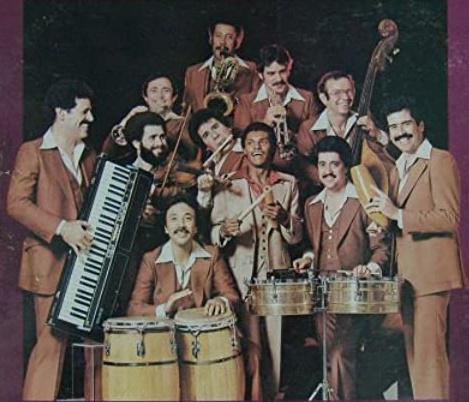
Tipica 73’s Spotify BioThe long-running salsa/Latin jazz outfit Tipica '73 originally formed in New York during 1972, drawing inspiration by the likes of Tito Puente, Arsenio Rodriguez, and Machito. The group formed out of local jam sessions that were organized and led by session percussionist Johnny "Dandy" Rodriguez Jr. (whose father, John "La Vaca" Rodriguez Sr., was a percussionist for Ray Barretto). Rodriguez Jr. invited several friends to join him on-stage for a weekly spot at the N.Y.C. club And Vinny's, as several members of Barretto's band soon signed on as well: Rene Lopez (trumpet), Orestes Vilato (bongo, timbales), Dave Perez (bass), Adalberto Santiago (vocalist), Larry Harlow's trombonist Leopoldo Pineda, Jose Fajardo's pianist Elio Osacar, and Frankie Dante's pianist/trumpeter Joe Manozzi. Throughout the years, however, Tipica '73's lineup reflected a game of musical chairs, with members constantly being rotated.
Tipica '73 soon signed a deal with the Inca label, resulting in the release of… their self-titled debut only a year after they originally formed. The group hit upon a fresh and intoxicating sound, as they combined the conjunto percussive style (congas, timbales, and bongos) with a horn section, and, in the process, became one of the salsa movement's leading outfits to hail from New York. A sophomore effort quickly appeared (like their debut, it was also titled Tipica '73), which spawned the hit single "Amalia Batista," a cover tune that was originally made famous by Rolando La Serie. But more importantly, the album signaled the debut of a new member, tres player Nelson Gonzalez, who would become an integral member of the outfit.
The group's third release, 1975's La Candela, further helped to establish Tipica '73 as one of the world's top Latin outfits, and is often singled out as the most important (and best) of the group's long career. Soon after, original leader Rodriguez Jr. handed the reins over to Sonny Bravo, as he decided to focus on collaborating with musicians living in Cuba. 1976 saw the release of Rumba Caliente, an album produced by the renowned Latin percussionist/arranger Louie Ramirez, and spawned such hits as "Pare Cochero," "Sonaremos el Tambor," and "Guaguanco de los Violentos." The group's fifth release overall, The Two Sides of Tipica '73, is widely considered to be their most musically experimental, as such styles as salsa, charanga, bolero (merged with an orchestra, nonetheless), songo a la Ritmo Oriental, and Latin jazz can be detected throughout.
Salsa Encendida was issued in 1978, which saw the group follow in the same direction as their previous release, but it would be Tipica '73's next release that proved to be a major step forward. Since a few years prior, Rodriquez Jr. had regularly come in contact with some of Cuba's finest musicians during his musical expeditions there, scouting local talent. And on Tipica '73's final release of the '70s, 1979's Tipica '73 en Cuba, Intercambio Cultural, Rodriguez put his findings to use, as he recorded the album entirely in Cuba with his newfound talent from the country (which was no easy feat at the time, due to the U.S. and Cuba's tense political relationship). The move was met with some resistance from certain members of Tipica '73, but Rodriguez pushed forward with his plan nonetheless. Although commendable, the group was subsequently given a hard time by club owners in the U.S., who subsequently refused to book the band, fearing ticket loss due to boycotts.
The '80s began on a less controversial note, with a tribute to the charanga style, 1980's Charangueando con la Tipica '73, which included standout versions of Tito Puente's "A Donde Vas" and Cachao's "Chanchullo," among others. Tipica '73 issued another album the same year, Into the 80's, which featured a plethora of special guests, including appearances by Latin jazz pioneer Mario Bauza, Puerto Rican percussion greats Rafael Cortijo and Kako, singers Roberto Torres and Nestor Sanchez, cuatro player Yomo Toro, and percussionist Roger Squitero, among others. But the strain of 1979's controversy had worn the group out, as bandleaders Bravo and Rodriguez Jr. decided to end Tipica '73 in 1982. Not much was heard from the group afterward, as most of the group's members focused on session work and appearances on other artist's recordings. But in 1995, Tipica '73 reunited for a successful concert in Puerto Rico, which led to a series of shows four years later. ~ Greg Prato, Rovi
Viberate is a music analytics platform built for A&Rs, artist managers, labels, booking agents, marketers, and artists.
It helps music professionals track artist growth, analyze audience data, monitor playlist activity, compare artists, follow song performance, and identify opportunities across the music market.
Public artist pages provide a free preview of selected artist data. Paid plans provide access to deeper analytics, historical data, charts, comparisons, playlist tools, exports, alerts, reports, and additional professional features.
Yes. Public Viberate artist pages provide selected artist analytics and music data for free.
Viberate also offers a 7-day free trial of the full platform. A credit card is required to start the trial. The trial includes access to the complete product so users can test deeper artist analytics, historical views, playlist insights, comparisons, charts, exports, alerts, and reporting features before choosing a paid plan.
Viberate provides artist analytics across streaming, playlists, social media, video, radio airplay, songs, and audience markets.
Users can analyze Spotify performance, Spotify and Apple Music playlists, YouTube activity, TikTok and Instagram growth, radio spins, song performance, audience locations, demographics, rankings, and overall artist momentum.
Artist profiles also connect to music charts, similar artists, and comparison tools, helping users benchmark performance and evaluate artists in context.
Viberate updates key artist and track data daily.
For followed artists and tracks, selected data is refreshed multiple times per day. This helps teams monitor playlist changes, streaming movement, audience growth, releases, and campaign performance with more current data.
Update frequency can vary depending on the metric and data source.
Yes. Viberate lets users compare up to five artists side by side across streaming, social media, audience, and engagement metrics.
Users can compare fanbase growth, audience demographics, locations, Spotify performance, social metrics, and other artist data over selected time periods.
Artist comparison can be used for A&R scouting, benchmarking, booking decisions, campaign planning, and evaluating artists with similar audiences or market positions.