 Viberate
Tina Kiberg
 DNKClassical, Opera
N/A monthly listeners
 DNKClassical, Opera

Tina Kiberg is a talented musician hailing from Frederiksberg, Denmark, known for her contributions to classical music with a focus on opera. With a rich voice and a passion for her craft, she has made a mark in the world of opera, captivating audiences and bringing stories to life through her performances. Her dedication to her art and her ability to connect with listeners make her a notable figure in the classical music scene.
Tina Kiberg's repertoire includes several notable pieces that resonate with fans of classical and opera music. One prominent track is "Mass in D Major, Op. 123, 'Missa Solemnis': II. Gloria," which showcases her vocal skills in a grand setting. Another significant work is "Deutsche Motette, Op. 62," highlighting a different facet of her artistry.
The "Glagolitic Mass" is a standout in her catalog, featuring multiple sections such as "IV. Slava (Gloria)" and "III. Gospodi pomiluj (Kyrie)," each presenting a unique blend of voices. Other pieces like "VII. Agnece Bozij (Agnus Dei)" and "VI. Svet (Sanctus)" further illustrate the depth of this mass. Additionally, "Siddharta (Play for the Expected One): Act I: Introduction 'Folket straler, lyser' (Suddhodana)" and "Missa solemnis, Op. 123: I. Kyrie" add to her diverse selection. Each piece contributes to her standing in the classical music scene, appealing to a wide audience.
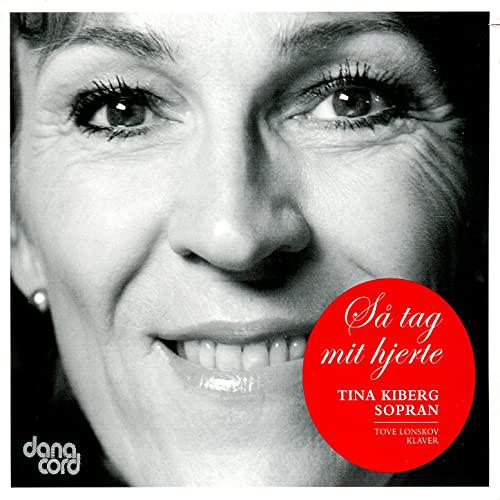
Tina Kiberg continues to explore a range of classical and operatic works, showcasing her vocal skills in various settings. Her latest album, "Så tag mit hjerte," released in 2011, features a collection of songs that resonate with emotional depth. The tracks offer a blend of familiar melodies and lesser-known pieces, allowing listeners to experience both traditional and contemporary themes.
Earlier works, such as "Mahler: Symphony No. 2 'Resurrection' - Beethoven: String Quartet in F Minor" from 1995 and "Janácek: Glagolitic Mass - Kodaly: Psalmus Hungaricus" from 1994, illustrate her diverse repertoire. Each of these recordings highlights her ability to interpret complex compositions, engaging audiences with her distinctive approach. Through her performances, Kiberg continues to contribute to the classical music scene, bringing attention to both renowned and emerging works.
Tina Kiberg's collaborations include notable works with established composers and musicians. In "Mass in D Major, Op. 123, 'Missa Solemnis': II. Gloria," she joined forces with Ludwig van Beethoven, Rosemarie Lang, and Antal Doráti. This piece showcases the blending of voices and orchestration, creating a rich choral experience.
Another significant collaboration is "Deutsche Motette, Op. 62," where she worked alongside Richard Strauss, Stefan Parkman, and Randi Stene. This composition highlights a unique interplay of vocal lines and orchestral support, emphasizing the depth of the choral tradition.
Kiberg also contributed to the "Glagolitic Mass, JW 3/9: IV. Slava (Gloria)," performed with the Danish National Symphony Orchestra. This collaboration reflects a powerful choral and orchestral dialogue. Further, in "Siddharta (Play for the Expected One): Act I: Introduction 'Folket straler, lyser' (Suddhodana)," she partnered with Per Nørgård, Stig Fogh Andersen, and Poul Elming, showcasing her versatility in different musical contexts.
Viberate is a professional music analytics service that provides a complete data overview of Tina Kiberg, covering audience data, Spotify playlists and stats, individual track performance, and cross-platform metrics including Spotify, YouTube, streaming, and radio airplay analytics. The platform also includes full social media analytics across Instagram, TikTok, and Facebook, as well as insights from Apple Music playlists, SoundCloud, Beatport, Shazam, and Deezer, alongside artist charts, streaming charts, genre charts, and genre analytics to support A&R discovery, benchmarking, and strategic decision-making.
