Thomas Campion

Classical
Classical Crossover
 Viberate Rank: 632942
 Viberate Rank: 632942
 Monthly ListenersFollowers
 Subscribers
 Followers
 Followers
 FansTop Spotify SongsTop YouTube VideosMonthly ListenersFeatured in Playlists
| Playlist | Followers | |
|---|---|---|
1 | Yule, Medieval Christmas, Tudor Christmas lwestenra | 6.66K |
2 | 60bpm Baroque Study Tan | 4.99K |
3 |  Early Music - Renaissance, Medieval & Ancient Music David Meindl | 4.85K |
4 |  Dark Classical Squirrel Potatoes | 3.99K |
5 | Very relaxing classical Jenni | 3.25K |
Audience| City | Monthly Listeners | |
|---|---|---|
1 | | 197 |
2 |  | 41 |
3 |  | 35 |
4 | | 33 |
5 | | 32 |
See full performance history, audience data, playlist activity, rankings, comparisons, and more in Viberate music analytics. Start with a free trial, then continue with a paid plan.
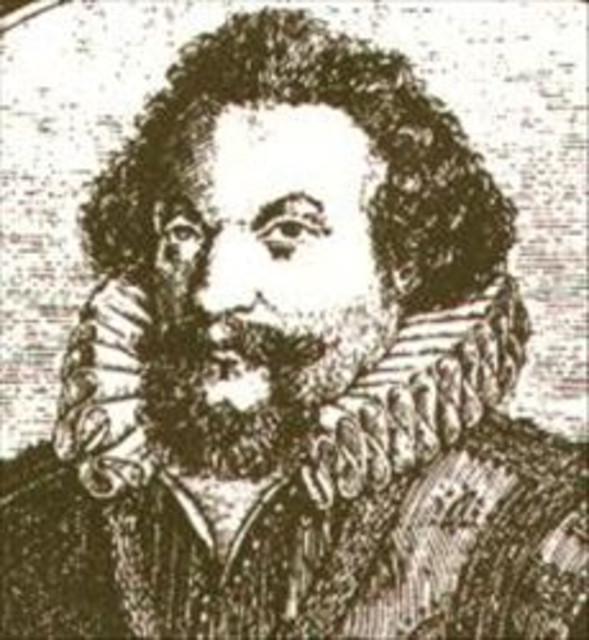
Thomas Campion’s Spotify BioWith John Dowland (ca. 1563-1626), Campion was one of the most prolific composers of English lute songs, or Ayres. A true "renaissance man," Campion also wrote masques for court performances, a critique of English poetry and, in 1613, a treatise on counterpoint. He was also a trained physician. His works were widely disseminated; the best of them demonstrate a capacity for elegant melodic lines that perfectly matches the rhythm of English verse. Unlike most composers of songs, he wrote all of the poems he set to music himself.
Campion's father, John, was a cursitor of the Chancery Court; his mother, Lucy, had a significant sum of money from her previous marriage. On February 12, 1567, Thomas Campion was baptized at the church of St. Andrew, Holborn. Campion left home in 1581, matriculating at Peterhouse, Cambridge, but never completing a degree. In 1586 he entered Gray's Inn, one of the Inns of Court at which young noblemen learned "the ropes" of court life. There he established… contacts with potential patrons, in part through his participation in performances of masques attended by members of the nobility, including Queen Elizabeth.
By the early 1590s Campion had become known as a poet; in 1595 he published a book of Latin poems that was particularly well received. His first collection of songs came six years later (1601) as part of Philip Rosseter's A Book of Ayres, the second half of which featured songs by Rosseter. In 1602 Campion's Observations on the Art of English Poesie appeared, in which he discussed rhyme, the structure of poetry, and the proper meters to use when setting English; his skillful setting of English texts is, arguably, the most impressive aspect of his music. For the next decade, Campion concentrated on the contribution of music to masques, including two printed as The Lords Maske, written in 1613. Unfortunately, only the texts of these works survive.
Campion studied medicine at the University of Caen, earning his M.D. on February 10, 1605. This did not derail his compositional activities, however: he composed masques for performance at the court of James I, and his Two Bookes of Ayres was published ca. 1614. A year later he was accused of participating in the plot to murder Sir Thomas Overby by the Earl and Countess of Somerset; however, Campion's name was eventually cleared. The Third and Fourth Booke of Ayres appeared in either 1617 or 1618, and Campion's last published work, Tho. Campiani epigrammatum libi II, was printed in 1619.
All of Campion's Ayres were for solo voice with lute accompaniment; however, many of the songs were printed with the parts for alto, tenor, and bass extracted from the lute texture. His attention to proper text setting of each verse of a poem is remarkable. Although he generally avoided superficial word-painting, he was not above the occasional illustrative passage. For example, in "Mistris since you so much desire," Campion sets the line, "but a little higher," four times in succession, each statement a step higher than the previous. His strict adherence to the rules of four-part counterpoint laid out in his treatise lends a measure of predictability to some of his Ayres, but the best examples show a composer capable of exquisite melodic tailoring, skillful contrapuntal writing, and technical mastery of the lute.
Viberate is a music analytics platform built for A&Rs, artist managers, labels, booking agents, marketers, and artists.
It helps music professionals track artist growth, analyze audience data, monitor playlist activity, compare artists, follow song performance, and identify opportunities across the music market.
Public artist pages provide a free preview of selected artist data. Paid plans provide access to deeper analytics, historical data, charts, comparisons, playlist tools, exports, alerts, reports, and additional professional features.
Yes. Public Viberate artist pages provide selected artist analytics and music data for free.
Viberate also offers a 7-day free trial of the full platform. A credit card is required to start the trial. The trial includes access to the complete product so users can test deeper artist analytics, historical views, playlist insights, comparisons, charts, exports, alerts, and reporting features before choosing a paid plan.
Viberate provides artist analytics across streaming, playlists, social media, video, radio airplay, songs, and audience markets.
Users can analyze Spotify performance, Spotify and Apple Music playlists, YouTube activity, TikTok and Instagram growth, radio spins, song performance, audience locations, demographics, rankings, and overall artist momentum.
Artist profiles also connect to music charts, similar artists, and comparison tools, helping users benchmark performance and evaluate artists in context.
Viberate updates key artist and track data daily.
For followed artists and tracks, selected data is refreshed multiple times per day. This helps teams monitor playlist changes, streaming movement, audience growth, releases, and campaign performance with more current data.
Update frequency can vary depending on the metric and data source.
Yes. Viberate lets users compare up to five artists side by side across streaming, social media, audience, and engagement metrics.
Users can compare fanbase growth, audience demographics, locations, Spotify performance, social metrics, and other artist data over selected time periods.
Artist comparison can be used for A&R scouting, benchmarking, booking decisions, campaign planning, and evaluating artists with similar audiences or market positions.