Thelma Carpenter

Jazz
Smooth Jazz
Big band Jazz
 Viberate Rank: 452271
 Viberate Rank: 452271
 Monthly ListenersFollowers
 Subscribers
 Followers
 Followers
 FansTop Spotify Songs
| Track | 7-Day Streams | |
|---|---|---|
1 | 7.05K | |
2 | 3.01K | |
3 | 425 | |
4 | 425 | |
5 | 85 |
Top YouTube VideosMonthly ListenersFeatured in Playlists| Playlist | Followers | |
|---|---|---|
1 |  De officiële Foute 1500 | editie 2026 | Qmusic QmusicNL | 90.56K |
2 |  Showstoppers! Spotify | 88.87K |
3 |  Soul Train 70s Disco and Funk djlarras | 69.74K |
4 |  The Big Beautiful Obituary Manners | 53.39K |
5 |  Auto Meezingers 2026 🤍 Tessa | 33.40K |
Audience| City | Monthly Listeners | |
|---|---|---|
1 | | 224 |
2 | | 192 |
3 | | 164 |
4 | | 145 |
5 | | 142 |
See full performance history, audience data, playlist activity, rankings, comparisons, and more in Viberate music analytics. Start with a free trial, then continue with a paid plan.
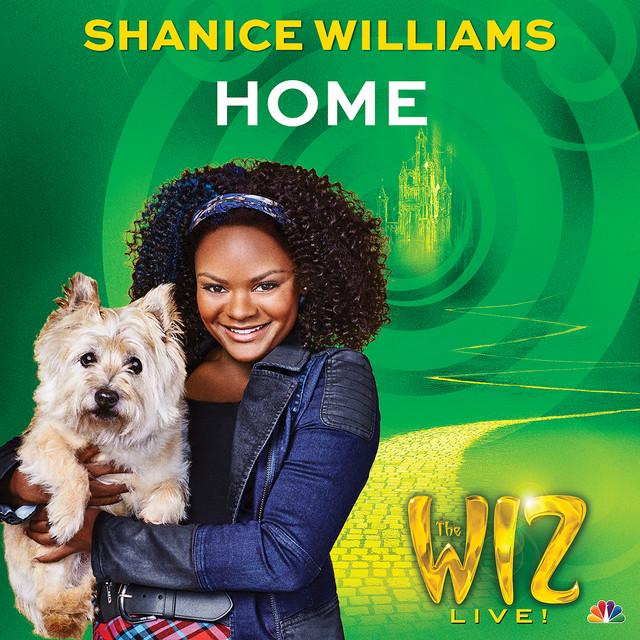
Thelma Carpenter’s Spotify BioThis vocalist and performer enjoyed a long and rich career, and might be the only American singer who can boast to have been backed up by both the Count Basie Orchestra and the Munchkins. She also mastered what is sometimes the hardest challenge for a performer: how to grow old gracefully. Thelma Carpenter spoke in interviews of having performed at the age of seven, although not a great deal of information is available on her background. Talent scout and record producer John Hammond picked up on her in 1939, when she was 19. Youthful as she still was, she was already performing and recording with classic jazz tenor saxophonist Coleman Hawkins, with whom she would be closely associated. Work with several of Hammond's prize clients, Count Basie and Teddy Wilson, was soon to follow, and she began working regularly in both concert settings and on a series of popular 78 records, among them her recordings of "Can't Help Lovin' That Man" and "American Lullaby." Another of her popular… recording collaborations was the mid-'40s "Hurry Home," featuring her with the Deep River Boys. She was also active in the film industry during the '40s, providing vocals for the music video precursors called "soundies" as well as dubbing songs for various actresses and even actors who were unable to sing in tune on their own when required to. In this capacity, one of her strangest credits was dubbing the vocal in for actor Ramsay Ames in the 1943 Crazy House. She also appeared regularly on radio broadcasts with vocalist Eddie Cantor, whose racist comments about the Black Carpenter "crying tears of ink" got him in hot water. Live performance work, such as New York's many cabarets, kept her busy throughout the '50s, although it was certainly the decline of the big-band era, and many of her former employers were no longer keeping female vocalists on steadily. Several Broadway revues were good for her in this period, such as Blackbirds of 1928 and Shuffle Along, both hitting the stage in 1953. These productions allowed her to collaborate with several legends of the Black vaudeville era, including Cab Calloway and pianist Eubie Blake. The death of her mother in 1962 seems to have been a major shock for her, and she claims to have "just lay down in (her) bed for a whole year." When she needed money, she found work for the company that produces Mott's Applesauce as a filing clerk. The next phase of her career began in the mid-'60s, when she replaced Pearl Bailey on-stage in the role of Dolly Levi. She performed and recorded with stride pianist Herman Chittison in the '60s, releasing the albums 1933-1941 and P.S. with Love. The major event of her golden years of performing was her involvement in the '70s production of The Wiz, the slightly ill-fated Black version of The Wizard of Oz, which has retroactively earned critical respect and cult fanaticism that it failed to make at the box office when the film version tanked. The concept pulled together a Who's-Who of Black performers of many generations, including Michael Jackson and Diana Ross. Carpenter had a plum role in the character of Miss One, a combination of the Witch of the North and a numbers runner. It was in this part that she sang a number with the Munchkins, the clever lyrics full of references to the numbers-running racket, as was much of dialogue. One of her final on-stage performances was a 1993 televised tribute to classic performers from the Apollo Theatre. A variety of her material has been reissued on compact disc, including the collection A Souvenir on Audiophile. Her singing is also included on the three-CD box set Sultry Ladies of Jazz, released on Hindsight. She died in 1997 of natural causes. ~ Eugene Chadbourne, Rovi
Viberate is a music analytics platform built for A&Rs, artist managers, labels, booking agents, marketers, and artists.
It helps music professionals track artist growth, analyze audience data, monitor playlist activity, compare artists, follow song performance, and identify opportunities across the music market.
Public artist pages provide a free preview of selected artist data. Paid plans provide access to deeper analytics, historical data, charts, comparisons, playlist tools, exports, alerts, reports, and additional professional features.
Yes. Public Viberate artist pages provide selected artist analytics and music data for free.
Viberate also offers a 7-day free trial of the full platform. A credit card is required to start the trial. The trial includes access to the complete product so users can test deeper artist analytics, historical views, playlist insights, comparisons, charts, exports, alerts, and reporting features before choosing a paid plan.
Viberate provides artist analytics across streaming, playlists, social media, video, radio airplay, songs, and audience markets.
Users can analyze Spotify performance, Spotify and Apple Music playlists, YouTube activity, TikTok and Instagram growth, radio spins, song performance, audience locations, demographics, rankings, and overall artist momentum.
Artist profiles also connect to music charts, similar artists, and comparison tools, helping users benchmark performance and evaluate artists in context.
Viberate updates key artist and track data daily.
For followed artists and tracks, selected data is refreshed multiple times per day. This helps teams monitor playlist changes, streaming movement, audience growth, releases, and campaign performance with more current data.
Update frequency can vary depending on the metric and data source.
Yes. Viberate lets users compare up to five artists side by side across streaming, social media, audience, and engagement metrics.
Users can compare fanbase growth, audience demographics, locations, Spotify performance, social metrics, and other artist data over selected time periods.
Artist comparison can be used for A&R scouting, benchmarking, booking decisions, campaign planning, and evaluating artists with similar audiences or market positions.