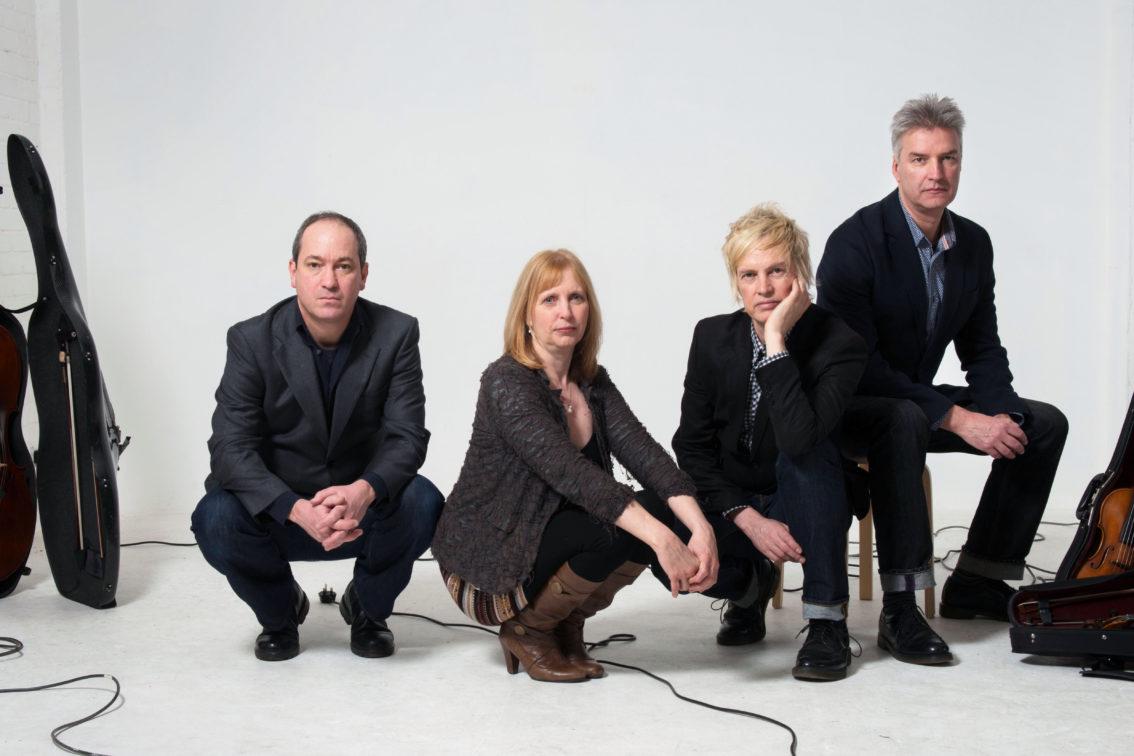
The Smith Quartet

Classical
Chamber Music
 Viberate Rank: 511898
 Viberate Rank: 511898
 Monthly ListenersFollowers
 Subscribers
 Followers
 Followers
 FansTop Spotify SongsTop YouTube VideosMonthly ListenersFeatured in Playlists
| Playlist | Followers | |
|---|---|---|
1 | Ketamine Assisted Therapy Kaila Compton | 14.99K |
2 |  Brassic Official Playlist - Every Bangin' Track S1-S7 Sky | 12.49K |
3 | Post-Classical Spotify Ireland | 5.22K |
4 | 5 Minutes nytimes | 4.67K |
5 |  Chamber Music for Self-Renewal synergy555 | 4.21K |
Audience| City | Monthly Listeners | |
|---|---|---|
1 | | 46 |
2 |  | 24 |
3 | | 24 |
4 | | 20 |
5 |  | 18 |
See full performance history, audience data, playlist activity, rankings, comparisons, and more in Viberate music analytics. Start with a free trial, then continue with a paid plan.
The Smith Quartet’s Spotify BioBritain's Smith Quartet is a key ensemble in the world of contemporary music, having endured several personnel changes to become one of the world's foremost chamber groups with that specialty. The Smith Quartet was founded in 1988 by violinist Charles Mutter and Darragh Morgan, violist Nick Pendlebury, and cellist Philip Shepard; the 2010s membership consists of violinists Ian Humphries and Rick Koster, violist Nic Pendlebury, and cellist Deirdre Cooper. The quartet has commissioned more than 200 works from such top chamber composers as Jon Lord, Gabriel Prokofiev, Tunde Jegede, Donnacha Dennehy, Kevin Volans, Joe Cutler, and Michael Nyman, whose fourth and fifth string quartets they recorded for the MN Records label in 2018. The Smith Quartet has also been active in the fields of electronic and film music. They have appeared at major festivals in Britain and beyond, and in 2015, as Associate Artists at St. John's Smith Square London, they performed complete cycles of the works of Nyma…n and Philip Glass, along with music by Howard Skempton, Gavin Bryars, and Steve Martland. Another major contemporary event to which the Smith Quartet was central was 2016's minimalism unwrapped, where they gave the world premiere of Wayne Siegel's North Shore, collaborated with David Lang of the American ensemble Bang on a Can in a concert of minimalist music from the U.S., and reprised their Nyman cycle. In the cinematic realm, they were heard in the BBC 2005 documentary film Holocaust: A Music Memorial Concert from Auschwitz, performing Reich's Different Trains, which they also recorded for the Signum label. The Smith Quartet's many collaborative projects have included projects with Malian vocalist Rokia Traoré, jazz pianist John Taylor, dance groups Ultima Vez and Shobana Jeyasingh Dance, and the rock group Pulp. The Smith Quartet's catalog of recordings has appeared mostly on the Signum and BBC labels.
Viberate is a music analytics platform built for A&Rs, artist managers, labels, booking agents, marketers, and artists.
It helps music professionals track artist growth, analyze audience data, monitor playlist activity, compare artists, follow song performance, and identify opportunities across the music market.
Public artist pages provide a free preview of selected artist data. Paid plans provide access to deeper analytics, historical data, charts, comparisons, playlist tools, exports, alerts, reports, and additional professional features.
Yes. Public Viberate artist pages provide selected artist analytics and music data for free.
Viberate also offers a 7-day free trial of the full platform. A credit card is required to start the trial. The trial includes access to the complete product so users can test deeper artist analytics, historical views, playlist insights, comparisons, charts, exports, alerts, and reporting features before choosing a paid plan.
Viberate provides artist analytics across streaming, playlists, social media, video, radio airplay, songs, and audience markets.
Users can analyze Spotify performance, Spotify and Apple Music playlists, YouTube activity, TikTok and Instagram growth, radio spins, song performance, audience locations, demographics, rankings, and overall artist momentum.
Artist profiles also connect to music charts, similar artists, and comparison tools, helping users benchmark performance and evaluate artists in context.
Viberate updates key artist and track data daily.
For followed artists and tracks, selected data is refreshed multiple times per day. This helps teams monitor playlist changes, streaming movement, audience growth, releases, and campaign performance with more current data.
Update frequency can vary depending on the metric and data source.
Yes. Viberate lets users compare up to five artists side by side across streaming, social media, audience, and engagement metrics.
Users can compare fanbase growth, audience demographics, locations, Spotify performance, social metrics, and other artist data over selected time periods.
Artist comparison can be used for A&R scouting, benchmarking, booking decisions, campaign planning, and evaluating artists with similar audiences or market positions.