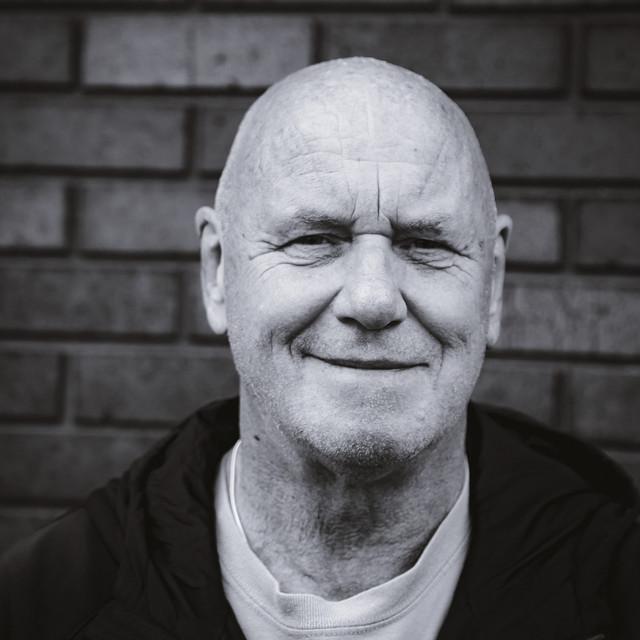
The Orb

Electronic
House
Trance
Other Electronic Music
 Viberate Rank: 30485
 Viberate Rank: 30485
 Monthly ListenersFollowers
 Subscribers
 Followers
 Followers
 FansTop Spotify SongsTop YouTube VideosMonthly ListenersFeatured in Playlists
| Playlist | Followers | |
|---|---|---|
1 |  audífonos con cable Spotify | 414.99K |
2 |  IDM Essentials Spotify | 204.19K |
3 |  Generation Electronica Spotify | 178.31K |
4 |  Pure Moods (1994 original release) Thomas Gette | 114.69K |
5 |  Headphone Selections by RÜFÜS DU SOL RÜFÜS | 60.27K |
Audience| City | Monthly Listeners | |
|---|---|---|
1 | | 12.54K |
2 | | 4.69K |
3 |  | 4.59K |
4 | | 4.14K |
5 | | 2.96K |
See full performance history, audience data, playlist activity, rankings, comparisons, and more in Viberate music analytics. Start with a free trial, then continue with a paid plan.
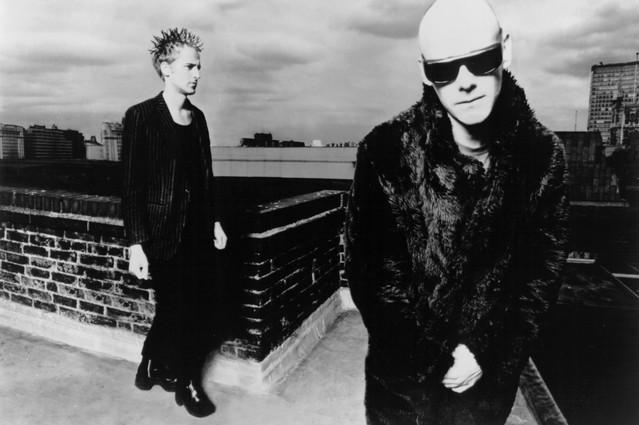
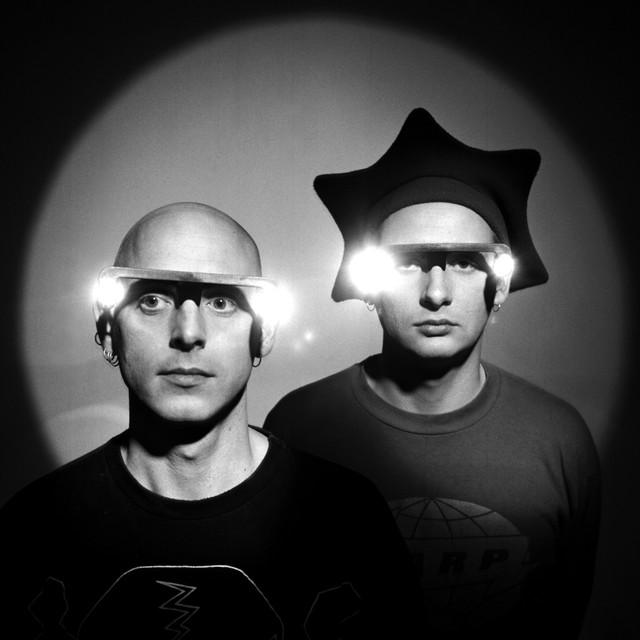
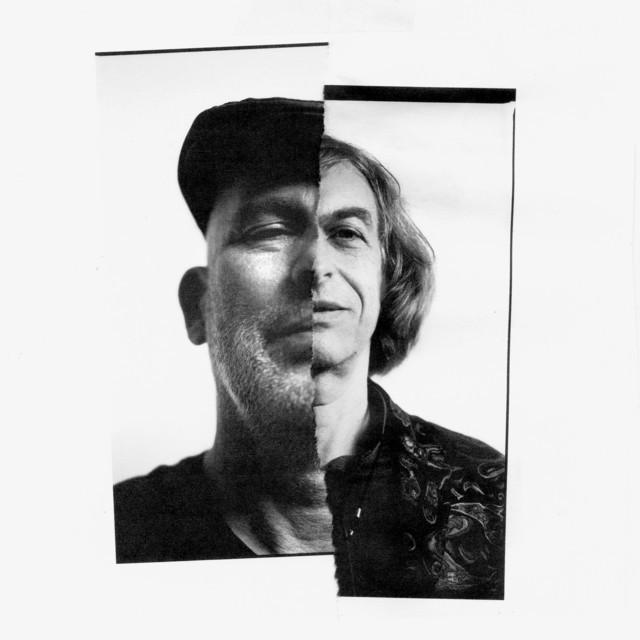
The Orb’s Spotify BioThe Orb virtually invented the electronic genre known as ambient house, resurrecting slower, more soulful rhythms and providing a soundtrack for early-morning ravers once the clubs closed their doors. Frontman Dr. Alex Paterson's formula was quite simple: he slowed down the rhythms of classic Chicago house and added synth work and effects inspired by 1970s ambient pioneers Brian Eno and Tangerine Dream. To make the whole a bit more listenable -- as opposed to danceable -- obscure vocal samples were looped, usually providing a theme for tracks that lacked singing. The Orb's Adventures Beyond the Ultraworld, their 1991 debut album, was hailed as a watershed moment for electronic music. The group popularized the genre by appearing on the British chart show Top of the Pops and hitting number one in the U.K. with the 1992 album U.F.Orb. The Orb managed to remain signed to Island Records throughout the '90s, even as they were releasing some of their most challenging work (Pomme Fritz, Orbus… Terrarum). During the 2000s, the group became affiliated with German techno label Kompakt, home to solo recordings by Orb member Thomas Fehlmann; Okie Dokie It's the Orb on Kompakt, one of their most straightforward techno releases, appeared in 2005. The 2010s brought high-profile collaborations with two major influences: David Gilmour of Pink Floyd and Lee "Scratch" Perry. The Orb returned to Kompakt for 2015's hip-hop-influenced Moonbuilding 2703 AD and 2016's ambient release COW / Chill Out, World! Paterson and company's post-Kompakt output has included 2018's No Sounds Are Out of Bounds and 2023's Prism, outward-looking works with numerous collaborators.
Paterson had worked as a roadie for Killing Joke during the '80s, and he began to be influenced by the explosion of Chicago house music in England during the mid- to late '80s. He joined the A&R department of EG Records -- the home of Brian Eno himself -- and first recorded as the Orb with Jimi Cauty (who had played in the Killing Joke side project Brilliant and later gained fame as half of the KLF). The duo's first release as the Orb, a failed acid house anthem named "Tripping on Sunshine," appeared on the 1988 compilation album Eternity Project One. In May 1989, the Orb released the Kiss EP, a four-tracker dedicated to -- and heavily sampled from -- New York's KISS-FM. Paterson had begun to DJ in London around this time, and Paul Oakenfold recruited him to man Land of Oz, the chillout room at his club Heaven.
Paterson's ambient sets incorporated a wide array of samples and sound effects, ranging from BBC nature recordings to NASA space broadcasts and special effects. With those samples mixed underneath the music of ambient pioneers such as Eno and Steve Hillage, his sets became popular alternatives for dancefloor victims and worn-out club kids. Hillage happened to be in the room one night when Paterson sampled his Rainbow Dome Musick album. The two became friends and later recorded together, Hillage contributing guitar to the Orb's "Blue Room" single and Paterson working on the debut album by Hillage's System 7 project (or 777, as it is known in the States due to copyright problems with Apple).
The Orb's first actual foray into ambient house appeared in October 1989 on Paterson's WAU!/Mr. Modo label. The 22-minute single "A Huge Ever Growing Pulsating Brain That Rules from the Centre of the Ultraworld," which sampled ocean noises and Minnie Riperton's "Loving You," actually hit the U.K. charts that year. The single became popular with indie kids as well as club DJs, and earned Paterson and Cauty the chance to re-record the song in December 1989 for a John Peel session. (That version was released two years later, alongside their second session, on the Orb's Peel Sessions album.)
In early 1990, Dave Stewart asked Paterson and Cauty to remix his single "Lilly Was Here"; the track hit the U.K.'s Top 20, and the Orb's remix work soon became just as popular as their original material. Erasure, Depeche Mode, Yello, Primal Scream, and more than 20 other bands eventually received the remix treatment before Paterson began to cut back his remixing work in 1992. (One of the only outside remixes of Orb material occurred around this time when breakbeat pioneers Coldcut remixed the Kiss EP for a U.S.-only single.)
Paterson and Cauty had been recording an album during the turn of 1989-1990, but the two split in April 1990 -- a result of Paterson's fear that the Orb had become known more as a KLF side project than an original act. Cauty stripped Paterson's contribution to the recordings and released the eponymous album -- credited simply as Space -- later that year. (Cauty released another ambient album that year: Chill Out, this time with his KLF partner Bill Drummond.) In the meantime, Paterson had been working with Youth (from Killing Joke) on the new track "Little Fluffy Clouds," with a melody incorporated from composer Steve Reich. The single appeared in November 1990, sparking the wrath of the sampled Rickie Lee Jones, whose dialogue, taken from an interview promo disc, was sampled for the chorus and title of the track; Big Life later settled out of court for an undisclosed sum.
Youth's other commitments made it impossible for him to become a permanent member of the Orb, so Paterson decided to recruit Kris Weston (nicknamed Thrash for his punk/metal roots), a young studio engineer who worked on "Little Fluffy Clouds" and had recently left his previous band, Fortran 5. The Orb performed live for the first time just after the pairing, early in 1991 at London's Town & Country 2 with Hillage on guitar. The group's live dates soon became their forte, breaking down the boundaries that had previously separated electronic music from rock. An Orb show encompassed the best elements of performance hall and club, with colorful light shows and visuals, and a relaxed, positive groove rarely found in electronic circles.
All this was fine and good, but the Orb had not yet released an album, the vehicle that virtually all modern musicians use to make artistic statements. Finally, in April 1991, The Orb's Adventures Beyond the Ultraworld was released in England to considerable critical acclaim. Its popularity extended to the general public as well, pushing the double album into Great Britain's Top 30 LP charts. By mid-1991, the Orb had signed a deal to release Ultraworld in the States, but they were forced to edit the album down to one disc. (The full double-disc version was later released in the U.S. by Island.) Paterson and Thrash toured Europe during 1991, and compiled the Orb's first two Peel Sessions that November. One month later, the duo released The Aubrey Mixes as a Christmas special. The album, a remix compilation with reworkings by Hillage, Youth, and Cauty, was deleted on the day of its release, but still managed to place in the U.K. Top 50.
In June 1992, the single "Blue Room" hit the British Top Ten. The longest single in chart history at just under 40 minutes, it earned the Orb a spot on Top of the Pops, where they ruminated over a chess-like game and waved at the camera while a three-minute edit of the single played in the background. Released in July, the album U.F.Orb concentrated not on space but the beings who inhabit it. (The actual "Blue Room" is an installation where the U.S. government allegedly keeps the relics of a 1947 saucer crash outside Roswell, New Mexico.) It hit number one on the British album charts, and also did well with critics, who praised it and the duo's sold-out tour of England.
The non-album single "Assassin" -- originally slated to feature vocals from Primal Scream's Bobby Gillespie -- followed in October, and it reached number 12 on the British charts. The U.S. release of U.F.Orb appeared two months later, with initial copies including a second disc with the full version of "Blue Room" plus mixes of "Assassin." A limited-LP release of U.F.Orb in England included a live recording of the Orb's appearance at London's Brixton Academy in 1991. (The date was later released on video with an added CD soundtrack as Adventures Beyond the Ultraworld: Patterns and Textures.)
Though the Orb had released several hours of recordings and many remixes during their first three years of existence, the beginning of 1993 prompted a dry spell of over a year-and-a-half. The problem wasn't a lack of material; Paterson and Thrash continued to record, but Big Life Records had begun a controversial campaign to reissue several early singles. The Orb threatened to release no new material until the label promised to cease and desist, and negotiations stalled while the duo looked to opt out of their contract. In the meantime, Big Life spent 1993-1994 reissuing five CD singles and two other 12" releases, including "Little Fluffy Clouds" (which hit the British Top Ten), "Huge Ever Growing Pulsating Brain," and "Perpetual Dawn" (the second single from Ultraworld). Paterson finally signed an international deal with Island in 1993 and released the stopgap Live 93 later that year. The double-disc set -- which hit number 23 in the album charts -- included highlights from Orb appearances in Europe and Japan, and featured another clever dig at Pink Floyd: the cover has a large stuffed sheep suspended over a power station, à la Floyd's Animals cover.
The Orb's first studio release for Island appeared in June 1994. Pomme Fritz (a "little album") was quite a departure from ambient house, the field that had since caught up with Paterson's revolution of the late '80s. The album has a schizophrenic quality that portrays the group caught between two worlds: the pastoral ambience of the first two albums and the harsher, almost industrial rhythms that the Orb were pushing forward. Pomme Fritz made number six on the British charts, but critics hated it, charging that Paterson had finally disappeared up his own arse. They even compared him to Pink Floyd's own Syd Barrett, who masterminded the psychedelic classic Piper at the Gates of Dawn but later slipped out of the band as the world's first -- and most popular -- acid casualty.
Pomme Fritz was also a watershed in that the role of Kris Weston had diminished greatly. Credited on Pomme Fritz only as an engineer, Weston did appear with Paterson on the August 1994 side project FFWD, the collaboration between Robert Fripp, Orb members Paterson and Weston, and Orb contributor Thomas Fehlmann (hence the name: Fripp, Fehlmann, Weston, and Doctor). By early 1995, Weston finally left the Orb to devote time to his own projects. Before the duo separated, however, they teamed for the Orb's most famous live appearance: on a rave bill at Woodstock '94 with Orbital, Aphex Twin, and Deee-Lite.
Taking up the slack from Weston's departure was Thomas Fehlmann. The Orb had previously remixed a single from his Sun Electric project, and most of Pomme Fritz was recorded at his Berlin studios. Finally, almost three years after U.F.Orb, the new and improved group released the Orb's third studio LP, Orbus Terrarum. With a concept and a sound rooted solidly on terra firma, the album's dense rhythms and return to natural samples heralded a turn away from the cosmic fascination within ambient house -- which had been nurtured in large part by Ultraworld and U.F.Orb. During 1995, Paterson and Fehlmann mounted an ambitious world tour. After the release of a double-disc remix compilation, the Orb returned to the great beyond with the spacy sounds of 1997's Orblivion. The retrospective U.F.Off followed in 1998, and though Paterson and company finished their fifth studio effort, Cydonia, soon after, Island delayed its release until the new millennium.
A shift in labels was in order, and Bicycles & Tricycles was initially issued in 2003 by V2 in Japan, then in 2004 by Cooking Vinyl (U.K.) and Sanctuary (North America). Working their next label change into the album title, Okie Dokie It's the Orb on Kompakt appeared at the end of 2005, as did the first volume in the rarities compilation series Orbsessions, released by the Killing Joke-associated label Malicious Damage. The Dream, released in 2007 in England, featured a change of lineup; joining the Orb were Youth, last heard on the hit single "Little Fluffy Clouds," and Dreadzone's Tim Bran. The record appeared in 2008 on the American label Six Degrees. One year later, another volume in the Orbsessions series appeared, a soundtrack recorded by Paterson and Thomas Fehlmann. (Although the film's title was Plastic Planet, the record itself was titled Baghdad Batteries.) Youth and Paterson collaborated again on the Orb's next proper album, Metallic Spheres, which also featured Pink Floyd's David Gilmour contributing guitar and lap steel to the record's two lengthy pieces.
The 2011 release C Batter C featured a 17-minute Paterson/Fehlmann composition recorded for Battersea Bunches, a short film featuring Super-8 Paterson family footage from 1956. Seven remixes of the track filled out the disc. The next Orb project, 2012's The Observer in the Star House, featured a starring role for seminal dub producer and longtime Orb influence Lee "Scratch" Perry, along with a remix of "Little Fluffy Clouds," dubbed "Golden Clouds." After they assembled a pair of box sets, History of the Future and History of the Future, Pt. 2, Paterson and Fehlmann returned to Kompakt for the hip-hop-influenced Moonbuilding 2703 AD, released in 2015.
In 2016, the Orb celebrated the 25th anniversary of their classic debut full-length, Adventures Beyond the Ultraworld, by performing the album in its entirety at London venue Electric Brixton. The Orb continued to perform the album live during their subsequent U.K. tour, which also included material from their Kompakt-released COW / Chill Out, World!, described by the bandmembers as their most ambient release to date. That same year, they issued a series of short releases, including the Alpine EP and the Sin in Space series, which included a Moonbuilding remix collection, an Alpine "diskomiks," and four remixes of tracks from the COW album.
Heading back into the studio in 2017, the group decided that they wanted to move away from the relatively streamlined nature of the previous two albums. To that end, they invited a swathe of guest musicians to expand their palette, including Roger Eno, Guy Pratt, Hollie Cook, Jah Wobble, and the return of Youth, to name a few; the result was 2018's No Sounds Are Out of Bounds. The ethos of utilizing guest artists continued into their next full-length project, 2020's Abolition of the Royal Familia, with the return of Steve Hillage and the addition of his partner, Miquette Giraudy. The record also saw Michael Rendell brought in as a co-writer, following Fehlmann's departure from the group. Remix album Abolition of the Royal Familia (Guillotine Mixes) appeared in 2021.
Paterson remained busy with several side projects, including Chocolate Hills (with Paul Conboy from Bomb the Bass), Sedibus (with former Orb member Andy Falconer), and OSS (Orb Sound System, with Fil Le Gonidec). He also released a Kompakt retrospective DJ mix, Connecting the Dots. The 2022 collaborative EP Roland & Albert Meet the Orb Upcountry in Uganda mixed ambient house and African folk. In 2023, the Orb released the full-length Prism, a mixture of drum'n'bass, pop, reggae, and ambient featuring guests including Violetta Vicci, Leandro Fresco, David Harrow, and Gaudi. ~ John Bush & Paul Simpson, Rovi
Viberate is a music analytics platform built for A&Rs, artist managers, labels, booking agents, marketers, and artists.
It helps music professionals track artist growth, analyze audience data, monitor playlist activity, compare artists, follow song performance, and identify opportunities across the music market.
Public artist pages provide a free preview of selected artist data. Paid plans provide access to deeper analytics, historical data, charts, comparisons, playlist tools, exports, alerts, reports, and additional professional features.
Yes. Public Viberate artist pages provide selected artist analytics and music data for free.
Viberate also offers a 7-day free trial of the full platform. A credit card is required to start the trial. The trial includes access to the complete product so users can test deeper artist analytics, historical views, playlist insights, comparisons, charts, exports, alerts, and reporting features before choosing a paid plan.
Viberate provides artist analytics across streaming, playlists, social media, video, radio airplay, songs, and audience markets.
Users can analyze Spotify performance, Spotify and Apple Music playlists, YouTube activity, TikTok and Instagram growth, radio spins, song performance, audience locations, demographics, rankings, and overall artist momentum.
Artist profiles also connect to music charts, similar artists, and comparison tools, helping users benchmark performance and evaluate artists in context.
Viberate updates key artist and track data daily.
For followed artists and tracks, selected data is refreshed multiple times per day. This helps teams monitor playlist changes, streaming movement, audience growth, releases, and campaign performance with more current data.
Update frequency can vary depending on the metric and data source.
Yes. Viberate lets users compare up to five artists side by side across streaming, social media, audience, and engagement metrics.
Users can compare fanbase growth, audience demographics, locations, Spotify performance, social metrics, and other artist data over selected time periods.
Artist comparison can be used for A&R scouting, benchmarking, booking decisions, campaign planning, and evaluating artists with similar audiences or market positions.