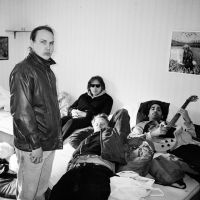
The Northquakes

Pop
Indie Pop
Retro Soul
 Viberate Rank: 743442
 Viberate Rank: 743442
 Monthly ListenersFollowers
 Subscribers
 Followers
 Followers
 FansTop Spotify Songs
| Track | 7-Day Streams | |
|---|---|---|
1 | 9 | |
2 | 8 | |
3 | 3 | |
4 | 2 | |
5 | 2 |
Top YouTube VideosMonthly ListenersFeatured in PlaylistsAudience| City | Monthly Listeners | |
|---|---|---|
1 | | 11 |
See full performance history, audience data, playlist activity, rankings, comparisons, and more in Viberate music analytics. Start with a free trial, then continue with a paid plan.
The Northquakes’ Spotify BioThe Northquakes’ story begins in 2015, when Kari Starck (producer/ multi- instrumentalist) —brimming with creativity and instrumental demos—decided to form a new band. He enlisted his longtime collaborator and trusted drummer, Iikka Winter, and soon after, fellow musicians from his hometown in Oulu joined on guitars and keyboards.
During their first recording session in Liminka in spring 2016, the band got its name. Just as the first bass notes blasted out of the low-frequency amplifier, a rare 4.1-magnitude earthquake shook the Bothnian Bay. The Northquakes was born.
The final piece of the puzzle came in spring 2017, when Elisa Espinosa joined as vocalist and lyricist. Over the next two years, the band crafted its debut album, Tears in Rain, released on May 17, 2019. Their early sound was described as “northern pop soul,” with influences ranging from reggae and funk to country and Britpop.
Since then, The Northquakes have undergone major transformation. The long process of writing and… recording their second album saw their music evolve into something bolder, more genre-defying, and uniquely their own. New members Seppo Salmi (guitar), Teiska Teittinen (guitar/bass), and Lauri Nurmela (keyboards) brought fresh energy and nuance to the group’s dynamic.
Their second album, Greetings from the End of the World, will be released February 6, 2026. Two singles—“Money Comes First” and “Chasing Shadows”—arrive on September 12 and October 31, 2025, respectively.
Viberate is a music analytics platform built for A&Rs, artist managers, labels, booking agents, marketers, and artists.
It helps music professionals track artist growth, analyze audience data, monitor playlist activity, compare artists, follow song performance, and identify opportunities across the music market.
Public artist pages provide a free preview of selected artist data. Paid plans provide access to deeper analytics, historical data, charts, comparisons, playlist tools, exports, alerts, reports, and additional professional features.
Yes. Public Viberate artist pages provide selected artist analytics and music data for free.
Viberate also offers a 7-day free trial of the full platform. A credit card is required to start the trial. The trial includes access to the complete product so users can test deeper artist analytics, historical views, playlist insights, comparisons, charts, exports, alerts, and reporting features before choosing a paid plan.
Viberate provides artist analytics across streaming, playlists, social media, video, radio airplay, songs, and audience markets.
Users can analyze Spotify performance, Spotify and Apple Music playlists, YouTube activity, TikTok and Instagram growth, radio spins, song performance, audience locations, demographics, rankings, and overall artist momentum.
Artist profiles also connect to music charts, similar artists, and comparison tools, helping users benchmark performance and evaluate artists in context.
Viberate updates key artist and track data daily.
For followed artists and tracks, selected data is refreshed multiple times per day. This helps teams monitor playlist changes, streaming movement, audience growth, releases, and campaign performance with more current data.
Update frequency can vary depending on the metric and data source.
Yes. Viberate lets users compare up to five artists side by side across streaming, social media, audience, and engagement metrics.
Users can compare fanbase growth, audience demographics, locations, Spotify performance, social metrics, and other artist data over selected time periods.
Artist comparison can be used for A&R scouting, benchmarking, booking decisions, campaign planning, and evaluating artists with similar audiences or market positions.