Terry Baucom

Country
Bluegrass
 Viberate Rank: 388687
 Viberate Rank: 388687
 Monthly ListenersFollowers
 Subscribers
 Followers
 Followers
 FansTop Spotify Songs
| Track | 7-Day Streams | |
|---|---|---|
1 | 1.33K | |
2 | 867 | |
3 | 740 | |
4 | 487 | |
5 | 261 |
Top YouTube VideosMonthly ListenersFeatured in Playlists| Playlist | Followers | |
|---|---|---|
1 | bluegrass classics Kingsley | 8.11K |
2 | Bluegrass 1258178990 | 7.83K |
3 | Banjos & Folk roha0414 | 7.07K |
4 | CATTLEMAN’S | 4.10K |
5 |  Hooked on Classics Upbeat Instrumental for Work & Studying 1228799150 | 3.64K |
Audience| City | Monthly Listeners | |
|---|---|---|
1 | | 191 |
2 | | 110 |
3 |  | 107 |
4 | | 97 |
5 | | 84 |
See full performance history, audience data, playlist activity, rankings, comparisons, and more in Viberate music analytics. Start with a free trial, then continue with a paid plan.
Terry Baucom’s Spotify BioMusic lovers will of course know the "Duke of Earl," and Frank Zappa fans would no doubt prefer the "Duke of Prunes," but probably only a heavy bluegrass fan would recognize the "Duke of Drive." This is apparently what fellow musicians like to call banjoist Terry Baucom, who made a name for himself playing in such progressive picking parties as the original Doyle Lawson & Quicksilver, Boone Creek, and IIIrd Tyme Out.
The speed of his playing made the Duke bluegrass royalty. He was also a multi-instrumentalist in the old-time music tradition who would be capable of overdubbing an entire string band on his own. He was skilled not only at the banjo, but performed and recorded on both fiddle and bass. As a vocalist, he displayed a bass voice that tended to be something of a showstopper. Many of these talents were overwhelmed by the sheer bravado of his banjo playing, inspiring critics to use terms such as "macho" and make comparisons to punching people in the face. Naturally, such a talent… was in-demand for banjo solos on recording projects by pickers such as Ronnie Bowman, Alan Bibey, and the legendary mandolinist Herschel Sizemore. Baucom won the "Instrumental Recording of the Year" at the 2001 IBMA awards show, and created an instructional video for fancy banjo picking.
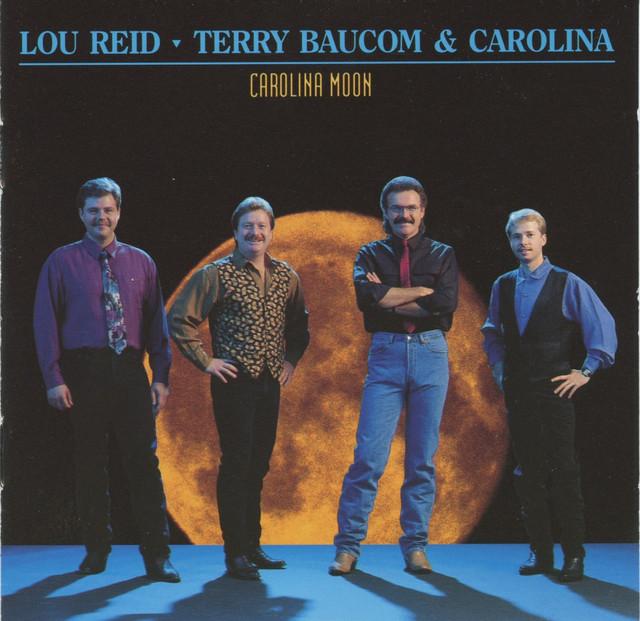
The banjoist was a force on the bluegrass scene beginning in the '70s, a decade in which fans often arm-wrestled over the traditional style versus the newfangled progressive bluegrass sometimes called newgrass. In the midst of all this more or less typical kvetching came a banjoist who liked to regard himself as part of a third stream made up of Southern baby boomers. Instead of hightailing it after the advanced jazz influences that were powering most newgrass engines, Baucom began molding a style in which the rhythm would be almost aggressive in its presence, punched out by an electric bass whenever possible. Vocals were smoothed out, presenting songs from rock and country & western as well as bluegrass. It wasn't really a new approach at all, but that was the point; in a way, it was the perfect thing to satisfy the dissenting parties on either side, and by the '90s, this style had basically taken over the bluegrass mainstream. Baucom formed Boone Creek when he was only 22 years old, fellow members included some young guys named Ricky Skaggs, Wes Golding, and Jerry Douglas. After two years, this supergroup disbanded and Baucom went on to Lawson's original Quicksilver lineup, an archetype of a contemporary bluegrass combo that kept the banjoist busy until the mid-'80s. The spin-off New Quicksilver outfit was next, followed by the banjoist's collaborations with IIIrd Tyme Out in the early '90s. In 1993, Baucom and original Quicksilver bassist Lou Reid started a new band named Caroline and hit the touring circuit. Baucom, Bibey, Graham & Haley formed in the late '90s.
Baucom began playing music as a child, and although his father exposed him to both country & western and bluegrass, his excitement about the banjo was quite a typical story among players of his generation: it was the Beverly Hillbillies television show that turned him on. Music ran in the Baucom family: his father played guitar, his grandfather a clawhammer banjo, and his great-grandfather a fiddle. Prior to going professional, young Baucom worked in a band of his father's for several years. The banjoist met most of the fellows who would be his first serious musical associates, such as Golding, at various fiddle conventions and bluegrass festivals in the early '60s. In 1972, Baucom was playing fiddle rather than banjo in the Charlie Moore group, and was finding he had a lot in common with other novice professionals he was meeting such as Skaggs. The similarities went beyond musical tastes, although this was important -- Baucom, Skaggs, Golding, and others from this crowd were all the youngest members of various groups. The resulting youth-driven propulsion of new groups and collaborations kept Baucom busy. Since the '70s, there were only a few short gaps during which Baucom was not a regular member of a band. Terry Baucom's drive came to a halt on December 7, 2023, when he died at the age of 71. ~ Eugene Chadbourne, Rovi
Viberate is a music analytics platform built for A&Rs, artist managers, labels, booking agents, marketers, and artists.
It helps music professionals track artist growth, analyze audience data, monitor playlist activity, compare artists, follow song performance, and identify opportunities across the music market.
Public artist pages provide a free preview of selected artist data. Paid plans provide access to deeper analytics, historical data, charts, comparisons, playlist tools, exports, alerts, reports, and additional professional features.
Yes. Public Viberate artist pages provide selected artist analytics and music data for free.
Viberate also offers a 7-day free trial of the full platform. A credit card is required to start the trial. The trial includes access to the complete product so users can test deeper artist analytics, historical views, playlist insights, comparisons, charts, exports, alerts, and reporting features before choosing a paid plan.
Viberate provides artist analytics across streaming, playlists, social media, video, radio airplay, songs, and audience markets.
Users can analyze Spotify performance, Spotify and Apple Music playlists, YouTube activity, TikTok and Instagram growth, radio spins, song performance, audience locations, demographics, rankings, and overall artist momentum.
Artist profiles also connect to music charts, similar artists, and comparison tools, helping users benchmark performance and evaluate artists in context.
Viberate updates key artist and track data daily.
For followed artists and tracks, selected data is refreshed multiple times per day. This helps teams monitor playlist changes, streaming movement, audience growth, releases, and campaign performance with more current data.
Update frequency can vary depending on the metric and data source.
Yes. Viberate lets users compare up to five artists side by side across streaming, social media, audience, and engagement metrics.
Users can compare fanbase growth, audience demographics, locations, Spotify performance, social metrics, and other artist data over selected time periods.
Artist comparison can be used for A&R scouting, benchmarking, booking decisions, campaign planning, and evaluating artists with similar audiences or market positions.