Tea Leaf Green

Rock
Pop Rock
Newgrass
 Viberate Rank: 144506
 Viberate Rank: 144506
 Monthly ListenersFollowers
 Subscribers
 Followers
 Followers
 FansTop Spotify Songs
| Track | 7-Day Streams | |
|---|---|---|
1 | 10.33K | |
2 | 3.35K | |
3 | 1.46K | |
4 | 1.04K | |
5 | 990 |
Top YouTube VideosMonthly ListenersFeatured in Playlists| Playlist | Followers | |
|---|---|---|
1 |  The Lot Spotify | 78.05K |
2 | Purple Rain elizahavener95 | 18.66K |
3 | perfect70cb | 11.44K |
4 | Jam Band Radio ryebow44 | 9.97K |
5 | Burning Jazz-rock Fusion fusionprogguy | 8.92K |
Audience| City | Monthly Listeners | |
|---|---|---|
1 | | 1.34K |
2 | | 1.08K |
3 | | 1.02K |
4 | | 1.00K |
5 | | 937 |
See full performance history, audience data, playlist activity, rankings, comparisons, and more in Viberate music analytics. Start with a free trial, then continue with a paid plan.
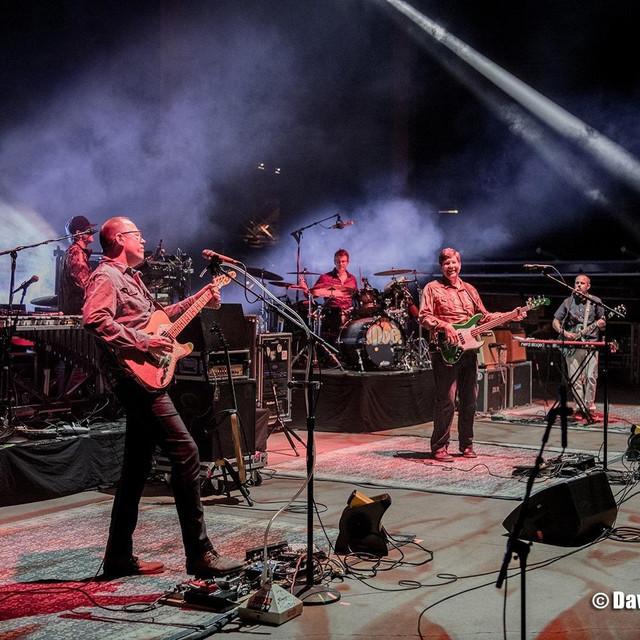
Tea Leaf Green’s Spotify BioSan Francisco-based jam band Tea Leaf Green got their start in the relationship between guitarist Josh Clark and drummer Scott Rager, who played in a high-school band together in Arcadia, CA. After graduation, Rager enrolled at San Francisco State College, where he met bassist Ben Chambers. When Clark moved to San Francisco, the three began playing together as a trio. Their first paying gig was attended by Trevor Garrod, a singer/songwriter and keyboard player who had moved to San Francisco looking for other musicians to play with. Garrod met the three others, and soon they were playing together as a quartet. They built a following in Northern California and self-released the albums Tea Leaf Green, Midnight on the Reservoir (2001), Friday June 6, 2003: Live at Slim's, San Francisco CA (September 17, 2003), Living in Between (February 7, 2004), and Live at the Independent (2004). Eventually, they extended their touring nationwide, including a performance at the Bonnaroo Festival in… 2005.
Signing to Reincarnate Music, they issued their first national release, Taught to Be Proud, on November 15, 2005, as they played shows opening for Gov't Mule and Trey Anastasio. On May 19, 2006, they appeared at the Fox Theater in Boulder, CO, and the show was filmed for a home video. It was issued by SCI Fidelity Records on October 31, 2006, as Rock 'n' Roll Band, both as a separately released CD and DVD. Further touring found Tea Leaf Green opening for Dave Matthews Band and Bruce Hornsby, as well as headlining on their own. Chambers left the band in November 2007 and was replaced by Reed Mathis, formerly of Jacob Fred Jazz Odyssey. In 2008, a move to Surfdog Records led to the re-release of the first three studio albums, Tea Leaf Green, Midnight on the Reservoir, and Living in Between, as the triple-CD compilation Seeds on April 22, 2008. Surfdog reissued Taught to Be Proud with bonus tracks on June 3, 2008, and released a new Tea Leaf Green studio album, Raise Up the Tent, on July 22, 2008. ~ William Ruhlmann, Rovi
Viberate is a music analytics platform built for A&Rs, artist managers, labels, booking agents, marketers, and artists.
It helps music professionals track artist growth, analyze audience data, monitor playlist activity, compare artists, follow song performance, and identify opportunities across the music market.
Public artist pages provide a free preview of selected artist data. Paid plans provide access to deeper analytics, historical data, charts, comparisons, playlist tools, exports, alerts, reports, and additional professional features.
Yes. Public Viberate artist pages provide selected artist analytics and music data for free.
Viberate also offers a 7-day free trial of the full platform. A credit card is required to start the trial. The trial includes access to the complete product so users can test deeper artist analytics, historical views, playlist insights, comparisons, charts, exports, alerts, and reporting features before choosing a paid plan.
Viberate provides artist analytics across streaming, playlists, social media, video, radio airplay, songs, and audience markets.
Users can analyze Spotify performance, Spotify and Apple Music playlists, YouTube activity, TikTok and Instagram growth, radio spins, song performance, audience locations, demographics, rankings, and overall artist momentum.
Artist profiles also connect to music charts, similar artists, and comparison tools, helping users benchmark performance and evaluate artists in context.
Viberate updates key artist and track data daily.
For followed artists and tracks, selected data is refreshed multiple times per day. This helps teams monitor playlist changes, streaming movement, audience growth, releases, and campaign performance with more current data.
Update frequency can vary depending on the metric and data source.
Yes. Viberate lets users compare up to five artists side by side across streaming, social media, audience, and engagement metrics.
Users can compare fanbase growth, audience demographics, locations, Spotify performance, social metrics, and other artist data over selected time periods.
Artist comparison can be used for A&R scouting, benchmarking, booking decisions, campaign planning, and evaluating artists with similar audiences or market positions.