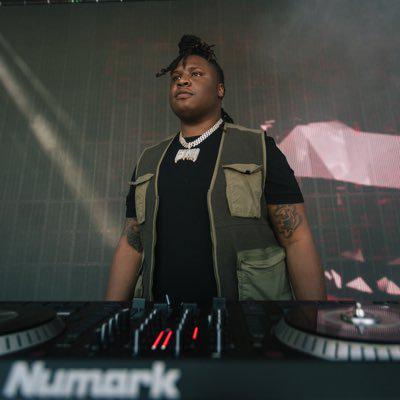
Tay Keith

Hip Hop
Trap
Contemporary Hip Hop
 Viberate Rank: 16374
 Viberate Rank: 16374
 Monthly ListenersFollowers
 Subscribers
 Followers
 Followers
 FansTop Spotify Songs
| Track | 7-Day Streams | |
|---|---|---|
1 | 422.44K | |
2 | 345.83K | |
3 | 338.29K | |
4 | 107.43K | |
5 | 103.67K |
Top YouTube Videos| Video | 7-Day Views | |
|---|---|---|
1 | 136.58K | |
2 | 44.13K | |
3 | 22.19K | |
4 | 16.59K | |
5 | 8.04K |
Monthly ListenersFeatured in Playlists| Playlist | Followers | |
|---|---|---|
1 |  Grand Theft Auto Official Playlist Spotify | 917.35K |
2 |  Pressure Spotify | 450.75K |
3 |  This Is Stormzy Spotify | 339.79K |
4 |  GYM TRAP🔥 | WORKOUT BOOST 💪 Gym Trap | 339.44K |
5 |  Certi Spotify | 296.16K |
Audience| City | Monthly Listeners | |
|---|---|---|
1 | | 22.57K |
2 | | 21.18K |
3 | | 19.43K |
4 | | 15.74K |
5 | | 13.63K |
See full performance history, audience data, playlist activity, rankings, comparisons, and more in Viberate music analytics. Start with a free trial, then continue with a paid plan.
Tay Keith’s Spotify BioProducer Tay Keith and his lean, snaking sound crept into the mainstream in 2018 with a trifecta of Top Ten pop hits tailored for the streets. He first scored that year with "Look Alive," headlined by longtime friend and collaborator BlocBoy JB. That track featured Drake, whose subsequent "Nonstop" -- which Tay co-produced -- almost crowned the chart. Those were warning flares for Travis Scott's massive "Sicko Mode," another Tay co-production, which not only topped the Billboard Hot 100 but earned a pair of Grammy nominations and achieved rare diamond platinum status. Since that breakthrough year, Tay Keith's collection of gold and platinum awards has grown through collaborations with the likes of 6ix9ine ("Stoopid"), DJ Khaled (including "Wish Wish"), Polo G ("Go Stupid"), and Lil Nas X ("Holiday"). In addition to his large volume of work in support of rappers and singers, Tay has been either a lead or co-lead artist on occasion. He has teamed with Co Cash for Foolhardy (2018), and… with Fast Cash Boyz for Fxck the Cash Up (2020). He launched his Warner-supported Drumatized label with the Lil Durk and Gunna collaboration "Lights Off" (2022).
Born in South Memphis, Tennessee, Tay Keith (born Brytavious Lakeith Chambers) found his knack for production at age 14, learning at home while uploading beats to audio streaming platforms. After moving to Raleigh, he quickly developed a friendship and working relationship with local rapper BlocBoy JB, and was quick to provide beats for the rapper's 2016 debut mixtape, Who Am I. Mastering both the clacking drawl of local production styles and the faster pace of mainstream trap, the producer upped his work ethic through the mid- to late 2010s, working on mixtapes including Blac Youngsta's F*ck Everybody, Moneybagg Yo's Heartless and Federal 3X, and BlocBoy's Loco, Grape Juice, The Purple M&M, and Who Am I 3.
After the Memphis collaborators caught the attention of international superstar Drake, the trio worked together for 2018 single "Look Alive," which landed at number five on the U.S. singles chart and gave both artists their first taste of the mainstream. With international eyes on the duo, they were quick to enlist 21 Savage for remix track "Rover 2.0." Working alongside artists from A$AP Rocky to G-Eazy, Tay landed production work for Travis Scott's upcoming ASTROWORLD LP through his co-sign from Drake, whose "Nonstop" had become Tay's second Top Ten production. The result was the co-produced "Sicko Mode," the first hip-hop song in history to spend more than 30 weeks in the chart's Top Ten. The single landed Tay his first number one hit, as well as two nominations at the 61st Grammy Awards later that year.
Now an established name in the hip-hop mainstream, the Memphis producer continued to work with some of the industry's biggest names, ending 2018 with colossal hits including Eminem's "Not Alike," Lil Baby, Gunna, and Drake's "Never Recover," Metro Boomin and 21 Savage's "Don't Come Out the House," and 6ix9ine's "Stoopid." He also made time for comparatively underground projects such as Foolhardy, a full-length with Co Cash. The next year saw the producer expand his repertoire to R&B and pop. After kicking off 2019 with work for Beyoncé ("Before I Let Go"), Tay worked with Miley Cyrus ("Mother's Daughter") and DJ Khaled ("Wish Wish"), alongside more traditional trap rappers Denzel Curry ("Automatic") and Gucci Mane ("Came from Scratch," "Look at Me Now," "Bottom"). Tay's triumphs over the next two years included platinum certifications for Polo G's "Go Stupid," Lil Nas X's "Holiday," and another DJ Khaled hit, "Every Chance I Get" (featuring Lil Baby and Lil Durk). Additionally, he put together another full-length, Fxck the Cash Up, this one recorded with fellow Memphis natives Fast Cash Boyz. In 2022, Tay set up his hometown-based Drumatized label, worked out a licensing deal with major-label Warner, and launched his imprint with "Take Off," a single co-produced by Grayson Beats with mike duties shared by Lil Durk and Gunna. ~ David Crone, Rovi
Viberate is a music analytics platform built for A&Rs, artist managers, labels, booking agents, marketers, and artists.
It helps music professionals track artist growth, analyze audience data, monitor playlist activity, compare artists, follow song performance, and identify opportunities across the music market.
Public artist pages provide a free preview of selected artist data. Paid plans provide access to deeper analytics, historical data, charts, comparisons, playlist tools, exports, alerts, reports, and additional professional features.
Yes. Public Viberate artist pages provide selected artist analytics and music data for free.
Viberate also offers a 7-day free trial of the full platform. A credit card is required to start the trial. The trial includes access to the complete product so users can test deeper artist analytics, historical views, playlist insights, comparisons, charts, exports, alerts, and reporting features before choosing a paid plan.
Viberate provides artist analytics across streaming, playlists, social media, video, radio airplay, songs, and audience markets.
Users can analyze Spotify performance, Spotify and Apple Music playlists, YouTube activity, TikTok and Instagram growth, radio spins, song performance, audience locations, demographics, rankings, and overall artist momentum.
Artist profiles also connect to music charts, similar artists, and comparison tools, helping users benchmark performance and evaluate artists in context.
Viberate updates key artist and track data daily.
For followed artists and tracks, selected data is refreshed multiple times per day. This helps teams monitor playlist changes, streaming movement, audience growth, releases, and campaign performance with more current data.
Update frequency can vary depending on the metric and data source.
Yes. Viberate lets users compare up to five artists side by side across streaming, social media, audience, and engagement metrics.
Users can compare fanbase growth, audience demographics, locations, Spotify performance, social metrics, and other artist data over selected time periods.
Artist comparison can be used for A&R scouting, benchmarking, booking decisions, campaign planning, and evaluating artists with similar audiences or market positions.