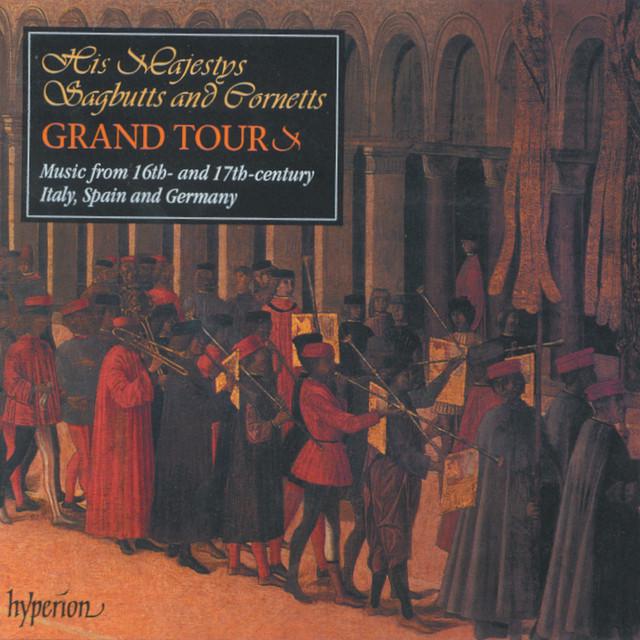
Tarquinio Merula

Classical
Classical Crossover
 Viberate Rank: 417814
 Viberate Rank: 417814
 Monthly ListenersFollowers
 Subscribers
 Followers
 Followers
 FansTop Spotify Songs
| Track | 7-Day Streams | |
|---|---|---|
1 | 1.32K | |
2 | 904 | |
3 | 800 | |
4 | 751 | |
5 | 720 |
Top YouTube VideosMonthly ListenersFeatured in Playlists| Playlist | Followers | |
|---|---|---|
1 |  Renaissance, Baroque, Medieval, & Other Early Music Andrew T. Lane | 13.44K |
2 | Classical music jm jesusmartinell | 12.08K |
3 |  DLF_Klassik-Pop-et cetera Deutschlandfunk | 7.97K |
4 |  Baroque Study Music Bobby Kennedy | 5.55K |
5 | 60bpm Baroque Study Tan | 4.99K |
Audience| City | Monthly Listeners | |
|---|---|---|
1 |  | 358 |
2 |  | 272 |
3 |  | 205 |
4 | | 203 |
5 |  | 200 |
See full performance history, audience data, playlist activity, rankings, comparisons, and more in Viberate music analytics. Start with a free trial, then continue with a paid plan.
Tarquinio Merula’s Spotify BioThe date for the birth of Tarquinio Merula is guesswork stemming from the fact that he received his confirmation on April 23, 1607, and 12 is the customary age for that. He seems to have been a contentious person and was frequently in trouble, but is recognized as one of the most progressive Italian composers of the early Baroque.
His first post appears to have been as organist of San Bartolomeo, a Carmelite Fathers' church in Cremona. He was engaged to serve as organist of Santa Maria Incoronata in Lodi on October 22, 1616, to a three-year contract. He renewed his contract in February, 1620, but left Lodi in January, 1621. It was most likely because he got a better job, because he next shows up in Warsaw as organist of church and chamber to Sigismund III, King of Poland.
He returned to Cremona in 1624, where he received a part-time position as provisional maestro di cappella for Laude della Madonna services. This meant that he led music at the main altar of the cathedral on Saturdays… and during vigils devoted to the Virgin Mary. This was transformed into a permanent appointment in 1627. In 1628 he took an additional post, as organist of the collegiate church of Saint Agatha.
He moved to Bergamo in 1631, as maestro di cappella of Santa Maria Maggiore, where Alessandro Grandi, his predecessor, had died of the plague. He was faced with the job of rebuilding the cappella. On December 29, 1632, he was fired for "indecency" towards some of the choir boys. He threatened to sue to recover his salary, but the church officials threatened to turn the matter over to criminal authorities, and he dropped the suit and issued an apology in April, 1633.
He returned to Cremona again. He was held in high enough esteem as a musician that they demoted his successor and re-instated him as permanent maestro di cappella for the Lauds of the Madonna. The good feeling this evidenced did not last long: he began disagreeing with his superiors over salary and the scope of his job, and left after two years.
He moved back to Bergamo, and in 1638 was maestro di cappella and organist at the Cathedral next to Santa Maria Maggiore. It is customary for the choir of the latter to take part in some services at the cathedral, but in 1642 they issued an order forbidding their musicians and singers from performing under Merula's direction.
All of this did not prevent the Pope from honoring him with the Order of the Golden Spur, and from receiving election to the prestigious Accademia dei Filomusi of Bologna. The restless Merula again returned to Cremona in 1646, becoming maestro de cappella of the Marian Lauds again and organist of the cathedral. He finally found stability, holding these positions until his death nearly 20 years later.
Merula was an innovator in music. He wrote some of the first solo motets with string accompaniment, introduced bass ostinato patterns into his psalm settings, and was among the composers developing the form of the ritornello and an ABB design that became common in Italian music throughout the 1600s. He is also one of the first to use the formula of recitative followed by aria, which became the norm for solo cantatas of that era. His most significant works are his canzonas, but he also advanced the form and technique of instrumental music in several sets of sonatas and in keyboard music.
Viberate is a music analytics platform built for A&Rs, artist managers, labels, booking agents, marketers, and artists.
It helps music professionals track artist growth, analyze audience data, monitor playlist activity, compare artists, follow song performance, and identify opportunities across the music market.
Public artist pages provide a free preview of selected artist data. Paid plans provide access to deeper analytics, historical data, charts, comparisons, playlist tools, exports, alerts, reports, and additional professional features.
Yes. Public Viberate artist pages provide selected artist analytics and music data for free.
Viberate also offers a 7-day free trial of the full platform. A credit card is required to start the trial. The trial includes access to the complete product so users can test deeper artist analytics, historical views, playlist insights, comparisons, charts, exports, alerts, and reporting features before choosing a paid plan.
Viberate provides artist analytics across streaming, playlists, social media, video, radio airplay, songs, and audience markets.
Users can analyze Spotify performance, Spotify and Apple Music playlists, YouTube activity, TikTok and Instagram growth, radio spins, song performance, audience locations, demographics, rankings, and overall artist momentum.
Artist profiles also connect to music charts, similar artists, and comparison tools, helping users benchmark performance and evaluate artists in context.
Viberate updates key artist and track data daily.
For followed artists and tracks, selected data is refreshed multiple times per day. This helps teams monitor playlist changes, streaming movement, audience growth, releases, and campaign performance with more current data.
Update frequency can vary depending on the metric and data source.
Yes. Viberate lets users compare up to five artists side by side across streaming, social media, audience, and engagement metrics.
Users can compare fanbase growth, audience demographics, locations, Spotify performance, social metrics, and other artist data over selected time periods.
Artist comparison can be used for A&R scouting, benchmarking, booking decisions, campaign planning, and evaluating artists with similar audiences or market positions.