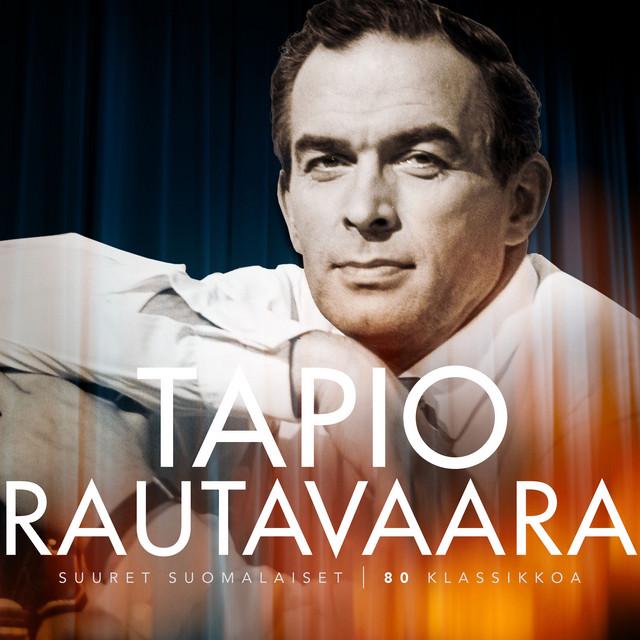
Tapio Rautavaara

Pop
Mainstream Pop
 Viberate Rank: 212790
 Viberate Rank: 212790
 Monthly ListenersFollowers
 Subscribers
 Followers
 Followers
 FansTop Spotify Songs
| Track | 7-Day Streams | |
|---|---|---|
1 | 8.31K | |
2 | 6.09K | |
3 | 3.68K | |
4 | 2.91K | |
5 | 2.79K |
Top YouTube VideosMonthly ListenersFeatured in Playlists| Playlist | Followers | |
|---|---|---|
1 |  OLVARin parhaat by Pelaajat.com Arttu Hämäläinen | 9.16K |
2 | ISKELMÄ HITIT Eveliina Holm | 8.80K |
3 | Suomihitit- Kaikki suosituimmat biisit🇫🇮 em1lioo | 5.66K |
4 |  100 maailman parasta laulua Juuso Määttänen | 4.90K |
5 |  Shuffle me Anssi Huovinen | 4.28K |
Audience| City | Monthly Listeners | |
|---|---|---|
1 | | 11.76K |
2 | | 2.65K |
3 | | 1.50K |
4 | | 881 |
5 | | 814 |
See full performance history, audience data, playlist activity, rankings, comparisons, and more in Viberate music analytics. Start with a free trial, then continue with a paid plan.
Tapio Rautavaara’s Spotify BioTapio Rautavaara is a Finnish singing legend with over 300 songs to his name whose recording career went all the way from 1946 until 1979. Born March 8, 1915, in Nokia, Finland, he initially rose to fame as a gold medalist javelin thrower at the 1948 Summer Olympics in London. The following year he sang a couple hit singles, "Reissumies ja Kissa" and "Päivänsäde ja Menninkäinen." He had begun his singing career a few years earlier in 1946 but hadn't scored a hit single until 1949, thanks in part to his newfound celebrity as an Olympic gold medalist. He was most successful during the early '50s, when he released some of his greatest hits, including "Kulkuri ja Joutsen," "Isoisän Olkihattu," "Ontuva Eriksson," "Sininen Uni," and "Juokse Sinä Humma." Meanwhile, he was also a star on the silver screen, having made his film debut as an actor in 1945 with Vain Sinulle. As with his singing, he was most successful as an actor during the 1950s, when he starred in a long list of films. While… Rautavaara fell out of fashion during the cultural revolution of the 1960s, he remained active throughout that decade as well as the next. In fact, he was active right up until his death on September 25, 1979, in Helsinki; he suffered a brain hemorrhage after a fall. The tragic death of Rautavaara enhanced his legacy as a Finnish icon, and in later years his back catalog was reissued time and time again in a series of greatest-hits collections and exhaustive collectors' box sets. The most notable of these latter-day compilations are En Päivääkään Vaihtaisi Pois - Sata Levytystä Vuosilta 1946--1979 (1995), a five-CD box set repackaged for re-release in 2004, and Kulkurin Taival (2008), a mammoth 14-CD box set. ~ Jason Birchmeier, Rovi
Viberate is a music analytics platform built for A&Rs, artist managers, labels, booking agents, marketers, and artists.
It helps music professionals track artist growth, analyze audience data, monitor playlist activity, compare artists, follow song performance, and identify opportunities across the music market.
Public artist pages provide a free preview of selected artist data. Paid plans provide access to deeper analytics, historical data, charts, comparisons, playlist tools, exports, alerts, reports, and additional professional features.
Yes. Public Viberate artist pages provide selected artist analytics and music data for free.
Viberate also offers a 7-day free trial of the full platform. A credit card is required to start the trial. The trial includes access to the complete product so users can test deeper artist analytics, historical views, playlist insights, comparisons, charts, exports, alerts, and reporting features before choosing a paid plan.
Viberate provides artist analytics across streaming, playlists, social media, video, radio airplay, songs, and audience markets.
Users can analyze Spotify performance, Spotify and Apple Music playlists, YouTube activity, TikTok and Instagram growth, radio spins, song performance, audience locations, demographics, rankings, and overall artist momentum.
Artist profiles also connect to music charts, similar artists, and comparison tools, helping users benchmark performance and evaluate artists in context.
Viberate updates key artist and track data daily.
For followed artists and tracks, selected data is refreshed multiple times per day. This helps teams monitor playlist changes, streaming movement, audience growth, releases, and campaign performance with more current data.
Update frequency can vary depending on the metric and data source.
Yes. Viberate lets users compare up to five artists side by side across streaming, social media, audience, and engagement metrics.
Users can compare fanbase growth, audience demographics, locations, Spotify performance, social metrics, and other artist data over selected time periods.
Artist comparison can be used for A&R scouting, benchmarking, booking decisions, campaign planning, and evaluating artists with similar audiences or market positions.