Tail Dragger

Blues
Classic Blues
Contemporary Blues
 Viberate Rank: 416544
 Viberate Rank: 416544
 Monthly ListenersFollowers
 Subscribers
 Followers
 Followers
 FansTop Spotify Songs
| Track | 7-Day Streams | |
|---|---|---|
1 | 39 | |
2 | 39 | |
3 | 21 | |
4 | 20 | |
5 | 19 |
Top YouTube VideosMonthly ListenersFeatured in Playlists| Playlist | Followers | |
|---|---|---|
1 | Slow Blues The Blues Room | 28.09K |
2 |  Midnight Blues Helmut Neubauer | 3.81K |
3 |  Electric Blues Giants | Don's Tunes Don's Tunes | 1.99K |
4 | A man and his harmonica zetazebra | 1.41K |
5 | BB KING BLUESVILLE emblair | 402 |
Audience| City | Monthly Listeners | |
|---|---|---|
1 | | 6 |
2 |  | 5 |
3 |  | 5 |
4 |  | 5 |
5 |  | 4 |
See full performance history, audience data, playlist activity, rankings, comparisons, and more in Viberate music analytics. Start with a free trial, then continue with a paid plan.
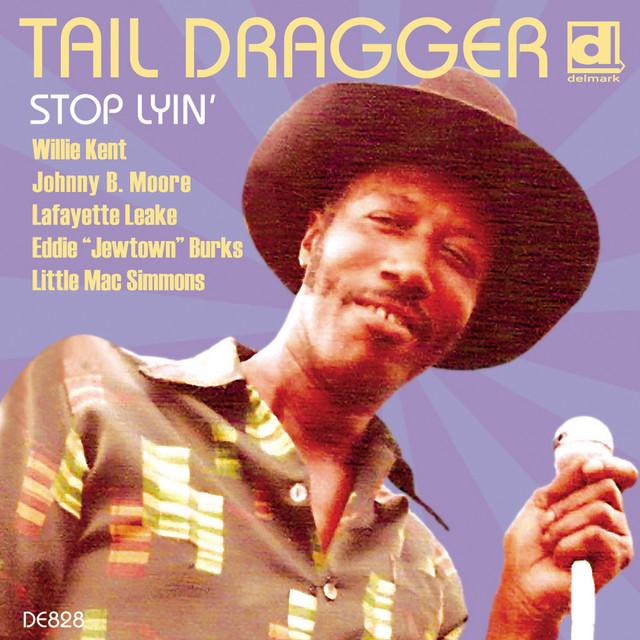
Tail Dragger’s Spotify BioVeteran singer James Yancey Jones, aka Tail Dragger, has been making his presence felt on the Chicago blues scene since the '60s. But like so many other bluesmen who specialize in electric Chicago blues and made their mark in the Windy City, Tail Dragger actually grew up in the Deep South. Tail Dragger was born on September 30, 1940 in Altheimer, AK, where he was raised by his grandparents and began listening to the blues as a kid. Although he appreciated a variety of blues when he was growing up (including acoustic Southern country blues), electric Chicago blues became his greatest interest. Tail Dragger's most obvious influence has been Howlin' Wolf, although his rugged, gritty approach was also affected by Muddy Waters, Sonny Boy Williamson, and Willie Dixon. Tail Dragger left Arkansas for good in 1966, when he moved to the city that did the most to shape him stylistically: Chicago. Moving to the city's West Side, Tail Dragger didn't start earning his living from music right after… his arrival; at first, he had a "day gig" as an auto mechanic. But Tail Dragger got a lucky break when he met his idol, Howlin' Wolf, who let him sit in during live performances. Howlin' Wolf, in fact, started calling him Tail Dragger because Jones often showed up late for gigs (before he became known as Tail Dragger, Jones was known as Crawlin' James in Chicago blues circles because he would sometimes crawl around on the floor when he performed).
Tail Dragger's association with Howlin' Wolf (who died in 1976) did a lot to increase his profile in the blues world, but in the early '70s, he became a full-time solo artist -- and Willie Kent, Hubert Sumlin, Carey Bell, Mack Simmons, Big Leon Brooks, and Eddie Shaw were among the Chicago-based bluesmen who performed in his various bands. Tail Dragger received some negative publicity in 1993, when he shot and killed fellow blues artist Bennie Joe Houston, aka Boston Blackie (b. 1943, Panola, AL). The two had just performed together at a gig, and allegedly, they got into a heated argument over payment. Tail Dragger said he acted in self-defense; nonetheless, he was convicted of manslaughter and spent 17 months in an Illinois prison. But after his release, he wasted no time resuming his musical career. Although Tail Dragger was a fixture in Chicago blues clubs throughout the '70s and '80s, and recorded some singles along the way, it wasn't until the mid-'90s that he finally had an album available. Crawlin' Kingsnake, Tail Dragger's first album, was released on the St. George label in 1996 (the year he turned 56). That disc was followed by a second album, American People, which was recorded in 1998 and released by Delmark the following year. Delmark put out his DVD, My Head Is Bald: Live at Vern's Friendly Lounge, in 2005 and released his Live at Rooster's Lounge as both a DVD an audio CD in 2009. ~ Alex Henderson, Rovi
Viberate is a music analytics platform built for A&Rs, artist managers, labels, booking agents, marketers, and artists.
It helps music professionals track artist growth, analyze audience data, monitor playlist activity, compare artists, follow song performance, and identify opportunities across the music market.
Public artist pages provide a free preview of selected artist data. Paid plans provide access to deeper analytics, historical data, charts, comparisons, playlist tools, exports, alerts, reports, and additional professional features.
Yes. Public Viberate artist pages provide selected artist analytics and music data for free.
Viberate also offers a 7-day free trial of the full platform. A credit card is required to start the trial. The trial includes access to the complete product so users can test deeper artist analytics, historical views, playlist insights, comparisons, charts, exports, alerts, and reporting features before choosing a paid plan.
Viberate provides artist analytics across streaming, playlists, social media, video, radio airplay, songs, and audience markets.
Users can analyze Spotify performance, Spotify and Apple Music playlists, YouTube activity, TikTok and Instagram growth, radio spins, song performance, audience locations, demographics, rankings, and overall artist momentum.
Artist profiles also connect to music charts, similar artists, and comparison tools, helping users benchmark performance and evaluate artists in context.
Viberate updates key artist and track data daily.
For followed artists and tracks, selected data is refreshed multiple times per day. This helps teams monitor playlist changes, streaming movement, audience growth, releases, and campaign performance with more current data.
Update frequency can vary depending on the metric and data source.
Yes. Viberate lets users compare up to five artists side by side across streaming, social media, audience, and engagement metrics.
Users can compare fanbase growth, audience demographics, locations, Spotify performance, social metrics, and other artist data over selected time periods.
Artist comparison can be used for A&R scouting, benchmarking, booking decisions, campaign planning, and evaluating artists with similar audiences or market positions.