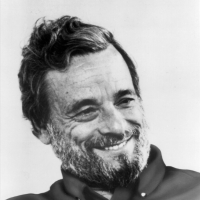
Stephen Sondheim

Classical
Classical Crossover
 Viberate Rank: 50569
 Viberate Rank: 50569
 Monthly ListenersFollowers
 Subscribers
 Followers
 Followers
 FansTop Spotify Songs
| Track | 7-Day Streams | |
|---|---|---|
1 | 32.11K | |
2 | 20.52K | |
3 | 16.86K | |
4 | 14.87K | |
5 | 14.56K |
Top YouTube VideosMonthly ListenersFeatured in Playlists| Playlist | Followers | |
|---|---|---|
1 |  Broadway Hits Spotify | 585.61K |
2 |  Fidi & Bumsi Spotify | 353.23K |
3 |  Jazz Covers Spotify | 161.30K |
4 |  Broadway Belts Spotify | 135.23K |
5 |  This Is Josh Groban Spotify | 98.19K |
Audience| City | Monthly Listeners | |
|---|---|---|
1 | | 13.53K |
2 |  | 13.45K |
3 | | 8.86K |
4 | | 8.33K |
5 | | 7.10K |
See full performance history, audience data, playlist activity, rankings, comparisons, and more in Viberate music analytics. Start with a free trial, then continue with a paid plan.
Stephen Sondheim’s Spotify BioThe foremost composer/lyricist of his generation and among the most highly regarded in Broadway history, Stephen Sondheim combined virtuosic wordplay with music that was groundbreakingly angular for the form. Sometimes in tandem with experimental story structures, his songs often feature elaborate, chromatic melodies and harmonic dissonance, without ever venturing into atonality. He even scored a Top 40 hit with Judy Collins' 1975 rendition of the melancholy ballad "Send in the Clowns." Sondheim was celebrated early in his career for his lyrics to the hit musicals West Side Story (1957) and Gypsy (1959) before making his Broadway composing debut with A Funny Thing Happened on the Way to the Forum in 1962. Working primarily as a solo composer/lyricist thereafter, he went on to write such enduring, dark classics as Sweeney Todd (1979), Into the Woods (1987), and Assassins (1990). An Academy Award winner for "Sooner or Later (I Always Get My Man)" from 1990's Dick Tracy, he had eight Tony… Awards (a record for a composer), numerous Grammys, and a Pulitzer Prize (Sunday in the Park with George), among his many other accolades, including the Presidential Medal of Freedom. Still actively composing and workshopping as an octogenarian in the 2010s, his musical Bunuel was workshopped in 2016 before he turned his attention to Square One, a collaboration with playwright David Ives.
Stephen Joshua Sondheim was born on March 22, 1930, in Manhattan. He was the only child of Herbert Sondheim, the proprietor of a dress manufacturing company, and Etta Janet (Fox) Sondheim, the chief designer for the company. He exhibited an early interest in music and first took piano lessons at approximately age seven. As he approached adolescence, he met famed lyricist Oscar Hammerstein II, who became his mentor. In high school, he began writing amateur musicals, continuing his apprenticeship while attending Williams College. Upon graduation, he won the Hutchinson Prize, a fellowship that he spent studying composition with Milton Babbitt. The show that could have marked his Broadway debut as a composer/lyricist was Saturday Night, but financing fell apart when its producer suddenly died.
The score for Saturday Night served as Sondheim's audition piece, and it got him a job writing lyrics to the music of Leonard Bernstein on West Side Story. It opened September 26, 1957, and ran for 732 performances before heading out on a national tour. The lasting popularity of the show, however, must be attributed to the film version, which hit theaters in 1961. The soundtrack album spent over a year at number one, prompting revivals in 1964 and 1968, eventually cementing the show's place in the Broadway pantheon.
Sondheim next agreed to write lyrics to Jule Styne's music for Gypsy, based on the memoirs of striptease artist Gypsy Rose Lee. With Ethel Merman in the title role, it opened May 21, 1959. The cast recording reached the Top Ten and won the Grammy for Best Show Album. When a movie version appeared in 1962, the soundtrack album made the Top Ten.
Sondheim finally got his chance to write both words and music for Broadway with A Funny Thing Happened on the Way to the Forum. Featuring a book by Burt Shevelove and Larry Gelbart based on the comic plays of Plautus, it opened on May 8, 1962. It won the Tony for Best Musical the following year. Forum was still playing when his Anyone Can Whistle opened on Broadway on April 4, 1964. A quick flop, it lasted only nine performances. Sondheim returned to writing only lyrics when he collaborated with Richard Rodgers on Do I Hear a Waltz?, which had its premiere on March 18, 1965. It remained for 220 performances. A movie version of A Funny Thing Happened on the Way to the Forum starring original Broadway lead Zero Mostel was released in 1966.
After Do I Hear a Waltz? closed in September 1965, Sondheim went nearly five years without being represented on Broadway. During this period, he worked on Follies, a musical about a reunion of women who had appeared in a Ziegfeld Follies-style revue, and Company, based on a series of short plays about affluent middle-aged couples. With no linear plot, Company consisted of a series of scenes and songs organized around the character of a bachelor celebrating his 35th birthday and pondering marital commitment. Labeled the first "concept" musical, when it opened on April 26, 1970, it enjoyed a profitable run of 690 performances, and the cast album won the Grammy Award for Best Show Album. The musical also garnered Sondheim his first Tonys in the categories of Best Music and Best Lyrics. Follies soon followed, opening on April 4, 1971. It ran 522 performances and gave the composer his second consecutive win for Best Score at the Tony Awards.
Sondheim followed the experimental Company and Follies with a more conventional musical based on Ingmar Bergman's 1955 film comedy Smiles of a Summer Night. Titled A Little Night Music, it opened on February 25, 1973, and became a hit, running for 601 performances and winning Sondheim the Best Score Tony for the third straight year. The cast LP won the Grammy for Best Show Album, and after Judy Collins reached number 36 on the Billboard Hot 100 in 1975 with the show's "Send in the Clowns," Sondheim won a Grammy for Song of the Year. A Little Night Music was adapted into a movie that opening in 1977.
Having succeeded with a conventional musical, Sondheim turned to the more ambitious Pacific Overtures, about the opening of Japan to the West in the 1850s. His third collaboration with Company and Follies director Hal Prince, Pacific Overtures opened on January 11, 1976, and closed after 193 performances.
With a book by A Little Night Music's Hugh Wheeler, Sondheim's next undertaking was Sweeney Todd, based on the 1973 Christopher Bond play Sweeney Todd: The Demon Barber of Fleet Street, itself a retelling of the Grand Guignol story of a serial killer in Dickensian London. Again directed by Prince, it opened on March 1, 1979, and became an unlikely hit, running for 557 performances. Sondheim won another Tony for Best Score and another Grammy for the Best Show Album.
A musical adaptation of the George S. Kaufman and Moss Hart play of the same name, Merrily We Roll Along examined the decline of an idealistic young man into a sellout. Like the original version, it unfolded in reverse chronology. The Prince-directed show opened and closed in November 1981 after only 16 performances, but that did not discourage Sondheim from the experimental Sunday in the Park with George, a show based on a painting, Georges Seurat's A Sunday Afternoon on the Island of La Grande Jatte. Featuring a book by its director, James Lapine, it opened on May 2, 1984, and ran 604 performances. The following year, it won the Pulitzer Prize for Drama. The cast album won the Grammy for Best Show Album.
Since the Follies cast album had provided only an abbreviated look at the show's 22 songs (productions vary), producer Thomas Z. Shepard organized a concert performance in 1985 of the complete score. Follies in Concert later won the Grammy for Best Show Album.
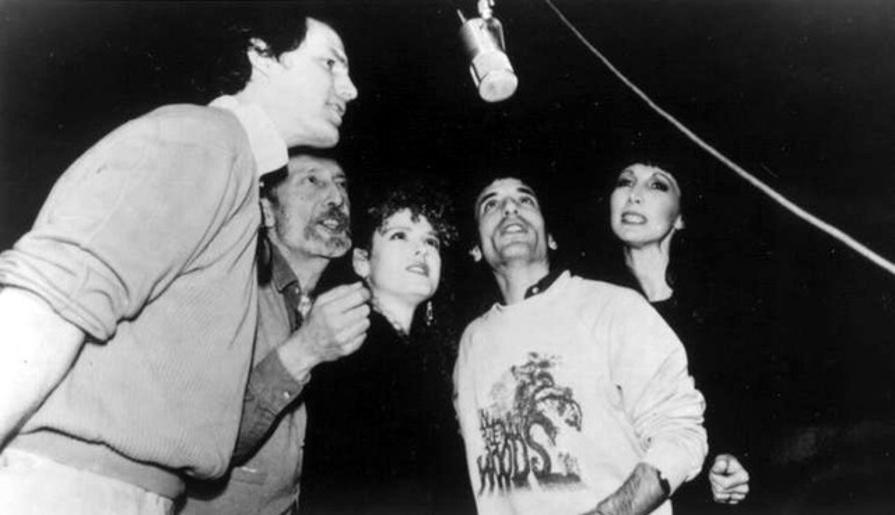
Sondheim's next musical, Into the Woods, was based on a series of fairy tales. Another collaboration with Lapine, it opened on November 5, 1987, and ran for nearly two years. The show earned Sondheim yet another Tony Award for Best Score as well as the Grammy for Best Show Album. With a book by John Weidman, Assassins premiered off-Broadway in 1990. A one-act musical with another unusual subject, it concerned the assassins and would-be assassins of American presidents. In the meantime, Sondheim wrote three songs that were sung by Madonna in the 1990 film Dick Tracy, among them "Sooner or Later (I Always Get My Man)," which took home the Oscar for Best Song.
The stage musical Passion was based on the film Passion d'Amour, an adaptation of the novel Fosca by Iginio Ugo Tarchetti. It became another hit for Sondheim and Lapine after opening on Broadway on May 9, 1994. It, too, won Sondheim the Tony for score and Grammy for show album. It was also named Best Musical at the Tonys.
By 1995, Sondheim was at work on a musical with Pacific Overtures' John Weidman, this one about the brothers Wilson Mizner, a con man and playwright, and Addison Mizner, an architect. It progressed slowly. As Bounce, the show finally appeared in regional productions in 2003. In 2004, Assassins finally ran on Broadway and won five Tonys, including Best Revival of a Musical. Hollywood produced a film version of Sweeney Todd in 2007 starring Johnny Depp before Bounce was reworked and returned as Road Show, opening off-Broadway in 2008.
Sondheim celebrated his 80th birthday with a series of concerts and special events, including Sondheim! The Birthday Concert with the New York Philharmonic at Lincoln Center. Subsequently, Road Show opened on the West End in 2011, and Into the Woods received a film adaptation (with screenplay by Lapine) in 2014. President Obama presented Sondheim with the Presidential Medal of Freedom in 2015.
Based on films by surrealist filmmaker Luis Buñuel, the long-teased Sondheim stage musical Bunuel had its off-Broadway opening canceled in 2019. Another musical, this one a collaboration with playwright/librettist David Ives, Square One had a reading (with participants including Bernadette Peters and Nathan Lane) in September 2021. After his death on November 26, 2021, Sondheim was hailed as a giant who changed musical theater. ~ Marcy Donelson & William Ruhlmann, Rovi
Viberate is a music analytics platform built for A&Rs, artist managers, labels, booking agents, marketers, and artists.
It helps music professionals track artist growth, analyze audience data, monitor playlist activity, compare artists, follow song performance, and identify opportunities across the music market.
Public artist pages provide a free preview of selected artist data. Paid plans provide access to deeper analytics, historical data, charts, comparisons, playlist tools, exports, alerts, reports, and additional professional features.
Yes. Public Viberate artist pages provide selected artist analytics and music data for free.
Viberate also offers a 7-day free trial of the full platform. A credit card is required to start the trial. The trial includes access to the complete product so users can test deeper artist analytics, historical views, playlist insights, comparisons, charts, exports, alerts, and reporting features before choosing a paid plan.
Viberate provides artist analytics across streaming, playlists, social media, video, radio airplay, songs, and audience markets.
Users can analyze Spotify performance, Spotify and Apple Music playlists, YouTube activity, TikTok and Instagram growth, radio spins, song performance, audience locations, demographics, rankings, and overall artist momentum.
Artist profiles also connect to music charts, similar artists, and comparison tools, helping users benchmark performance and evaluate artists in context.
Viberate updates key artist and track data daily.
For followed artists and tracks, selected data is refreshed multiple times per day. This helps teams monitor playlist changes, streaming movement, audience growth, releases, and campaign performance with more current data.
Update frequency can vary depending on the metric and data source.
Yes. Viberate lets users compare up to five artists side by side across streaming, social media, audience, and engagement metrics.
Users can compare fanbase growth, audience demographics, locations, Spotify performance, social metrics, and other artist data over selected time periods.
Artist comparison can be used for A&R scouting, benchmarking, booking decisions, campaign planning, and evaluating artists with similar audiences or market positions.