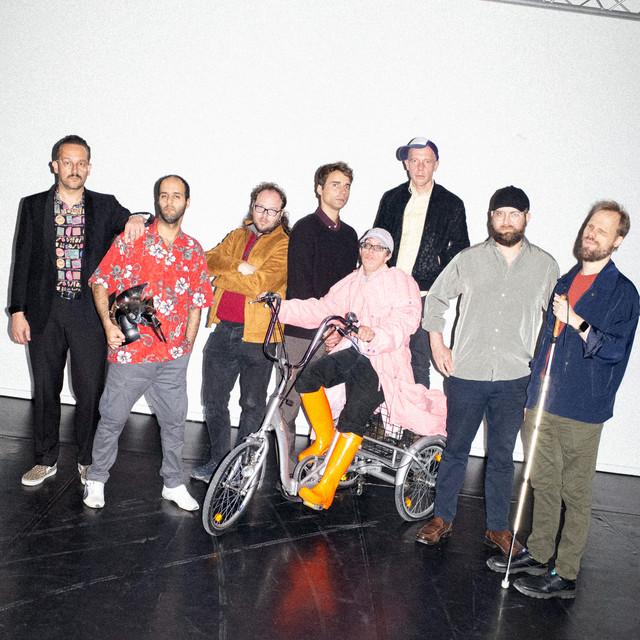
Station 17

Rock
Alternative Rock
Progressive Rock
 Viberate Rank: 347174
 Viberate Rank: 347174
 Monthly ListenersFollowers
 Subscribers
 Followers
 Followers
 FansTop Spotify Songs
| Track | 7-Day Streams | |
|---|---|---|
1 | 772 | |
2 | 132 | |
3 | 75 | |
4 | 70 | |
5 | 30 |
Top YouTube VideosMonthly ListenersFeatured in Playlists| Playlist | Followers | |
|---|---|---|
1 |  This Is Fettes Brot Spotify | 41.89K |
2 |  NACHTSCHICHT - eine Playlist von Moses Pelham Moses Pelham | 11.90K |
3 |  <-: Weval OST :-> Weval | 7.38K |
4 |  Essential Playlist DJ Koze | 5.67K |
5 |  Soma FM | Groove Salad Luuk Kielen | 5.34K |
Audience| City | Monthly Listeners | |
|---|---|---|
1 | | 308 |
2 | | 292 |
3 | | 169 |
4 |  | 123 |
5 | | 119 |
See full performance history, audience data, playlist activity, rankings, comparisons, and more in Viberate music analytics. Start with a free trial, then continue with a paid plan.
Station 17’s Spotify BioStation 17 is a collective of musicians gathered from a Hamburg welfare community of mentally disabled persons. Significant for connecting people with and without disabilities in a musical context, the group has earned much respect throughout the special needs community, as well as the underground music scene. They have worked with numerous high-profile musicians, ranging from members of Krautrock bands like Can and Neu! to electronic producers such as Thomas Fehlmann and Pole. Additionally, their music has evolved from the more esoteric experiments of their eponymous 1990 debut to techno and electro (on albums like 2001's Hitparade and 2006's Mikroprofessor) to accessible, politically charged indie pop (2014's Alles für Alle).
The group formed out of several late-'80s sessions led by social worker Kai Boysen. Recognizing the immense therapeutic value of music, he organized several jam sessions of spontaneous music. The Phonogram record label stepped in by 1989, financing an album on… the condition that all proceeds were plowed back into the Station 17 studio. With limited help from a few professional musicians (including Holger Czukay from Can and F.M. Einheit from Einstürzende Neubauten), six residents of the center recorded several long, improvised jam sessions for a self-titled debut album released in 1990. After 1993's Genau So, a theater group was formed from the project, sparking a series of appearances on television and at festivals, plus the documentary film Station 17: Der Film.
With 1997's Scheibe, Station 17 began moving from a more abstract, instrument-based focus into a form of electronic pop with ties to '70s godfathers Kraftwerk as well as the more recent spate of listening techno. The theater wing continued performing, and took their production of A Midsummer Night's Dream all over the country. One of German electronic music's most devoted disciples, Thomas Fehlmann (Palais Schaumburg, Sun Electric) produced Bravo, Station 17's fourth album, for a 1999 release. Fehlmann also proved indispensable in the hiring process for their 2001 remix album, Hitparade, which featured the top rank of German electronic producers (Pole, To Rococo Rot, the Modernist, Steve Bug).
In 2006, Boysen founded a label called 17rec., and Station 17 returned with Mikroprofessor, their most purely electronic release to date. Goldstein Variationen, which featured collaborations with artists ranging from Michael Rother of Neu! to indie electronic artists like Schneider TM and Barbara Morgenstern, appeared in 2008, with a remix album eventually following in 2011. The same year also brought Fieber, which preceded the polished, urgent pop album Alles für Alle in 2014. Both albums focused on the group's philosophy of inclusion, and their belief that all of the group's members are qualified, regardless of their disabilities. In 2018, Bureau B released Station 17's full-length Blick, another collaboration-heavy release that counted Faust, Andreas Dorau, and Ulrich Schnauss among its participants. ~ John Bush & Paul Simpson, Rovi
Viberate is a music analytics platform built for A&Rs, artist managers, labels, booking agents, marketers, and artists.
It helps music professionals track artist growth, analyze audience data, monitor playlist activity, compare artists, follow song performance, and identify opportunities across the music market.
Public artist pages provide a free preview of selected artist data. Paid plans provide access to deeper analytics, historical data, charts, comparisons, playlist tools, exports, alerts, reports, and additional professional features.
Yes. Public Viberate artist pages provide selected artist analytics and music data for free.
Viberate also offers a 7-day free trial of the full platform. A credit card is required to start the trial. The trial includes access to the complete product so users can test deeper artist analytics, historical views, playlist insights, comparisons, charts, exports, alerts, and reporting features before choosing a paid plan.
Viberate provides artist analytics across streaming, playlists, social media, video, radio airplay, songs, and audience markets.
Users can analyze Spotify performance, Spotify and Apple Music playlists, YouTube activity, TikTok and Instagram growth, radio spins, song performance, audience locations, demographics, rankings, and overall artist momentum.
Artist profiles also connect to music charts, similar artists, and comparison tools, helping users benchmark performance and evaluate artists in context.
Viberate updates key artist and track data daily.
For followed artists and tracks, selected data is refreshed multiple times per day. This helps teams monitor playlist changes, streaming movement, audience growth, releases, and campaign performance with more current data.
Update frequency can vary depending on the metric and data source.
Yes. Viberate lets users compare up to five artists side by side across streaming, social media, audience, and engagement metrics.
Users can compare fanbase growth, audience demographics, locations, Spotify performance, social metrics, and other artist data over selected time periods.
Artist comparison can be used for A&R scouting, benchmarking, booking decisions, campaign planning, and evaluating artists with similar audiences or market positions.