Stamic Quartet

Classical
Classical Crossover
Chamber Music
 Viberate Rank: 733685
 Viberate Rank: 733685
 Monthly ListenersFollowers
 Subscribers
 Followers
 Followers
 FansTop Spotify SongsTop YouTube VideosMonthly ListenersFeatured in Playlists
| Playlist | Followers | |
|---|---|---|
1 |  Chamber Music for Self-Renewal synergy555 | 4.21K |
2 |  365 Days of Music by Women Chords & Queens | 2.42K |
3 |  The Sound of 21st Century Classical The Sounds of Spotify | 2.37K |
4 |  Calm/Tranquil Chamber Music synergy555 | 1.50K |
5 |  Guts and Blackpowder OST Cyan | 1.40K |
Audience| City | Monthly Listeners | |
|---|---|---|
1 |  | 15 |
2 |  | 11 |
3 | | 9 |
4 |  | 9 |
5 |  | 8 |
See full performance history, audience data, playlist activity, rankings, comparisons, and more in Viberate music analytics. Start with a free trial, then continue with a paid plan.
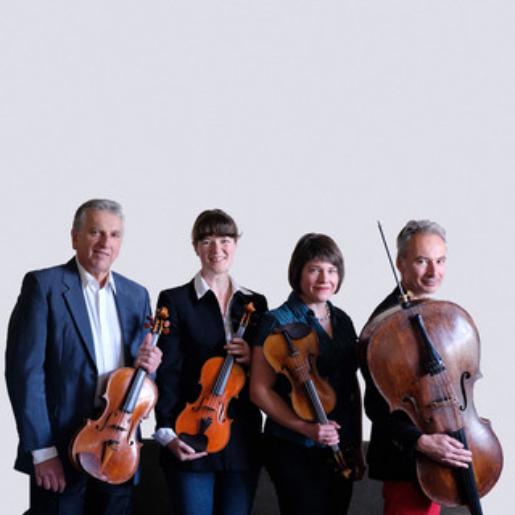
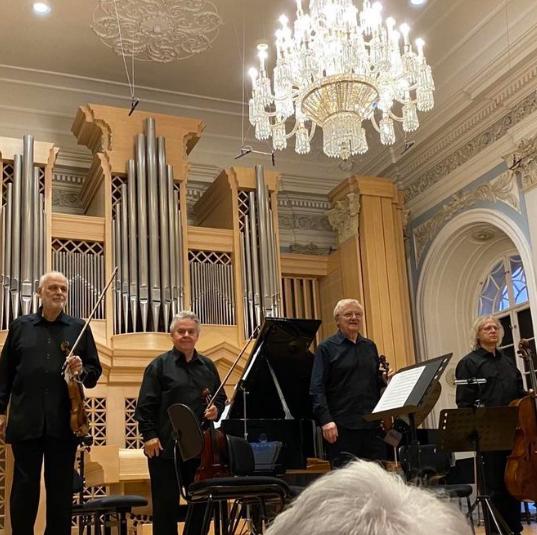
Stamic Quartet’s Spotify BioWithin a year or so of its 1985 founding, the Stamic Quartet established itself as one of the leading Czech string quartets of its time. Its victory in 1986 at the Salzburg-based National Broadcasting Union Competition catapulted them into the limelight, the players then launching their international careers with critically acclaimed tours across Europe and the Americas. The group is best known for its Czech repertory, especially the quartets of Dvorák and Martinu. Indeed, it has performed and recorded all 14 of Dvorák's quartets, as well as the seven by Martinu. The group has also played much other Czech music, including works by Smetana, Janácek, Klusak, and Hába. But the repertory is hardly limited to Czech fare, taking in a whole range of works by Haydn, Mozart, Schubert, Brahms, Verdi, Borodin, Ravel, Hindemith, Britten, and little known modern composers like Jirí Teml, Ivan Kurz, Maximo Pujol, and Carlos Guastavino. Its recordings are available on a range of labels, including… Bayer Records, Supraphon, ASV, Capriccio, and Brilliant Classics.
The Stamic (or Stamitz) Quartet was collectively formed in 1985 by Bohuslav Matousek (first violin), Josef Kekula (second violin), Jan Peruska (viola), and Vladimír Leixner (cello). All but Peruska were one-time members of the Dolezal Quartet. Over the years there have been several changes in the personnel of the Stamic players: Matousek, the leader of the group in its early years, departed in 1995 and was replaced by Vitezslav Cernoch. In 2001 Cernoch left and was replaced by Jindrich Pazdera. Leixner was the only other original member to depart; his replacement was Petr Hejny, who joined the ensemble in 2007.
Despite the changes in personnel, critics have generally agreed that the Stamic Quartet's colorful sonic character and vital spirit have been a constant in its 2,000-plus performances and numerous recordings.
Throughout the 1990s the ensemble grew in international stature as it began to take on ambitious recording projects, notably the aforementioned quartets of Dvorák and Martinu. Both these cycles drew lavish accolades from critics across the globe and are still available on the Bayer Records label.
In 2000 the Stamic Quartet took on duties as organizers of the Prague-based EuroArt International Music Festival, an event where the quartet serves as resident ensemble. Among the Stamic Quartet's more important later recordings is the 2007 four-disc set on Bayer of the 16 quartets and other chamber works of Alois Hába.
Viberate is a music analytics platform built for A&Rs, artist managers, labels, booking agents, marketers, and artists.
It helps music professionals track artist growth, analyze audience data, monitor playlist activity, compare artists, follow song performance, and identify opportunities across the music market.
Public artist pages provide a free preview of selected artist data. Paid plans provide access to deeper analytics, historical data, charts, comparisons, playlist tools, exports, alerts, reports, and additional professional features.
Yes. Public Viberate artist pages provide selected artist analytics and music data for free.
Viberate also offers a 7-day free trial of the full platform. A credit card is required to start the trial. The trial includes access to the complete product so users can test deeper artist analytics, historical views, playlist insights, comparisons, charts, exports, alerts, and reporting features before choosing a paid plan.
Viberate provides artist analytics across streaming, playlists, social media, video, radio airplay, songs, and audience markets.
Users can analyze Spotify performance, Spotify and Apple Music playlists, YouTube activity, TikTok and Instagram growth, radio spins, song performance, audience locations, demographics, rankings, and overall artist momentum.
Artist profiles also connect to music charts, similar artists, and comparison tools, helping users benchmark performance and evaluate artists in context.
Viberate updates key artist and track data daily.
For followed artists and tracks, selected data is refreshed multiple times per day. This helps teams monitor playlist changes, streaming movement, audience growth, releases, and campaign performance with more current data.
Update frequency can vary depending on the metric and data source.
Yes. Viberate lets users compare up to five artists side by side across streaming, social media, audience, and engagement metrics.
Users can compare fanbase growth, audience demographics, locations, Spotify performance, social metrics, and other artist data over selected time periods.
Artist comparison can be used for A&R scouting, benchmarking, booking decisions, campaign planning, and evaluating artists with similar audiences or market positions.