Solar X

Electronic
Other Electronic Music
 Viberate Rank: 458242
 Viberate Rank: 458242
 Monthly ListenersFollowers
 Subscribers
 Followers
 Followers
 FansTop Spotify Songs
| Track | 7-Day Streams | |
|---|---|---|
1 | 56 | |
2 | 49 | |
3 | 33 | |
4 | 19 | |
5 | 14 |
Top YouTube VideosMonthly ListenersFeatured in Playlists| Playlist | Followers | |
|---|---|---|
1 | official trip discography triprecordings | 5.94K |
2 |  📻 Solutions radio Stuk | Celte | 2.22K |
3 |  [IDM, ACID, BRAINDANCE & GLITCH] idmdiscovery.com Ruby Violet | 1.42K |
4 |  Ant-Zen clonn | 1.10K |
5 |  IDM/BRAINDANCE/AMBIENT/TECHNO/DUBSTEP/BREAKCORE/ MINIMAL/GLITCH/8-BIT/EXPERIMENTAL ELECTRONICA arsendis | 1.01K |
Audience| City | Monthly Listeners | |
|---|---|---|
1 |  | 15 |
2 |  | 14 |
3 | | 13 |
4 |  | 13 |
5 | | 11 |
See full performance history, audience data, playlist activity, rankings, comparisons, and more in Viberate music analytics. Start with a free trial, then continue with a paid plan.
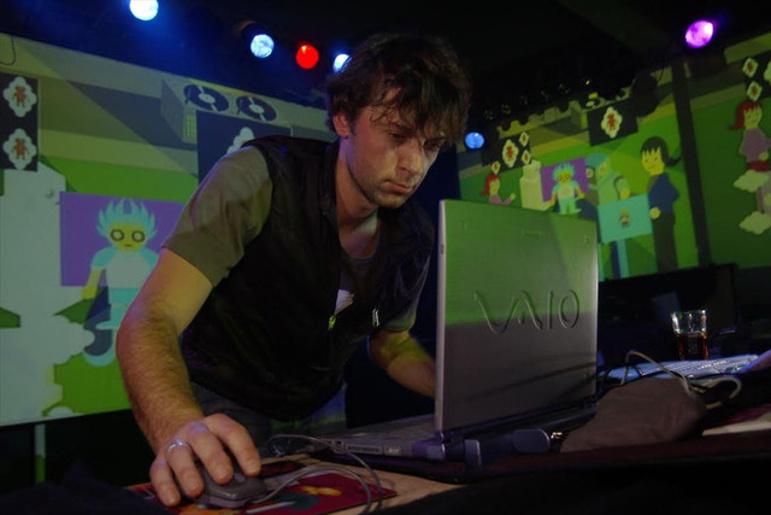
Solar X’s Spotify BioRoman Belavkin aka Solar X emerged from the Russian post-Perestroika underground with his special brand of multi-faceted low-tech electronic music. His first whirls with techno used the simplest analogue keyboards to generate a sound that caught the fancy of both West and East, spurring electronic activity on the home front, and raising foreign interest in the Russian scene. Belavkin himself is a Renaissance man, versed not only in music, but in martial arts and cognitive science. His probes into electronic music share purposes with his scientific queries into structure, chaos, and complexity, and their tie-in to the brain and emotions.
The Moscow-born musician played around with breakbeats as a highschooler, but considered music a hobby until a 1992 car accident left him housebound for two years. His constant companion became his computer, and lacking the money to buy synthesizers, he tinkered with software and soundcards that let him make his own samples using the Soviet analogue… instruments of his youth. Buoyed by his education as a mathematician and theoretical physicist, he gained proficiency in music technology via internet correspondences with international cohorts, fellow devotees of the analogue medium. Friends recorded his debut, Outre X Mer, that in 1995 made its way to the American label Defective Records (it's founder was one of Belavkin's online mentors). The album caused a stir among international techno audiences, but even more at home, since Belavkin's Detroit-pressed records were miraculously making there way back to Moscow clubs. In post-Perestroika Russia, where there was no local scene or independent labels, and techno came exclusively from the West, he had accomplished the unimaginable. He spent the next few years enjoying small-scale fame in Moscow, paying homage to the greats of Russian music when he collaborated with famed producer Artyom Troitskiy to cover an Alla Pugachova song. In order to economize on record production, he started his own label, ArT-TeK Records; their first release was Solar X's 1997 album, X-rated, whose modulations of funk and disco were aroused by the album's muse: pornography. The label became a hub for Russian electronica, attracting groups like EU and Lazyfish, and releasing the 1999 Russian IDM compilation, Artefacts. London's Worm Interface Records releasedSolar X's third album, Little Pretty Automatic, praised for its classical sense of form, precision and balance. It was Belavkin's last dance with old Russian synths, and only a half effort at that, since he had begun to use realtime programs to expedite the journey from mind to ear. For 2001's Chanel N° 303 released on Germany's Hymen Records, he abandoned his antique instruments in favor of modeled replications in his computer. By this point Belavkin was based in London where he completed a PhD in Artificial Intelligence and landed a teaching job in the Computer Science department at Middlesex University. ~ Sabrina Jaszi, Rovi
Viberate is a music analytics platform built for A&Rs, artist managers, labels, booking agents, marketers, and artists.
It helps music professionals track artist growth, analyze audience data, monitor playlist activity, compare artists, follow song performance, and identify opportunities across the music market.
Public artist pages provide a free preview of selected artist data. Paid plans provide access to deeper analytics, historical data, charts, comparisons, playlist tools, exports, alerts, reports, and additional professional features.
Yes. Public Viberate artist pages provide selected artist analytics and music data for free.
Viberate also offers a 7-day free trial of the full platform. A credit card is required to start the trial. The trial includes access to the complete product so users can test deeper artist analytics, historical views, playlist insights, comparisons, charts, exports, alerts, and reporting features before choosing a paid plan.
Viberate provides artist analytics across streaming, playlists, social media, video, radio airplay, songs, and audience markets.
Users can analyze Spotify performance, Spotify and Apple Music playlists, YouTube activity, TikTok and Instagram growth, radio spins, song performance, audience locations, demographics, rankings, and overall artist momentum.
Artist profiles also connect to music charts, similar artists, and comparison tools, helping users benchmark performance and evaluate artists in context.
Viberate updates key artist and track data daily.
For followed artists and tracks, selected data is refreshed multiple times per day. This helps teams monitor playlist changes, streaming movement, audience growth, releases, and campaign performance with more current data.
Update frequency can vary depending on the metric and data source.
Yes. Viberate lets users compare up to five artists side by side across streaming, social media, audience, and engagement metrics.
Users can compare fanbase growth, audience demographics, locations, Spotify performance, social metrics, and other artist data over selected time periods.
Artist comparison can be used for A&R scouting, benchmarking, booking decisions, campaign planning, and evaluating artists with similar audiences or market positions.