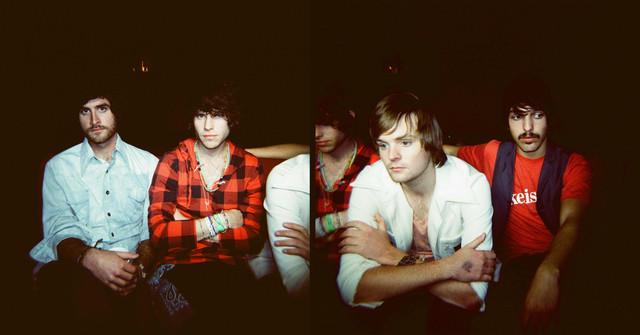
Shout Out Louds

Pop
Indie Pop
Alternative Rock
 Viberate Rank: 73601
 Viberate Rank: 73601
 Monthly ListenersFollowers
 Subscribers
 Followers
 Followers
 FansTop Spotify Songs
| Track | 7-Day Streams | |
|---|---|---|
1 | 11.64K | |
2 | 6.86K | |
3 | 6.58K | |
4 | 4.59K | |
5 | 4.49K |
Top YouTube VideosMonthly ListenersFeatured in Playlists| Playlist | Followers | |
|---|---|---|
1 |  All New Rock Spotify | 959.87K |
2 |  Fidi & Bumsi Spotify | 353.23K |
3 |  Indie Brandneu Spotify | 178.08K |
4 |  Ny Rock Spotify | 140.55K |
5 |  The OC Soundtrack [All Seasons Playlist] Solitude Collective | 138.09K |
Audience| City | Monthly Listeners | |
|---|---|---|
1 | | 3.54K |
2 |  | 2.23K |
3 | | 1.76K |
4 | | 1.30K |
5 | | 1.12K |
See full performance history, audience data, playlist activity, rankings, comparisons, and more in Viberate music analytics. Start with a free trial, then continue with a paid plan.
Shout Out Louds’ Spotify BioStockholm indie outfit Shout Out Louds rose in the mid-2000s with an engaging sound that ranged in tone from cozy, jangling guitar pop to something more cinematic. Their 2007 album Our Ill Wills reached the Top Ten in Sweden, while 2010's Phil Ek-produced follow-up, Work, saw the band make inroads in the U.S. Although their output over the coming years wasn't prodigious, each subsequent release explored a different facet of Shout Out Louds' palette, from the adventurous pop of 2013's Optica to the laid-back reflections of 2017's Ease My Mind. 2022's House continued this trend with its sonic pastiche of murky new wave guitar sounds and sweet melodies.
Childhood friends Adam Olenius (vocals, guitar), Ted Malmros (bass), and Carl von Arbin (guitars) formed the band in 2001, adding drummer Eric Edman and keyboardist/singer Bebban Stenborg to the lineup soon afterward. A copy of their early demo tape found its way to Filip Wilén, owner of Sweden's Bud Fox Recordings, and he offered them a… contract. Shout Out Louds spent the majority of 2002 writing and recording songs before making their debut in early 2003 with the 100° EP. Their first full-length, Howl Howl Gaff Gaff, arrived in October, effectively introducing the group's high-energy, ultra-melodic sound to a widespread audience. They toured hard, releasing additional material ("Please Please Please," "Very Loud/Wish I Was Dead," and the Oh, Sweetheart EP), and inking an American deal with Capitol Records. The U.S. version of Howl Howl Gaff Gaff was released in May 2005, featuring songs from the Swedish release plus some early singles and EP tracks.
A tour of the U.S. with indie darlings the Dears helped boost the band's profile, as did song placements on television shows like The O.C. Despite such growing success, the Shout Out Louds' 2007 album -- Our Ill Wills, produced by Björn Yttling (Peter Björn and John) -- was a somber, melancholy affair, replete with icy synths and Cure-inspired vocals. Another round of tour dates kept the bandmates busy until mid-2008, at which point they decided to take a half-year hiatus. After reconvening in Stockholm to write new material, the group headed to Seattle to begin recording with American producer Phil Ek (Fleet Foxes, the Shins).
Now represented by high-profile indie Merge Records in the U.S., Shout Out Louds' more streamlined third album, Work, arrived in early 2010 and just cracked the Billboard 200 in the States, while making a strong showing back home in Sweden. Following another rigorous tour in support of the record, the bandmembers felt that a change in the way they worked was in order. Hoping to recapture the more relaxed spirit of earlier recordings, they spent time outside the studio composing the songs, with each member responsible for coming up with their own parts. When they came back together, the group produced their next record themselves (with help from Johannes Berglund) in a small Stockholm studio. Optica was released by Merge in early 2013 and was at once looser and more adventurous.
The next few years saw a handful of solo releases from Olenius as well as Stenborg's Astropol project before the band regrouped in Stockholm to make their fifth album. 2017's Ease My Mind saw the band make an intentional shift toward mellow, introspective songwriting, as a reaction against the tumultuous global climate of the time. Five more years passed before Shout Out Louds returned in early 2022 with House, a darker-hued collection with new wave undertones. ~ Tim Sendra, Rovi
Viberate is a music analytics platform built for A&Rs, artist managers, labels, booking agents, marketers, and artists.
It helps music professionals track artist growth, analyze audience data, monitor playlist activity, compare artists, follow song performance, and identify opportunities across the music market.
Public artist pages provide a free preview of selected artist data. Paid plans provide access to deeper analytics, historical data, charts, comparisons, playlist tools, exports, alerts, reports, and additional professional features.
Yes. Public Viberate artist pages provide selected artist analytics and music data for free.
Viberate also offers a 7-day free trial of the full platform. A credit card is required to start the trial. The trial includes access to the complete product so users can test deeper artist analytics, historical views, playlist insights, comparisons, charts, exports, alerts, and reporting features before choosing a paid plan.
Viberate provides artist analytics across streaming, playlists, social media, video, radio airplay, songs, and audience markets.
Users can analyze Spotify performance, Spotify and Apple Music playlists, YouTube activity, TikTok and Instagram growth, radio spins, song performance, audience locations, demographics, rankings, and overall artist momentum.
Artist profiles also connect to music charts, similar artists, and comparison tools, helping users benchmark performance and evaluate artists in context.
Viberate updates key artist and track data daily.
For followed artists and tracks, selected data is refreshed multiple times per day. This helps teams monitor playlist changes, streaming movement, audience growth, releases, and campaign performance with more current data.
Update frequency can vary depending on the metric and data source.
Yes. Viberate lets users compare up to five artists side by side across streaming, social media, audience, and engagement metrics.
Users can compare fanbase growth, audience demographics, locations, Spotify performance, social metrics, and other artist data over selected time periods.
Artist comparison can be used for A&R scouting, benchmarking, booking decisions, campaign planning, and evaluating artists with similar audiences or market positions.