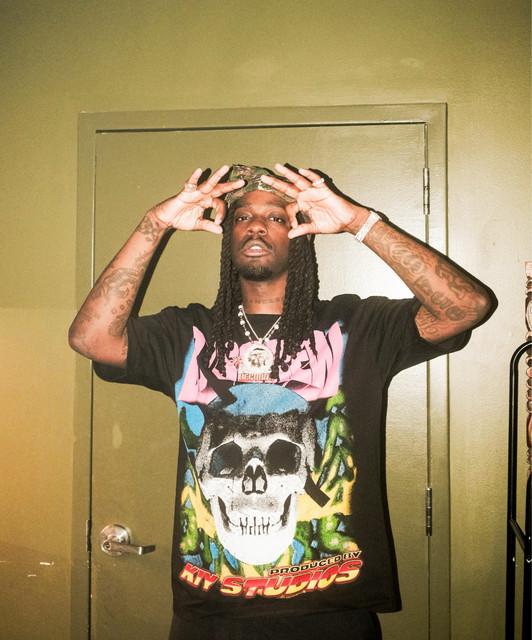
Shakewell

Hip Hop
Trap
 Viberate Rank: 16734
 Viberate Rank: 16734
 Monthly ListenersFollowers
 Subscribers
 Followers
 Followers
 FansTop Spotify Songs
| Track | 7-Day Streams | |
|---|---|---|
1 | 171.92K | |
2 | 148.13K | |
3 | 102.73K | |
4 | 96.45K | |
5 | 84.59K |
Top YouTube VideosMonthly ListenersFeatured in Playlists| Playlist | Followers | |
|---|---|---|
1 |  TIRADE Spotify | 602.33K |
2 |  This Is Ghostemane Spotify | 263.57K |
3 |  GANGSTER GANG hdfamilyontheplaylist | 123.97K |
4 |  EDC Las Vegas 2026 Official Playlist Insomniac | 114.89K |
5 |  Best of $uicideboys$ Ryu | 114.41K |
Audience| City | Monthly Listeners | |
|---|---|---|
1 | | 21.90K |
2 | | 20.12K |
3 | | 19.83K |
4 | | 17.33K |
5 | | 17.18K |
See full performance history, audience data, playlist activity, rankings, comparisons, and more in Viberate music analytics. Start with a free trial, then continue with a paid plan.
Shakewell’s Spotify BioArmed with direct lyrics and dark production, California-bred rapper Shakewell began his career as an emcee in the 2010s after pivoting from a previous incarnation in a hardcore band. As heard on his early mixtapes, his dexterous style -- which veers from melodic to menacing -- found an audience with fans of his fellow collaborators Pouya, Fat Nick, and $uicideboy$. The latter act signed Shakewell to their G59 imprint in 2020, with his debut album for the label, Pray 4 Shakewell, arriving in 2022. He landed on the U.S. charts the next year with Shameless $uicide, a joint EP with $uicideboy$.
Born Andrew Adolph in 1991, the San Fernando Valley musician got his start on the hardcore scene, playing bass in the metal band Betrayal. After three albums with that crew, he switched to a different kind of hardcore, debuting his rap skills in the late 2010s with a trio of mixtapes, including 2017's Key Stone Prince and 2018's Big Juice tha Sip. Lyrically, he balanced sex, drugs, and violence with… unflinching introspection and confessionals, quickly amassing a circle of like-minded associates that included Pouya, Fat Nick, Mikey the Magician, and Germ. And just like with the latter rapper, he caught the ears of New Orleans duo $uicideboy$, who signed him to their G59 label in 2020. In 2022, the pair appeared on his label debut, Pray 4 Shakewell, which also featured appearances by Fat Nick and Boobie Lootaveli. Their teamwork continued in 2023 with a full collaborative EP, Shameless $uicide, which debuted at number 50 on the Billboard 200. ~ Neil Z. Yeung, Rovi
Viberate is a music analytics platform built for A&Rs, artist managers, labels, booking agents, marketers, and artists.
It helps music professionals track artist growth, analyze audience data, monitor playlist activity, compare artists, follow song performance, and identify opportunities across the music market.
Public artist pages provide a free preview of selected artist data. Paid plans provide access to deeper analytics, historical data, charts, comparisons, playlist tools, exports, alerts, reports, and additional professional features.
Yes. Public Viberate artist pages provide selected artist analytics and music data for free.
Viberate also offers a 7-day free trial of the full platform. A credit card is required to start the trial. The trial includes access to the complete product so users can test deeper artist analytics, historical views, playlist insights, comparisons, charts, exports, alerts, and reporting features before choosing a paid plan.
Viberate provides artist analytics across streaming, playlists, social media, video, radio airplay, songs, and audience markets.
Users can analyze Spotify performance, Spotify and Apple Music playlists, YouTube activity, TikTok and Instagram growth, radio spins, song performance, audience locations, demographics, rankings, and overall artist momentum.
Artist profiles also connect to music charts, similar artists, and comparison tools, helping users benchmark performance and evaluate artists in context.
Viberate updates key artist and track data daily.
For followed artists and tracks, selected data is refreshed multiple times per day. This helps teams monitor playlist changes, streaming movement, audience growth, releases, and campaign performance with more current data.
Update frequency can vary depending on the metric and data source.
Yes. Viberate lets users compare up to five artists side by side across streaming, social media, audience, and engagement metrics.
Users can compare fanbase growth, audience demographics, locations, Spotify performance, social metrics, and other artist data over selected time periods.
Artist comparison can be used for A&R scouting, benchmarking, booking decisions, campaign planning, and evaluating artists with similar audiences or market positions.