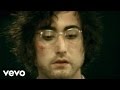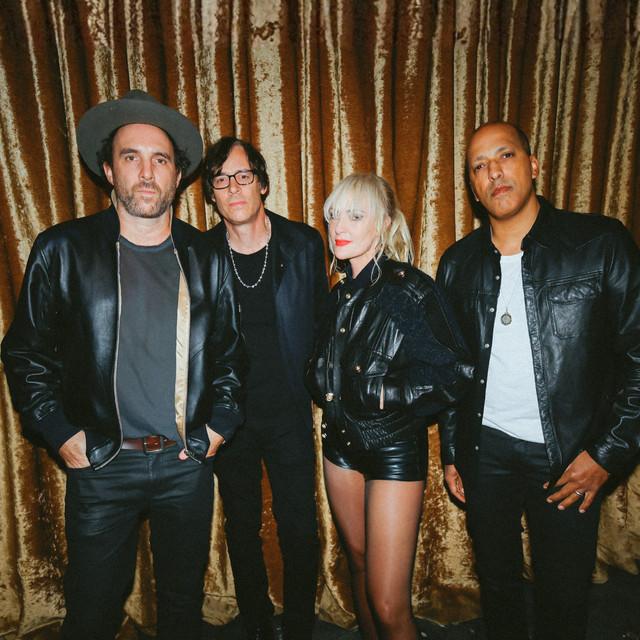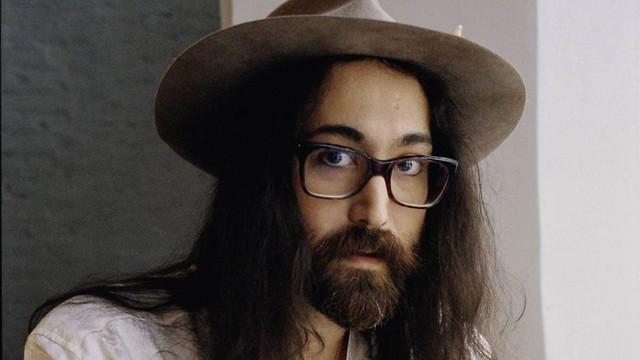
Sean Lennon

Rock
Indie Rock
Pop Rock
 Viberate Rank: 14189
 Viberate Rank: 14189
 Monthly ListenersFollowers
 Subscribers
 Followers
 Followers
 FansTop Spotify Songs
| Track | 7-Day Streams | |
|---|---|---|
1 | 834.35K | |
2 | 158.57K | |
3 | 140.93K | |
4 | 12.21K | |
5 | 11.99K |
Top YouTube VideosMonthly ListenersFeatured in Playlists| Playlist | Followers | |
|---|---|---|
1 |  This Is Lana Del Rey Spotify | 2.88M |
2 |  Weihnachtshits Spotify | 1.43M |
3 |  Lana Del Rey Complete Lana Del Rey | 1.38M |
4 |  the best of lana del rey julia hardy | 362.28K |
5 |  yearning aliyah | 174.09K |
Audience| City | Monthly Listeners | |
|---|---|---|
1 |  | 10.67K |
2 |  | 6.07K |
3 |  | 4.81K |
4 |  | 3.61K |
5 |  | 3.40K |
See full performance history, audience data, playlist activity, rankings, comparisons, and more in Viberate music analytics. Start with a free trial, then continue with a paid plan.
Sean Lennon’s Spotify BioSean Lennon has always chosen his own musical path, following it deftly as he splits the difference between pop and experimental pursuits. He came of age in the kaleidoscopic '90s, working with Cibo Matto and issuing his first solo album, 1998's Into the Sun, on the Beastie Boys' Grand Royal label, while beginning a long stint playing in his mother Yoko Ono's band. In the following decade he formed the psychedelic duo the Ghost of a Saber Tooth Tiger and the improvisational prog group Mystical Weapons. As his musical interests expanded further, he teamed with Les Claypool to form the hard-to-categorize project the Claypool Lennon Delirium, branched out into film scoring, explored more mainstream territory as he worked with artists like Lana Del Ray and Lily Allen, and delved into jazz as well. His first foray into that style was 2024's Asterisms, a fully instrumental album of electronics-fused jazz and psychedelic soundscape music.
The son of John Lennon and Yoko Ono, Lennon was born in… New York City in 1975. During his childhood, he was educated in Swiss boarding schools, but occasionally appeared on his mother's albums and sang on the 1984 Ono tribute Every Man Has a Woman. In his early teens, he was occasionally seen decked out in a plastic Thriller jacket and hanging out with Michael Jackson, but his first official step into the spotlight was in the form of filmed interviews for the 1988 documentary Imagine: John Lennon. Three years later, he organized -- with Ono and Lenny Kravitz -- a star-studded re-recording of his father's "Give Peace a Chance" as a protest to the Gulf War. That year, he also appeared on Kravitz's album Mama Said. Shortly afterward, he retreated from the spotlight again, deciding to attend Columbia University. He spent only a few semesters at college before he dropped out of school to hang out in the New York indie rock scene. He encouraged his mother to begin performing again, supporting her in a noise rock trio named IMA; the trio was featured on Ono's 1995 album Rising and backed her on her subsequent tour. During that time, Lennon met Cibo Matto, who were hired to remix a song on Ono and IMA's EP, and he became Cibo Matto's touring bassist as well as keyboardist Yuka Honda's boyfriend. For a short while in the mid-'90s, he was touring with both IMA and Cibo Matto; it was the first time he was on the road playing music for an extended period of time.
Once the touring was completed, Lennon played some of his songs to Beastie Boy Adam Yauch. Impressed with the demos, Yauch asked Lennon if he wanted to record a solo album for the Beasties' label, Grand Royal. He accepted the offer and had Honda produce the resulting album, Into the Sun. A mellow, eclectic effort that bounces between bossa nova and alternative rock, Into the Sun was released in the spring of 1998. Journalists and observers were ready to spot musical similarities between Sean and his father, but perhaps the clearest shared trait was an ability to unwittingly stick his foot in his mouth just like his dad. Shortly before Into the Sun, he gave an interview to The New Yorker, claiming his father was assassinated by the American government. It helped stir up interest for his debut album, but he didn't need it, since the rock press was already eager to run stories about him -- not only was he the heir to rock royalty, he had the Grand Royal stamp of approval. Consequently, Into the Sun received strong reviews and, on the basis of those reviews, earned a small following, debuting at number 153 on the charts.
When Grand Royal folded in 2001, Lennon found himself without a label, but Capitol soon signed him. However, it wasn't until 2006 that he released new material. His second album, the mostly piano-driven Friendly Fire, appeared that fall and featured contributions from Honda, Ono, Money Mark, and Vincent Gallo. In 2008, Lennon formed a new project with Charlotte Kemp Muhl called the Ghost of a Saber Tooth Tiger. In 2009, they performed at the opening of the independent film Rosencrantz & Guildenstern Are Undead, which Lennon had scored. GOASTT released the critically acclaimed LP Midnight Sun in 2014 and joined Dinosaur Jr. and Primus on tour in 2015. While touring, Lennon and Primus' Les Claypool hit it off and formed the psych-rock duo the Claypool Lennon Delirium. Throughout the rest of the 2010s, Lennon also worked with a diverse host of other artists, writing music with and appearing on albums by Lady Gaga, Lana Del Rey, John Zorn, and Lily Allen, among others. He also continued scoring films, and grew increasingly interested in instrumental composition. This interest took on a life of its own with Asterisms. Made with the help of musicians Michael Leonhart, João Nogueira, Devon Hoff, and others, the fully instrumental album combined jazz, electronics, and rock sounds for a cinematic soundscape style. Asterisms was released by John Zorn's Tzadik label in February of 2024. ~ Stephen Thomas Erlewine, Rovi
Viberate is a music analytics platform built for A&Rs, artist managers, labels, booking agents, marketers, and artists.
It helps music professionals track artist growth, analyze audience data, monitor playlist activity, compare artists, follow song performance, and identify opportunities across the music market.
Public artist pages provide a free preview of selected artist data. Paid plans provide access to deeper analytics, historical data, charts, comparisons, playlist tools, exports, alerts, reports, and additional professional features.
Yes. Public Viberate artist pages provide selected artist analytics and music data for free.
Viberate also offers a 7-day free trial of the full platform. A credit card is required to start the trial. The trial includes access to the complete product so users can test deeper artist analytics, historical views, playlist insights, comparisons, charts, exports, alerts, and reporting features before choosing a paid plan.
Viberate provides artist analytics across streaming, playlists, social media, video, radio airplay, songs, and audience markets.
Users can analyze Spotify performance, Spotify and Apple Music playlists, YouTube activity, TikTok and Instagram growth, radio spins, song performance, audience locations, demographics, rankings, and overall artist momentum.
Artist profiles also connect to music charts, similar artists, and comparison tools, helping users benchmark performance and evaluate artists in context.
Viberate updates key artist and track data daily.
For followed artists and tracks, selected data is refreshed multiple times per day. This helps teams monitor playlist changes, streaming movement, audience growth, releases, and campaign performance with more current data.
Update frequency can vary depending on the metric and data source.
Yes. Viberate lets users compare up to five artists side by side across streaming, social media, audience, and engagement metrics.
Users can compare fanbase growth, audience demographics, locations, Spotify performance, social metrics, and other artist data over selected time periods.
Artist comparison can be used for A&R scouting, benchmarking, booking decisions, campaign planning, and evaluating artists with similar audiences or market positions.