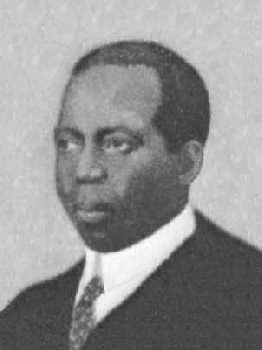
Scott Joplin

Jazz
Swing
Classical Crossover
 Viberate Rank: 52715
 Viberate Rank: 52715
 Monthly ListenersFollowers
 Subscribers
 Followers
 Followers
 FansTop Spotify Songs
| Track | 7-Day Streams | |
|---|---|---|
1 | 30.87K | |
2 | 16.20K | |
3 | 4.54K | |
4 | 4.54K | |
5 | 3.66K |
Top YouTube VideosMonthly ListenersFeatured in Playlists| Playlist | Followers | |
|---|---|---|
1 |  1000 Recordings to Hear Before You Die (Tom Moon): Album Index Ulysses' Classical | 94.29K |
2 |  How I Met Your Mother: Songs From The Show Sam M. | 71.67K |
3 |  Memes Songs radyaanargya | 45.04K |
4 |  House MD (All seasons) Taha BAŞTUĞ | 40.49K |
5 | Dr House M.D. Soundtrack Stéphanie Mouskito | 40.38K |
Audience| City | Monthly Listeners | |
|---|---|---|
1 |  | 2.85K |
2 |  | 2.19K |
3 |  | 2.18K |
4 | | 1.96K |
5 | | 1.94K |
See full performance history, audience data, playlist activity, rankings, comparisons, and more in Viberate music analytics. Start with a free trial, then continue with a paid plan.
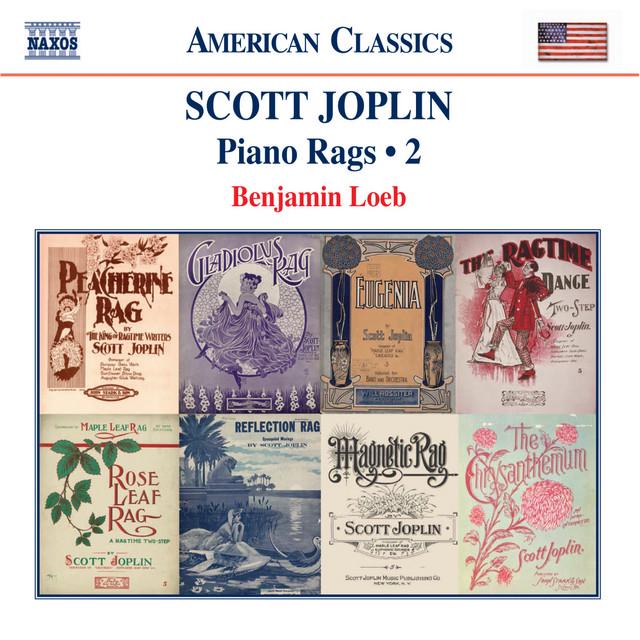
Scott Joplin’s Spotify BioScott Joplin was "the King of Ragtime Writers," a composer who elevated "banjo piano playing," a lowly entertainment associated with saloons and brothels, into an American art form loved by millions. Born in Texas in either 1867 or 1868, Joplin was raised in Texarkana, the son of a laborer and former enslaved person. As a child, Joplin taught himself piano on an instrument belonging to a family that granted him access to it, and ultimately studied with a local, German-born teacher who introduced Joplin to classical music. Joplin attended high school in Sedalia, Missouri, a town that would serve as Joplin's home base during his most prosperous years, and where a museum would later bear his name.
In 1891, the first traceable evidence of Joplin's music career is found, placing him in a minstrel troupe in Texarkana. In 1893, he played in Chicago while the Columbian Exposition was held, reportedly leading a band with a cornet. Afterward, Joplin settled in Sedalia, worked with other brass… bands, and founded a vocal group called the Texas Medley Quartette. During an 1895 appearance in Syracuse, New York, the quality of Joplin's original songs for the Texas Medley Quartette so impressed a group of local businessmen that they arranged for Joplin's first publications. Around 1896, Joplin enrolled in Sedalia's historically Black George R. Smith College to study formally, publishing a few more pieces in the years to follow.
In 1899, publisher John Stark of Sedalia issued Joplin's second ragtime composition, "Maple Leaf Rag." It didn't catch on immediately, but within a few years the popularity of "Maple Leaf Rag" was so enormous that it made Joplin's name; Joplin earned a small percentage of income from it for the rest of his days, helping to stabilize him in his last years. By the end of 1899, Joplin presented his first ambitious work, the ballet The Ragtime Dance, at the Wood Opera House in Sedalia. It didn't appear in print until 1902, and then only in a truncated form. Joplin moved to St. Louis in 1901, as did Stark, who set his new publishing venture up as "The House of Classic Rags." Joplin wrote many of his other well-known rags during this time, including "The Entertainer," "The Easy Winners," and "Elite Syncopations."
In 1903, Joplin organized a touring company to perform his first opera, A Guest of Honor, which foundered after a couple of months, leaving Joplin destitute. He had recovered well enough to appear at the 1904 St. Louis World's Fair to present his rag "The Cascades," which proved his second great success. Joplin also married for a second time to a woman who died only a few weeks into their marriage after a bout with pneumonia, plunging Joplin into another bout of despair. During a visit to Chicago in 1907, he renewed an acquaintance with the St. Louis pianist Louis Chauvin, who did not long outlast the visit. Joplin utilized a strain drawn from Chauvin's playing into the finest of his "collaborative" rags, "Heliotrope Bouquet." This was published after Joplin moved to New York in 1907. Stark had also resettled there, and they resumed their partnership to some degree, but Joplin also published through Seminary Music, likewise home to aspiring songwriter Irving Berlin. Through Seminary, many of the best of his late works appeared, such as "Pine Apple Rag," the transparently beautiful "Mexican serenade" "Solace," and the harmonically adventurous "Euphonic Sounds."
From 1911 until his death in 1917, most of Joplin's efforts went into his second opera, Treemonishia, which he heard in concert but never managed to stage during his own lifetime. With his third wife, Lotte Joplin, Joplin formed his own music company and published his final piano rag, "Magnetic Rag" (1914), one of his best. By this time, debilitating, long-term effects of syphilis were beginning to break down Joplin's health, although he did manage to make seven hand-played piano rolls in 1916 and 1917; though heavily edited, these rolls are as close as one is likely to get to hearing Joplin's own playing. One of them is W.C. Handy's "Ole Miss Rag," which suggests that Joplin might have had a hand in its composition or arrangement. Joplin was tireless and selfless in his advocacy of his fellow ragtime composers, collaborating with James Scott, Arthur Marshall, Louis Chauvin, and Scott Hayden and helping to arrange others by Artie Matthews and the New Jersey composer Joseph Lamb, whose work Joplin pitched to Stark.
"Maple Leaf Rag" remained a constant in popular music throughout the Jazz Age, but the better part of Joplin's work remained unknown until the "ragtime revival" of the early 1970s, during which "Scott Joplin" became a household name and Treemonishia was finally staged by the Houston Grand Opera. Although primary sources on Joplin's music were still extant as late as the late '40s, not a single manuscript page in Joplin's hand existed by the end of the century, and only three photographs of him survived, along with precious few first-hand quotations. Joplin died in a mental facility convinced that he had failed in his mission to achieve success as an Black composer of serious music. Were he alive today, Joplin would be astounded to learn that, a century after his work was first printed, he was considered the most successful African American composer of serious music that ever lived -- and by far. Some of his works have been recorded hundreds of times and arranged for practically every conceivable instrumental combination, played by everything from symphony orchestras to ice cream trucks. ~ Uncle Dave Lewis, Rovi
Viberate is a music analytics platform built for A&Rs, artist managers, labels, booking agents, marketers, and artists.
It helps music professionals track artist growth, analyze audience data, monitor playlist activity, compare artists, follow song performance, and identify opportunities across the music market.
Public artist pages provide a free preview of selected artist data. Paid plans provide access to deeper analytics, historical data, charts, comparisons, playlist tools, exports, alerts, reports, and additional professional features.
Yes. Public Viberate artist pages provide selected artist analytics and music data for free.
Viberate also offers a 7-day free trial of the full platform. A credit card is required to start the trial. The trial includes access to the complete product so users can test deeper artist analytics, historical views, playlist insights, comparisons, charts, exports, alerts, and reporting features before choosing a paid plan.
Viberate provides artist analytics across streaming, playlists, social media, video, radio airplay, songs, and audience markets.
Users can analyze Spotify performance, Spotify and Apple Music playlists, YouTube activity, TikTok and Instagram growth, radio spins, song performance, audience locations, demographics, rankings, and overall artist momentum.
Artist profiles also connect to music charts, similar artists, and comparison tools, helping users benchmark performance and evaluate artists in context.
Viberate updates key artist and track data daily.
For followed artists and tracks, selected data is refreshed multiple times per day. This helps teams monitor playlist changes, streaming movement, audience growth, releases, and campaign performance with more current data.
Update frequency can vary depending on the metric and data source.
Yes. Viberate lets users compare up to five artists side by side across streaming, social media, audience, and engagement metrics.
Users can compare fanbase growth, audience demographics, locations, Spotify performance, social metrics, and other artist data over selected time periods.
Artist comparison can be used for A&R scouting, benchmarking, booking decisions, campaign planning, and evaluating artists with similar audiences or market positions.