 Viberate
Rudolf Kempe
 DEUClassical, Orchestral, Choral
N/A monthly listeners
 DEUClassical, Orchestral, Choral

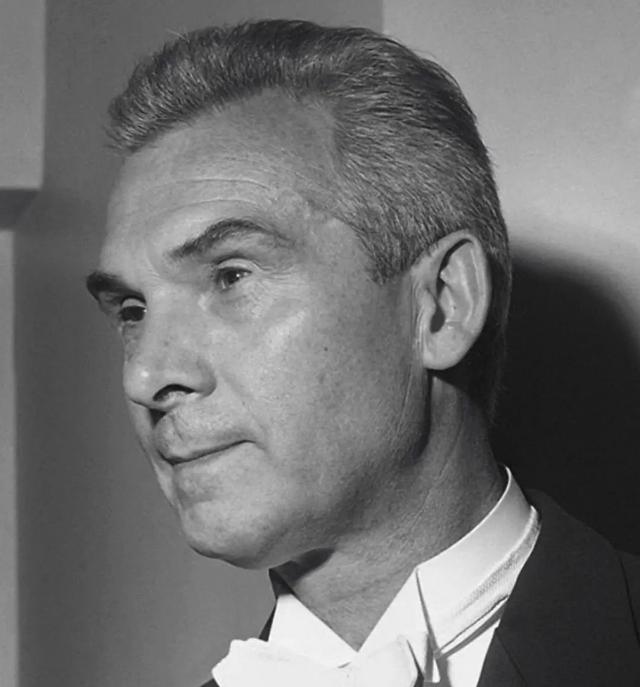
Rudolf Kempe was a well-known classical musician who specialized in the orchestral genres and came from the thriving German city of Dresden. Kempe made an enduring impression on the music industry with his spellbinding talent and compelling performances.
Kempe's mastery of music was demonstrated by his facile handling of the subtleties of classical pieces, which he brought to life with his passionate interpretations. He had unmatched control over the ensemble, skilfully leading the musicians and eliciting every last drop of feeling from the composition.
Kempe was renowned for his lively and animated conducting manner and had a talent for bringing life to his performances. He conducted the orchestra with dexterity and grace, weaving a symphonic tapestry that strongly affected the audience.
Kempe's musical career served as proof of his unwavering commitment to and love of his trade. He was a great master of his craft, with a natural grasp of the nuances of symphonic and classical music. Kempe enthralled audiences with his charismatic stage presence and rich musicality, leaving them in awe of his talent.
In conclusion, German classical musician Rudolf Kempe had a major influence on the orchestral subgenre. His legacy as a musical legend was solidified by his tremendous talent, emotive conducting style, and unrelenting commitment to his craft. His legacy has inspired and enthralled music lovers all across the world ever since.
Rudolf Kempe, a renowned conductor of classical and orchestral music from Dresden, Germany, has irrevocably changed the face of music with his outstanding interpretations and performances. His most well-known songs include the following: "Brahms: Ein deutsches Requiem, Op. 45: I. Selig sind die da Leid tragen," "Strauss Jr., J.: Geschichten aus dem Wienerwald, Op. 325," "Serenade for Strings in E Major, Op. 22, B. 52: II. Tempo di valse," and "Serenade for Strings in E Major, Op. 22" are some examples. The pieces include the "Overture," "Strauss: An Alpine Symphony, Op. 64, TrV 233: Night," "Strauss, R: Ariadne auf Naxos, Op. 60, Prologue: Overture," "Mozart: Requiem in D Minor, K. 626: I. Introitus," "Wagner: Lohengrin, WWV 75, Act 1: Prelude (Langsam), "Violin Concerto No.
The way Kempe sang Brahms' "Ein deutsches Requiem" demonstrates his talent for bringing out the music's emotional complexity and savoring its gloomy beauty. In "Strauss Jr., J.: Geschichten aus dem Wienerwald," another standout tune, Kempe's expert conducting brings out the jovial and vibrant spirit of the Vienna woods. Kempe's skill at leading delicate and elegant melodies is on display in the Serenade for Strings in E Major, Op. 22, B. 52: II. Tempo di valse.
Along with these pieces, Kempe's versions of Wagner's "Lohengrin" Prelude and Mozart's "Requiem in D Minor" stand out for their potent and stirring performances. The Overture, Strauss' "An Alpine Symphony," and the Overture to "Ariadne auf Naxos" are some of Kempe's other top choices. The opening movement of the Violin Concerto No. 1 in G minor by Max Bruch is a particularly excellent example of Kempe's ability to work well with soloists and strike a balance between the orchestra and the solo instrument.
The reason Rudolf Kempe is so well-liked is that he captures the soul of each work, enabling listeners to lose themselves completely in the music. His performances are distinguished by clarity, compassion, and a profound comprehension of the authors' intentions. Kempe has left a lasting legacy in the realm of classical and orchestral music thanks to his prowess as a conductor.
The renowned German classical and orchestral musician Rudolf Kempe recently produced several enthralling pieces. The orchestral interpretations on his most recent record, "Dvorak: Symphony No. 8 - Beethoven: Prometheus Overture - Strauss: Tod und Verklarung (Live at the Royal Albert Hall, 1972) (2023)," are magnificent. Kempe's vast comprehension of the music comes to life with each tune he meticulously selects, mesmerizing listeners with his creativity.
Kempe has released not just his most recent album but also two fascinating singles. His orchestral performances of "Symphony No. 3 in F Major, Op. 90: III. Poco allegretto (2022)" and "Symphony No. 4 in E-Flat Major, WAB 104 'Romantic' (1886 Version, Nowak Edition): I. Bewegt, nicht zu schnell (2022)" demonstrate his capacity to elicit strong emotions. Kempe brings these classic works to life with his perfect timing and nuanced interpretations, making a lasting effect on his listeners.
In his most recent works, Kempe has demonstrated his commitment to upholding the purity of classical and symphonic music. He brings out the spirit of each composition by precision conducting and attention to detail, enabling listeners to experience the entire range of emotions expressed in the music. Rudolf Kempe's most recent album and singles help to maintain his position as a renowned artist in the world of classical and orchestral music.
(Note: Track titles or album release dates cannot be included due to the character limitation restriction. The details shown above, however, give a succinct overview of Rudolf Kempe's most recent songs and music albums.)
The well-known German classical and orchestral musician Rudolf Kempe has worked with a number of eminent musicians over the course of his career. With the Chor der St. Hedwigs-Kathedrale Berlin and the Berliner Philharmoniker, he worked on one of his most important projects, "Brahms: Ein deutsches Requiem, Op. 45: I. Selig sind die da Leid tragen." Their combined abilities produced an enthralling performance of Brahms' masterwork that highlighted Kempe's extraordinary directing abilities and the choir and orchestra's faultless performance.
Kempe also worked admirably with Johann Strauss II and the Wiener Philharmoniker on the opera "Strauss Jr., J.: Geschichten aus dem Wienerwald, Op. 325." This lovely waltz demonstrated Kempe's talent for highlighting the subtleties and grace of Strauss' works. The orchestra's full sound and Kempe's directing technique worked together to provide the audience a captivating musical experience.
Among Kempe's remarkable partnerships, "Serenade for Strings in E Major, Op. 22, B. 52: II. Tempo di valse" by Antonin Dvorak and the Munchner Philharmoniker stands out. The way they performed Dvorak's charming serenade demonstrated Kempe's aptitude for interpreting the composition's emotional and melodic elements. Under Kempe's direction, the Munchner Philharmoniker played with precision, producing a gripping performance that perfectly encapsulated Dvorak's composition.
These three partnerships show Kempe's ability to bring out the best in his fellow performers, even if his work with Wolfgang Amadeus Mozart, Richard Wagner, and other well-known artists was equally noteworthy. Kempe created magical musical experiences that continue to delight listeners all across the world through his expert conducting and the collaboration with the orchestras and choirs he worked with.
Viberate is a professional music analytics service that provides a complete data overview of Rudolf Kempe, covering audience data, Spotify playlists and stats, individual track performance, and cross-platform metrics including Spotify, YouTube, streaming, and radio airplay analytics. The platform also includes full social media analytics across Instagram, TikTok, and Facebook, as well as insights from Apple Music playlists, SoundCloud, Beatport, Shazam, and Deezer, alongside artist charts, streaming charts, genre charts, and genre analytics to support A&R discovery, benchmarking, and strategic decision-making.
