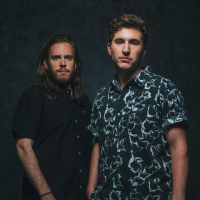
Ross Ellis

Country
Contemporary Country
 Viberate Rank: 188128
 Viberate Rank: 188128
 Monthly ListenersFollowers
 Subscribers
 Followers
 Followers
 FansTop Spotify Songs
| Track | 7-Day Streams | |
|---|---|---|
1 | 5.11K | |
2 | 5.01K | |
3 | 1.76K | |
4 | 1.22K | |
5 | 733 |
Top YouTube VideosMonthly ListenersFeatured in Playlists| Playlist | Followers | |
|---|---|---|
1 | MERICA🇺🇸🍻 Kamryn Stitz | 130.45K |
2 | Today’s Country 2026 trosser6258 | 101.90K |
3 |  New Country 2026 Travis James | 82.67K |
4 |  Country 2026 (Country Music Hits Updated Weekly) Ryan Robinette | 51.84K |
5 |  Weekly Top Country Hits Chad Krivanec | 50.06K |
Audience| City | Monthly Listeners | |
|---|---|---|
1 | | 503 |
2 | | 497 |
3 |  | 448 |
4 | | 445 |
5 |  | 395 |
See full performance history, audience data, playlist activity, rankings, comparisons, and more in Viberate music analytics. Start with a free trial, then continue with a paid plan.
Ross Ellis’ Spotify BioRoss was born and raised in the small town of Monterey, Louisiana. At fifteen years old, he started the band, “Wayside” with his cousin and some high school friends. The band gained a strong following throughout Ross’s high school and college years, playing venues across Louisiana and Mississippi. After graduating from University of Louisiana at Monroe, Ross turned down multiple job offers to instead move to Nashville. After a month of living out of hotels, Ross met singer/songwriters, Jameson Rodgers and Hunter Phelps, who were looking for a third roommate. After less than a year of working part time jobs, evening and weekend writing, and playing writer’s rounds, Ross caught the attention of BMI’s Bradley Collins. A short time later, Ross signed at Big Deal Music. In late 2017, Ross was named Sirius XM’s latest “Highway Find” with the release of his first single, “Home for the Weekend.” Most recently, Ross released the hauntingly powerful single, “Ghosts,” which has reached the top 10… most played songs on The Highway. He also celebrated a deeply personal milestone when fellow Louisiana native, Tim McGraw, released in October of 2018 the new single, “Neon Church,” co-written by Ellis, Ben Goldsmith and Ben Stennis. While continuing to write, Ross is currently touring alongside other Nashville staples, including Brett Young, Chase Rice, Raelynn, and Eli Young Band.
Viberate is a music analytics platform built for A&Rs, artist managers, labels, booking agents, marketers, and artists.
It helps music professionals track artist growth, analyze audience data, monitor playlist activity, compare artists, follow song performance, and identify opportunities across the music market.
Public artist pages provide a free preview of selected artist data. Paid plans provide access to deeper analytics, historical data, charts, comparisons, playlist tools, exports, alerts, reports, and additional professional features.
Yes. Public Viberate artist pages provide selected artist analytics and music data for free.
Viberate also offers a 7-day free trial of the full platform. A credit card is required to start the trial. The trial includes access to the complete product so users can test deeper artist analytics, historical views, playlist insights, comparisons, charts, exports, alerts, and reporting features before choosing a paid plan.
Viberate provides artist analytics across streaming, playlists, social media, video, radio airplay, songs, and audience markets.
Users can analyze Spotify performance, Spotify and Apple Music playlists, YouTube activity, TikTok and Instagram growth, radio spins, song performance, audience locations, demographics, rankings, and overall artist momentum.
Artist profiles also connect to music charts, similar artists, and comparison tools, helping users benchmark performance and evaluate artists in context.
Viberate updates key artist and track data daily.
For followed artists and tracks, selected data is refreshed multiple times per day. This helps teams monitor playlist changes, streaming movement, audience growth, releases, and campaign performance with more current data.
Update frequency can vary depending on the metric and data source.
Yes. Viberate lets users compare up to five artists side by side across streaming, social media, audience, and engagement metrics.
Users can compare fanbase growth, audience demographics, locations, Spotify performance, social metrics, and other artist data over selected time periods.
Artist comparison can be used for A&R scouting, benchmarking, booking decisions, campaign planning, and evaluating artists with similar audiences or market positions.