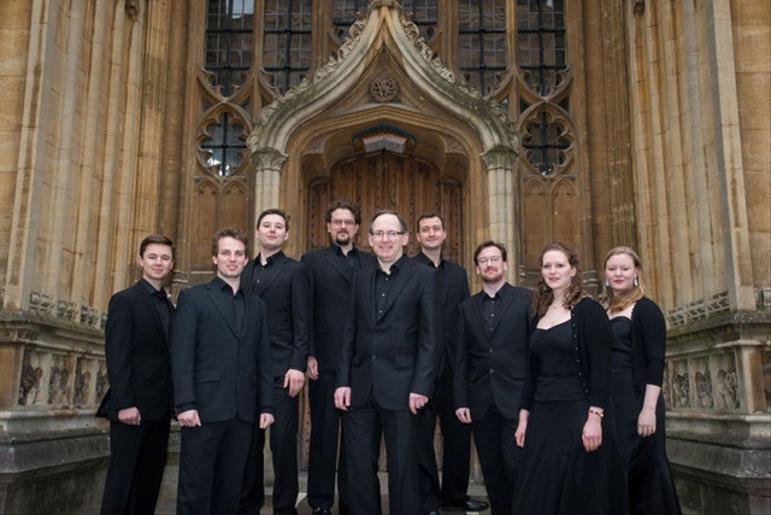
Robert Hollingworth

Classical
Orchestral
Choral
 Viberate Rank: 347499
 Viberate Rank: 347499
 Monthly ListenersFollowers
 Subscribers
 Followers
 Followers
 FansTop Spotify Songs
| Track | 7-Day Streams | |
|---|---|---|
1 | 3.16K | |
2 | 1.15K | |
3 | 708 | |
4 | 136 | |
5 | 109 |
Top YouTube VideosMonthly ListenersFeatured in Playlists| Playlist | Followers | |
|---|---|---|
1 |  Choir Classics Spotify | 302.01K |
2 |  Latin Catholic Chants baustinw420 | 6.59K |
3 |  Choral Chill Ollie Hooper | 6.50K |
4 |  Great British Baking Show Soundtrack SoundtrackStunners | 4.07K |
5 | Madrigals/Renaissance/Motets ms_opera_glam | 3.45K |
Audience| City | Monthly Listeners | |
|---|---|---|
1 | | 215 |
2 | | 41 |
3 |  | 38 |
4 |  | 36 |
5 |  | 32 |
See full performance history, audience data, playlist activity, rankings, comparisons, and more in Viberate music analytics. Start with a free trial, then continue with a paid plan.
Robert Hollingworth’s Spotify BioConductor Robert Hollingworth has been a major figure on the British early music scene since the mid-'80s through his leadership of the vocal group I Fagiolini. He has also led other choirs and been involved in various educational activities.
Like so many other figures in British vocal music, Hollingworth had his first musical performance experiences as a boy chorister, in his case, at Hereford Cathedral. He took violin and keyboard lessons before settling on a career in vocal music; he attended New College, Oxford University, majoring in music and singing and traveling widely with its choir. At Oxford, Hollingworth worked with the pioneering early music conductor Edward Higginbottom, who suggested that he create a new vocal ensemble of his own. The result was I Fagiolini, which gave its first concerts in 1986. The name, which means "the green beans" in Italian, resulted from a curious nickname for early music at Oxford: it was called "beany music" owing to the vegetarian proclivities… of many of its practitioners. Hollingworth went on for a postgraduate early music course at London's Guildhall School of Music and Drama, and since then, I Fagiolini has been in demand not only in the U.K. but far beyond. The group released the album Andrea Gabrieli: The Madrigal in Venice on the Chandos label in 2003, moving to Decca in 2011 for a recording of Alessandro Striggio's Mass in 40 Parts.
I Fagiolini and Hollingworth have toured the U.S., East Asia, and Africa and have appeared at the Proms concerts in London. Hollingworth has also recorded extensively with I Fagiolini, with albums released on the Erato, Metronome, and Chandos labels, including 2017's Monteverdi: The Other Vespers, a musical Vespers service reconstructed from late music by Monteverdi as well as works by other composers. In between all these activities, he has found time to work with larger choral groups, including the Leicester Bach Choir, the Netherlands Chamber Choir, the North German Radio Choir, and the National Chamber Choir of Ireland. Hollingworth has also directed a production of Monteverdi's L'Orfeo for Opera Zuid in the Netherlands, and he has worked with the early music ensembles Florilegium, The Bach Players, and Fretwork. He coached actor Joaquin Phoenix on conducting in the film Quills and has appeared on the BBC 2 and BBC 3 radio networks as a presenter.
Hollingworth is well known among ordinary choristers for his work with the Lacock Courses, educational programs for choral singers held in touristic places relevant to specific choral repertories. In 2019, Hollingworth and I Fagiolini moved to the Coro label for Leonardo: Shaping the Invisible, an exploration of musical resonances of the ideas of Leonardo da Vinci. Returning to Coro in 2023, Hollingworth and I Fagiolini issued a recording of Orazio Benevoli's Missa Tu es Petrus. ~ James Manheim, Rovi
Viberate is a music analytics platform built for A&Rs, artist managers, labels, booking agents, marketers, and artists.
It helps music professionals track artist growth, analyze audience data, monitor playlist activity, compare artists, follow song performance, and identify opportunities across the music market.
Public artist pages provide a free preview of selected artist data. Paid plans provide access to deeper analytics, historical data, charts, comparisons, playlist tools, exports, alerts, reports, and additional professional features.
Yes. Public Viberate artist pages provide selected artist analytics and music data for free.
Viberate also offers a 7-day free trial of the full platform. A credit card is required to start the trial. The trial includes access to the complete product so users can test deeper artist analytics, historical views, playlist insights, comparisons, charts, exports, alerts, and reporting features before choosing a paid plan.
Viberate provides artist analytics across streaming, playlists, social media, video, radio airplay, songs, and audience markets.
Users can analyze Spotify performance, Spotify and Apple Music playlists, YouTube activity, TikTok and Instagram growth, radio spins, song performance, audience locations, demographics, rankings, and overall artist momentum.
Artist profiles also connect to music charts, similar artists, and comparison tools, helping users benchmark performance and evaluate artists in context.
Viberate updates key artist and track data daily.
For followed artists and tracks, selected data is refreshed multiple times per day. This helps teams monitor playlist changes, streaming movement, audience growth, releases, and campaign performance with more current data.
Update frequency can vary depending on the metric and data source.
Yes. Viberate lets users compare up to five artists side by side across streaming, social media, audience, and engagement metrics.
Users can compare fanbase growth, audience demographics, locations, Spotify performance, social metrics, and other artist data over selected time periods.
Artist comparison can be used for A&R scouting, benchmarking, booking decisions, campaign planning, and evaluating artists with similar audiences or market positions.