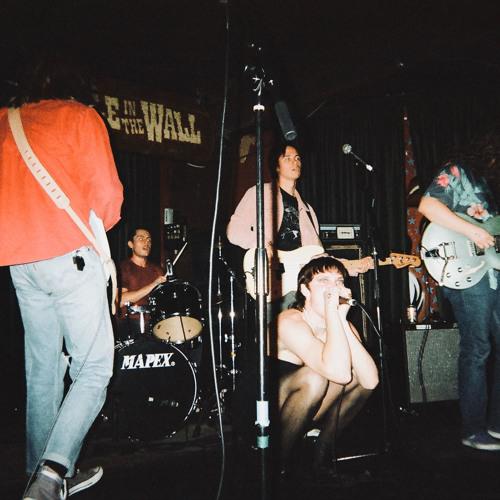
RNIE

Pop
Indie Pop
Darkwave
 Viberate Rank: 273124
 Viberate Rank: 273124
 Monthly ListenersFollowers
 Subscribers
 Followers
 Followers
 FansTop YouTube Videos
| Video | 7-Day Views | |
|---|---|---|
1 | 13 | |
2 | 1 | |
3 | 1 |
Monthly ListenersFeatured in Playlists| Playlist | Followers | |
|---|---|---|
1 |  Compact Cassette David Dean Burkhart | 60.73K |
2 |  An actual good indie playlist Mehyo | 27.04K |
3 |  alone again chapeleta | 11.90K |
4 |  acid6host mementodie | 9.27K |
5 |  We're Going on an Adventure Valspire Family | 8.55K |
Audience| City | Monthly Listeners | |
|---|---|---|
1 | | 536 |
2 | | 267 |
3 | | 229 |
4 | | 193 |
5 | | 191 |
See full performance history, audience data, playlist activity, rankings, comparisons, and more in Viberate music analytics. Start with a free trial, then continue with a paid plan.
RNIE’s Spotify BioRNIE is black. RNIE is gay. RNIE (pronounced “Ernie”) is the musical moniker of Lamont Brown. Born in Pittsburgh, PA, Brown would go on to spend his childhood moving around the Northern VA area with his father until later settling in NC with his mother in 2007. There, his interest in music began to spark. The remainder of his high school years were spent searching for music through skate videos and internet dives. Brown began to find his musical identity. Picking up bass the summer of 2011, he joined his first band early the next year. Diving head first into the Charlotte, NC music scene and the world of DIY, Brown’s love of music continued to evolve into an interest for recording. Buying a small interface he began to track in his bedroom bringing together the EP ‘Figi Afterglow’ in Jan 2015. Pulling from alternative, post punk, and indie ideals the band’s sound began to take shape. RNIE would begin to expand its sound by bringing delayed pitch bent guitars and entrancing loops into… the mix. December 2018 all of these sounds found their home on the band’s debut LP ‘Citrus’. Continuing to grow the band’s discography Brown began to push his love of tones further as he wrote small pockets of music during his time living in NYC. The songs were mixed after Brown’s move to Philadelphia in 2020 and released as an EP ‘PONCHO’. “A specific sound is never in mind, just the goal of making music that is satisfying at the end of the day,” as Brown weaves the discography of his life.
Viberate is a music analytics platform built for A&Rs, artist managers, labels, booking agents, marketers, and artists.
It helps music professionals track artist growth, analyze audience data, monitor playlist activity, compare artists, follow song performance, and identify opportunities across the music market.
Public artist pages provide a free preview of selected artist data. Paid plans provide access to deeper analytics, historical data, charts, comparisons, playlist tools, exports, alerts, reports, and additional professional features.
Yes. Public Viberate artist pages provide selected artist analytics and music data for free.
Viberate also offers a 7-day free trial of the full platform. A credit card is required to start the trial. The trial includes access to the complete product so users can test deeper artist analytics, historical views, playlist insights, comparisons, charts, exports, alerts, and reporting features before choosing a paid plan.
Viberate provides artist analytics across streaming, playlists, social media, video, radio airplay, songs, and audience markets.
Users can analyze Spotify performance, Spotify and Apple Music playlists, YouTube activity, TikTok and Instagram growth, radio spins, song performance, audience locations, demographics, rankings, and overall artist momentum.
Artist profiles also connect to music charts, similar artists, and comparison tools, helping users benchmark performance and evaluate artists in context.
Viberate updates key artist and track data daily.
For followed artists and tracks, selected data is refreshed multiple times per day. This helps teams monitor playlist changes, streaming movement, audience growth, releases, and campaign performance with more current data.
Update frequency can vary depending on the metric and data source.
Yes. Viberate lets users compare up to five artists side by side across streaming, social media, audience, and engagement metrics.
Users can compare fanbase growth, audience demographics, locations, Spotify performance, social metrics, and other artist data over selected time periods.
Artist comparison can be used for A&R scouting, benchmarking, booking decisions, campaign planning, and evaluating artists with similar audiences or market positions.