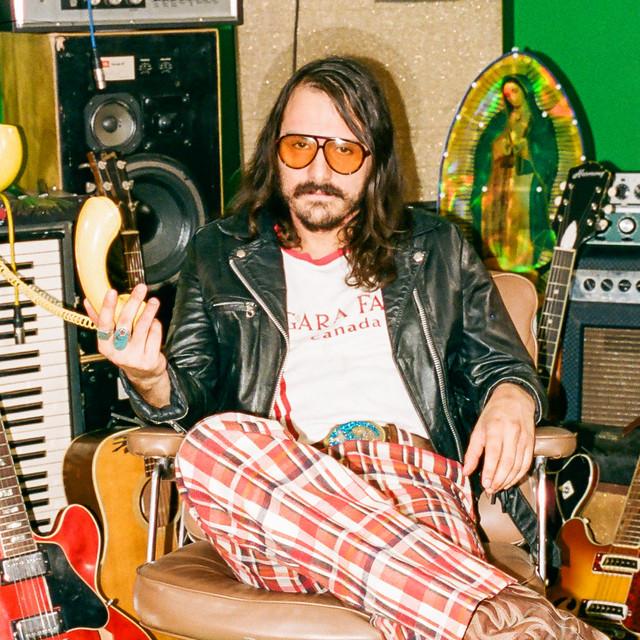
Richard Swift

Rock
Folk Rock
 Viberate Rank: 108528
 Viberate Rank: 108528
 Monthly ListenersFollowers
 Subscribers
 Followers
 Followers
 FansTop Spotify Songs
| Track | 7-Day Streams | |
|---|---|---|
1 | 25.37K | |
2 | 8.41K | |
3 | 5.47K | |
4 | 4.75K | |
5 | 3.93K |
Top YouTube VideosMonthly ListenersFeatured in Playlists| Playlist | Followers | |
|---|---|---|
1 |  Oceanvs Orientalis' track IDs Spotify | 93.47K |
2 |  Indications' Inspirations Durand Jones & The Indications | 35.68K |
3 |  Upstate Spotify | 32.11K |
4 |  Spiritual Songs Josh Garrels | 27.13K |
5 |  Very Beautiful Songs Alex Delany | 24.83K |
Audience| City | Monthly Listeners | |
|---|---|---|
1 | | 2.81K |
2 | | 2.36K |
3 |  | 2.26K |
4 | | 2.02K |
5 | | 1.98K |
See full performance history, audience data, playlist activity, rankings, comparisons, and more in Viberate music analytics. Start with a free trial, then continue with a paid plan.
Richard Swift’s Spotify BioAn in-demand producer and sideman as well as an idiosyncratic singer/songwriter, Richard Swift became an increasingly influential member of the indie music community throughout the 2000s and 2010s. A dedicated student of American pop music history, his sepia-toned style was most conspicuously influenced by the Tin Pan Alley era, Motown, and Phil Spector's Wall of Sound. Many of his songs also incorporated the freewheeling spirit of Captain Beefheart and the acerbic wit of fellow traditional pop descendants like Randy Newman and Harry Nilsson. Sometimes heartbreakingly earnest and at other times impishly playful, he often combined the two in both his music and lyrics. At the same time, he experimented with stylized production involving heavy reverb and psychedelic effects beginning with his first two solo releases, 2001's Walking Without Effort (released in 2005) and 2003's The Novelist. By the mid-2000s, Swift was establishing himself as a producer; he went on to record albums with… artists spanning Sylvie Lewis, Damien Jurado, Jessie Baylin, Guster, and Nathaniel Rateliff & the Night Sweats. Also finding work as a studio and touring musician, he played with bands including the Shins, the Black Keys, and the Arcs during the 2010s. Following a brief illness, Swift died in mid-2018 at the age of 41. Typically eclectic and haunting, his final solo album, The Hex, was released posthumously the same year.
Born Ricardo Ochoa in California in 1977, Swift was raised partly in California, Minnesota, Utah, and Cottage Grove, Oregon, where he remained based for most of his adulthood. He spent much of his youth locked in his room with a four-track recorder, a device that -- along with a computer -- the artist used loyally throughout his career. Cutting his teeth in the Christian music scene of the Pacific Northwest as a young adult, he worked as worship leader and played in Christian groups, recording a worship album in the late '90s that led to a record deal with California-based Metro One. By the time he released a solo album under the name Dicky Ochoa in 2000, he was married and had started a family. Then temporarily based in Southern California, he provided keyboards for shoegazers Starflyer 59 in the early 2000s while recording his first two secular solo albums as Richard Swift: Walking Without Effort and The Novelist. The Novelist was issued by Velvet Blue Music in 2003. Two years later, Secretly Canadian paired it with his previously unreleased 2001 album on the compilation The Novelist/Walking Without Effort. He would remain with the label for the rest of his solo career. His third album, Dressed Up for the Letdown, arrived in 2007, with the double EP Richard Swift as Onasis following a year later. As he continued to take on more and more work as a producer, he released the solo EP Ground Trouble Jaw in 2008 and the full-length Atlantic Ocean in 2009.
Swift began a fruitful relationship with fellow singer/songwriter Damien Jurado when he produced Jurado's 2010 album Saint Bartlett. The pair reunited later that year for a weekend get-together that resulted in the unplanned covers album Other People's Songs, Vol. 1. They released the home recording as a temporary, free digital download. Swift's own seven-track EP, Walt Wolfman, arrived in 2011 and was followed by further production work for Jurado (including his entire Maraqopa trilogy) as well as for bands including Foxygen, Tennis, and Guster. Meanwhile, Swift joined the Shins, staying on as a member from 2011-2016. He also toured on bass and backing vocals for the Black Keys in 2014 and played with Dan Auerbach's the Arcs beginning in 2015. In 2016, Other People's Songs, Vol. 1 received an official physical release by Secretly Canadian, and the Pretenders album Alone featured several contributions from Swift, including performances and artwork. The following year, Joyful Noise issued a vinyl single of the previously unreleased "4 Yr Luv" with B-side by Tall Tall Trees as part of a series pairing roster members with their musical influences.
Following an illness stemming from alcoholism-related complications, Swift died in Tacoma, Washington on July 3, 2018. His final album, The Hex, was released digitally that September with physical formats following in December 2018. A few months later, Secretly Canadian issued a compilation of the EPs Ground Trouble Jaw and Walt Wolfman. The more inclusive 4 Hits & a Miss: The Essential Richard Swift followed on the label in late 2024. ~ Marcy Donelson & James Christopher Monger, Rovi
Viberate is a music analytics platform built for A&Rs, artist managers, labels, booking agents, marketers, and artists.
It helps music professionals track artist growth, analyze audience data, monitor playlist activity, compare artists, follow song performance, and identify opportunities across the music market.
Public artist pages provide a free preview of selected artist data. Paid plans provide access to deeper analytics, historical data, charts, comparisons, playlist tools, exports, alerts, reports, and additional professional features.
Yes. Public Viberate artist pages provide selected artist analytics and music data for free.
Viberate also offers a 7-day free trial of the full platform. A credit card is required to start the trial. The trial includes access to the complete product so users can test deeper artist analytics, historical views, playlist insights, comparisons, charts, exports, alerts, and reporting features before choosing a paid plan.
Viberate provides artist analytics across streaming, playlists, social media, video, radio airplay, songs, and audience markets.
Users can analyze Spotify performance, Spotify and Apple Music playlists, YouTube activity, TikTok and Instagram growth, radio spins, song performance, audience locations, demographics, rankings, and overall artist momentum.
Artist profiles also connect to music charts, similar artists, and comparison tools, helping users benchmark performance and evaluate artists in context.
Viberate updates key artist and track data daily.
For followed artists and tracks, selected data is refreshed multiple times per day. This helps teams monitor playlist changes, streaming movement, audience growth, releases, and campaign performance with more current data.
Update frequency can vary depending on the metric and data source.
Yes. Viberate lets users compare up to five artists side by side across streaming, social media, audience, and engagement metrics.
Users can compare fanbase growth, audience demographics, locations, Spotify performance, social metrics, and other artist data over selected time periods.
Artist comparison can be used for A&R scouting, benchmarking, booking decisions, campaign planning, and evaluating artists with similar audiences or market positions.