 Viberate
Reinbert de Leeuw
 NLDClassical, Chamber Music
N/A monthly listeners
 NLDClassical, Chamber Music

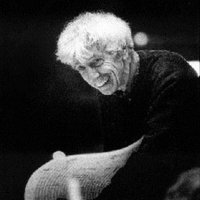
A Dutch musician named Reinbert de Leeuw made a great impact on the classical and chamber music genres. He was renowned for his in-depth familiarity with classical music as well as his distinctive approach to modern pieces. He was an excellent conductor of orchestras and ensembles, and his piano playing was praised for its subtlety and emotional depth.
De Leeuw started out as a pianist and immediately rose to fame for his inventive approaches to classical music. His performances of Erik Satie's pieces are regarded as among of the composer's best interpretations since he was particularly drawn to the composer's music. Later in his career, de Leeuw developed as a supporter of contemporary composers and played a crucial role in expanding the audience for their works.
De Leeuw stayed dedicated to the chamber music genre throughout his career and was a fervent supporter of its significance in the canon of classical music. He thought that chamber music offered a special chance for artists to interact with each other and audiences in a more personal way. For many years to come, his contributions to the chamber music genre will be honored.
A Dutch classical and chamber music performer named Reinbert de Leeuw has a number of well-known songs in his discography. Among his top tracks are "Gymnopedie No. 1," "Petite ouverture a danser (Ed. Caby)," "3 Gymnopedies: No.1," "Gnossiennes: No. 2 - Avec etonnement," "Gnossiennes: No. 3 - Lent," "Gnossiennes: No. 5," "Gymnopedie No. 2," "Gnossiennes: No. 4," "3 Gymnopedies: No.3," and "3 Sarabandes: No. 1."
One of the most well-known pieces of classical music is the calm, contemplative piano composition "Gymnopedie No. 1". It has a straightforward melody that is heard repeatedly and contributes to the piece's quiet and tranquil feel. A happy and energetic track called "Petite Ouverture a Danser (Ed. Caby)" demonstrates de Leeuw's aptitude for making music that is vibrant and entertaining. Another keyboard composition with a reputation for simplicity and calm is "3 Gymnopedies: No.1". Its status as a classic piece of music has been cemented by the various movies and TV shows in which it has appeared.
De Leeuw's "Gnossiennes" collection of songs is distinguished by its slow, deliberate tempo, which fosters an atmosphere of reflection and introspection. The more lively piano composition "Gymnopedie No. 2" has a slightly more intricate melody than its predecessor. The piece "3 Sarabandes: No. 1" exemplifies de Leeuw's ability to write music that evokes strong emotions.
Overall, the simplicity and thoughtfulness of Reinbert de Leeuw's music are what set it apart, and this is also true of his best songs. Whether you enjoy chamber music or classical music, de Leeuw's compositions are sure to make an impression.
Dutch composer and conductor Reinbert de Leeuw has long been engaged in the classical and chamber music genres. The release of his most recent record, "Der Nachtliche Wanderer | Abschied," is scheduled for 2023. Among others, the album includes compositions by Schubert, Brahms, and Mahler. The music on the album is a stunning homage to German composers from the Romantic era, and Reinbert de Leeuw does a wonderful job of performing it.
Mahler: Das Lied von der Erde (Arranged for Small Orchestra)," an album by Reinbert de Leeuw, was released in 2020. The record contains a minor orchestral arrangement of Gustav Mahler's well-known composition. Reinbert de Leeuw's skill as an arranger and conductor is showcased on the CD. Fans of Mahler's music and those who like orchestral music must listen to the album.
"Liszt: Via Crucis," an album by Reinbert de Leeuw from 2019, is a stunning selection of Franz Liszt's pieces. Liszt's Via Crucis, a composition for choir and organ, is interpreted by Reinbert de Leeuw on the album. The record is a lovely homage to Liszt's compositions, and Reinbert de Leeuw's performance of the works is superb.
The singles "Lieder, Op. 2: Empfangnis" from 2018, "Donaueschinger Musiktage 2006, Vol. 4" from 2013, "Shostakovich: Sonata, Wintersonate" from 2009, and "De Tijd" from 2005 were all released by Reinbert de Leeuw in recent years. Each of these singles is a gorgeous work of music that demonstrates Reinbert de Leeuw's flexibility as a conductor and composer. The most recent pieces by Reinbert de Leeuw are definitely worth checking out if you enjoy classical and chamber music.
Renowned Dutch classical and chamber pianist Reinbert de Leeuw has performed on numerous stages during his career. His performances in the 'Into The Great Wide Open' and 'Wonderfeel' festivals, which have both grown into must-attend occasions for music fans in the Netherlands, are among his most illustrious ones.
The 'Into The Great Wide Open' festival's De Leeuw performance stood out. The Dutch island of Vlieland serves as the festival's picturesque setting and diversified line-up. De Leeuw's performance lived up to the festival's stellar reputation and captivated the crowd with his mastery of the piano and interpretation of classical music.
De Leeuw's debut at the Paradiso Amsterdam, a concert venue renowned for its historic design and acoustics, was another noteworthy performance. The location is well-liked by music fans and has played host to many well-known musicians over the years. De Leeuw's performance was no exception, and the audience was spellbound by the entrancing sound of his piano playing as it filled the hall.
Both of De Leeuw's performances—at the Wonderfeel festival and at TivoliVredenburg—were outstanding. While TivoliVredenburg is a well-known location that has hosted numerous worldwide musicians, the "Wonderfeel" festival is well-known for its emphasis on chamber music. De Leeuw's performances in both locations were evidence of his talent and love for what he did.
Overall, Reinbert de Leeuw's appearances at prestigious Dutch festivals and venues have cemented his status as one of the nation's most renowned classical and chamber music performers. His great talent and artistry are evident in his capacity to enthrall listeners with his piano playing and interpretation of classical music.
The Dutch classical and chamber music performer Reinbert de Leeuw has worked with a wide range of creatives during the course of his career. The compositions "Gymnopedie No. 1," "Petite ouverture a danser (Ed. Caby)," "Gnossiennes: No. 2 - Avec etonnement," "3 Sarabandes: No. 1," and "Priere" by Erik Satie are among the most significant collaborations.
Satie's "Gymnopedie No. 1," a well-known piano work that de Leeuw has performed and recorded countless times, is one of the most prominent collaborations. He adds a distinctive perspective to the composition, highlighting its reflective and melancholy aspects. Satie's "Priere," which de Leeuw delivers with tremendous sensitivity and a thorough comprehension of the piece's spiritual essence, is another noteworthy collaboration.
De Leeuw's work with Satie's pieces demonstrates his excellent musicianship and capacity to capture the soul of a piece overall. The richness and depth of Satie's works are revealed by his delicate and nuanced interpretations.
Viberate is a professional music analytics service that provides a complete data overview of Reinbert de Leeuw, covering audience data, Spotify playlists and stats, individual track performance, and cross-platform metrics including Spotify, YouTube, streaming, and radio airplay analytics. The platform also includes full social media analytics across Instagram, TikTok, and Facebook, as well as insights from Apple Music playlists, SoundCloud, Beatport, Shazam, and Deezer, alongside artist charts, streaming charts, genre charts, and genre analytics to support A&R discovery, benchmarking, and strategic decision-making.
