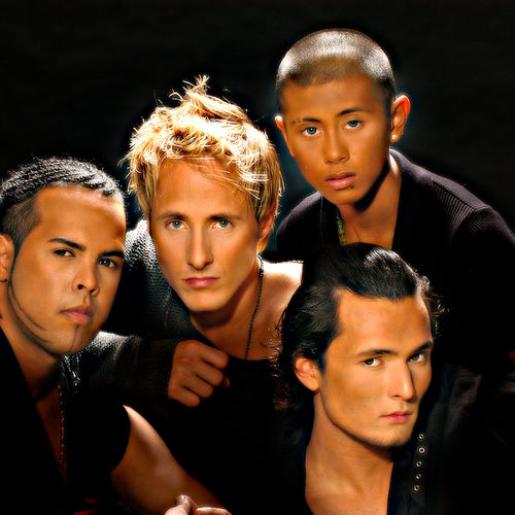
Rapsoul

Hip Hop
Contemporary Hip Hop
Mainstream Pop
 Viberate Rank: 133991
 Viberate Rank: 133991
 Monthly ListenersFollowers
 Subscribers
 Followers
 Followers
 FansTop Spotify Songs
| Track | 7-Day Streams | |
|---|---|---|
1 | 13.97K | |
2 | 4.37K | |
3 | 3.62K | |
4 | 3.55K | |
5 | 2.60K |
Top YouTube VideosMonthly ListenersFeatured in Playlists| Playlist | Followers | |
|---|---|---|
1 | larryontheroad larryontheroad | 19.45K |
2 | Ruhige Lieder nadja.sl_ | 16.38K |
3 |  Deutsche Hits der 2000er my.charts.music | 13.33K |
4 | Deutsche Musik pruchniesia | 12.32K |
5 |  DHÉMIS. DHÉMIS | 10.68K |
Audience| City | Monthly Listeners | |
|---|---|---|
1 | | 3.73K |
2 | | 3.47K |
3 | | 3.41K |
4 | | 2.56K |
5 | | 2.45K |
See full performance history, audience data, playlist activity, rankings, comparisons, and more in Viberate music analytics. Start with a free trial, then continue with a paid plan.
Rapsoul’s Spotify BioMixing boy band sensibilities with hip-hop influences, Rapsoul have distinguished themselves as Germany's leading male vocal trio. The group's two original members, Jan-Markus Färger and Steven Neumann, grew up together in Frankfurt, drawn together by their mutual love of music. As their interests turned to urban music, Färger began writing rap lyrics and Neumann composed tracks. The pair formed an official duo, Dreckskind und Pechvogel (Färger taking the moniker Dreckskind and Neumann performing as Pechvogel), releasing their debut EP, LebensArt, in April of 2004. As the duo performed more regularly, they became more connected with musicians in the region. They soon met vocalist C.J. Taylor, who they invited to join their group. With the addition of Taylor, the group was renamed Rapsoul. The group caught a break in 2005 when its remix of the Glashaus single "Du" was put on heavy rotation on the popular German station Planet Radio. An offer for a record deal with Gun Records (Sony/BMG)… was quickly followed by an invitation to open for the Backstreet Boys on their tour of Germany, Austria, and Switzerland. Though the band's debut single, "Verzweifelt," tanked, peaking at number 23 on German charts, Rapsoul's subsequent single, "Gott Schenk Ihr Flügel," hit charts at number two, as did their debut record, Unbeschreiblich. Enjoying international popularity thanks to their association with the Backstreet Boys and a successful debut record, Rapsoul headlined their own tour in September of 2006. The band's 2007 release, Achterbahn, experienced similar initial chart success, followed by the Rapsoul Clubtour, which took the group through important nightclubs all over Germany. ~ Evan C. Gutierrez, Rovi
Viberate is a music analytics platform built for A&Rs, artist managers, labels, booking agents, marketers, and artists.
It helps music professionals track artist growth, analyze audience data, monitor playlist activity, compare artists, follow song performance, and identify opportunities across the music market.
Public artist pages provide a free preview of selected artist data. Paid plans provide access to deeper analytics, historical data, charts, comparisons, playlist tools, exports, alerts, reports, and additional professional features.
Yes. Public Viberate artist pages provide selected artist analytics and music data for free.
Viberate also offers a 7-day free trial of the full platform. A credit card is required to start the trial. The trial includes access to the complete product so users can test deeper artist analytics, historical views, playlist insights, comparisons, charts, exports, alerts, and reporting features before choosing a paid plan.
Viberate provides artist analytics across streaming, playlists, social media, video, radio airplay, songs, and audience markets.
Users can analyze Spotify performance, Spotify and Apple Music playlists, YouTube activity, TikTok and Instagram growth, radio spins, song performance, audience locations, demographics, rankings, and overall artist momentum.
Artist profiles also connect to music charts, similar artists, and comparison tools, helping users benchmark performance and evaluate artists in context.
Viberate updates key artist and track data daily.
For followed artists and tracks, selected data is refreshed multiple times per day. This helps teams monitor playlist changes, streaming movement, audience growth, releases, and campaign performance with more current data.
Update frequency can vary depending on the metric and data source.
Yes. Viberate lets users compare up to five artists side by side across streaming, social media, audience, and engagement metrics.
Users can compare fanbase growth, audience demographics, locations, Spotify performance, social metrics, and other artist data over selected time periods.
Artist comparison can be used for A&R scouting, benchmarking, booking decisions, campaign planning, and evaluating artists with similar audiences or market positions.