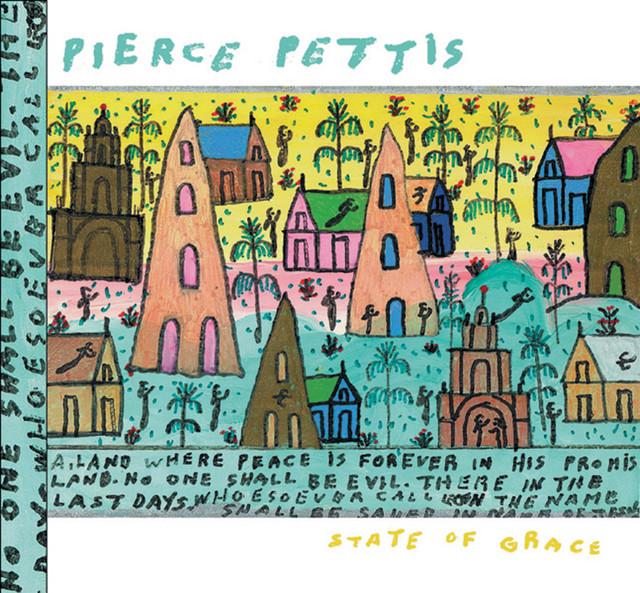
Pierce Pettis

Rock
Folk Rock
Mainstream Pop
 Viberate Rank: 346530
 Viberate Rank: 346530
 Monthly ListenersFollowers
 Subscribers
 Followers
 Followers
 FansTop Spotify Songs
| Track | 7-Day Streams | |
|---|---|---|
1 | 125 | |
2 | 124 | |
3 | 93 | |
4 | 68 | |
5 | 63 |
Top YouTube Videos| Video | 7-Day Views | |
|---|---|---|
1 | 18 | |
2 | 8 | |
3 | 5 | |
4 | 5 | |
5 | 3 |
Monthly ListenersFeatured in Playlists| Playlist | Followers | |
|---|---|---|
1 | All Windham Hill Winter Solstice David R. Anderson | 1.88K |
2 |  NO KINGS - Protest Songs Steve Cohen | 1.23K |
3 |  Smithsonian Folkways Recordings Full Catalogue Part 1 Evan Davies-Velie | 1.14K |
4 | Ultimate Bob Dylan Covers- The Original zenreader | 1.05K |
Audience| City | Monthly Listeners | |
|---|---|---|
1 | | 29 |
2 | | 27 |
3 | | 24 |
4 | | 21 |
5 | | 15 |
See full performance history, audience data, playlist activity, rankings, comparisons, and more in Viberate music analytics. Start with a free trial, then continue with a paid plan.
Pierce Pettis’ Spotify BioYou know you've got a shot when Joan Baez covers one of your songs. That's what sparked the career of Alabama singer-songwriter Pierce Pettis in 1979 when Baez chose to include "Song at the End of the Movie" on her Honest Lullaby. From there, Pettis was involved with the Fast Folk movement in New York in the '80s alongside artists such as Shawn Colvin and Suzanne Vega. He continued to write songs and eventually embarked on his solo career in 1987 with the independent release of Moments, an album which some still consider his finest. Following that, Pettis made his way onto High Street Records, issuing four releases between 1991 and 1996. Tinseltown, While the Serpent Lies Sleeping, Chase the Buffalo, and Making Light of It all garnered much critical praise, but failed to find a widespread audience. What Pettis did find were fans in other artists who began adding his original tunes to their own repertoires. Dar Williams snagged "Family" for her Mortal City disc, while Garth Brooks tappe…d "You Move Me" for his hit Sevens. Maintaining his status as a songwriter has always been a focus for Pettis, from his time at Muscle Shoals Sound Studios to his work as a staff writer for PolyGram Publishing in Nashville. Making his name as an artist is another matter, and one that Pettis continues to pursue. In 1998, he aimed himself in a slightly different direction, he signed on with Compass Records and released Everything Matters. A fine collection of poignant character sketches, Everything Matters has a more refined, mature sound than previous efforts, perhaps due to the production of Grammy winner Gordon Kennedy who is best known for his work on Eric Clapton's "Change the World." ~ Kelly McCartney
Viberate is a music analytics platform built for A&Rs, artist managers, labels, booking agents, marketers, and artists.
It helps music professionals track artist growth, analyze audience data, monitor playlist activity, compare artists, follow song performance, and identify opportunities across the music market.
Public artist pages provide a free preview of selected artist data. Paid plans provide access to deeper analytics, historical data, charts, comparisons, playlist tools, exports, alerts, reports, and additional professional features.
Yes. Public Viberate artist pages provide selected artist analytics and music data for free.
Viberate also offers a 7-day free trial of the full platform. A credit card is required to start the trial. The trial includes access to the complete product so users can test deeper artist analytics, historical views, playlist insights, comparisons, charts, exports, alerts, and reporting features before choosing a paid plan.
Viberate provides artist analytics across streaming, playlists, social media, video, radio airplay, songs, and audience markets.
Users can analyze Spotify performance, Spotify and Apple Music playlists, YouTube activity, TikTok and Instagram growth, radio spins, song performance, audience locations, demographics, rankings, and overall artist momentum.
Artist profiles also connect to music charts, similar artists, and comparison tools, helping users benchmark performance and evaluate artists in context.
Viberate updates key artist and track data daily.
For followed artists and tracks, selected data is refreshed multiple times per day. This helps teams monitor playlist changes, streaming movement, audience growth, releases, and campaign performance with more current data.
Update frequency can vary depending on the metric and data source.
Yes. Viberate lets users compare up to five artists side by side across streaming, social media, audience, and engagement metrics.
Users can compare fanbase growth, audience demographics, locations, Spotify performance, social metrics, and other artist data over selected time periods.
Artist comparison can be used for A&R scouting, benchmarking, booking decisions, campaign planning, and evaluating artists with similar audiences or market positions.