Philip Bailey

R&B
Contemporary R&B
Folk Rock
Funk Rock
 Viberate Rank: 6323
 Viberate Rank: 6323
 Monthly ListenersFollowers
 Subscribers
 Followers
 Followers
 FansTop Spotify Songs
| Track | 7-Day Streams | |
|---|---|---|
1 | 4.39M | |
2 | 74.27K | |
3 | 33.03K | |
4 | 5.23K | |
5 | 4.61K |
Top YouTube VideosMonthly ListenersFeatured in Playlists| Playlist | Followers | |
|---|---|---|
1 |  All Out 80s Spotify | 12.07M |
2 |  Songs to Sing in the Shower Spotify | 7.57M |
3 |  Soft Rock Spotify | 3.55M |
4 |  80s Hits Spotify | 3.51M |
5 |  80s HITS | TOP 100 SONGS Filtr US | 2.90M |
Audience| City | Monthly Listeners | |
|---|---|---|
1 |  | 156.66K |
2 |  | 138.31K |
3 |  | 122.84K |
4 | | 112.22K |
5 |  | 101.36K |
See full performance history, audience data, playlist activity, rankings, comparisons, and more in Viberate music analytics. Start with a free trial, then continue with a paid plan.
Philip Bailey’s Spotify BioRenowned most for his zestful falsetto, Philip Bailey appeared in the early 1970s as the four-octave counterpart to Maurice White in Earth, Wind & Fire, the repeatedly multi-platinum, Grammy-winning band who elevated the art of performance to a spectacular level. In addition to singing and playing percussion, Bailey co-wrote some of EW&F's earliest hits, including "Evil" and "Shining Star," and by the end of the '70s extended his reach into production. Concurrent with the enduring EW&F, Bailey started a solo career in the early '80s that has roamed across R&B, jazz, gospel, and pop, illuminated by the number two Billboard Hot 100 hit "Easy Lover" (1984), the Grammy-winning gospel recording Triumph (1986), and the singer's most adventurous work, Love Will Find a Way (2019), which topped Billboard's jazz chart the year EW&F celebrated their 50th anniversary.
Philip Irvin Bailey began singing in church as a child in his native Denver. He remained in his hometown for college, studying at… Metropolitan State University and the University of Colorado. During this period, Bailey played in a band called Friends & Love. They opened for Earth, Wind & Fire, whose Maurice White consequently invited Bailey -- and eventually the singer and percussionist's bandmate, saxophonist Andrew Woolfolk -- to be part of his group's overhauled lineup. Bailey joined in time to cut the third EW&F album, Last Days and Time (1972), and took on a greater role in the following Head to the Sky (1973), co-writing "Evil" and fronting "Keep Your Head to the Sky," the band's first two singles to peak within the Top 25 of the R&B chart.
Bailey became an integral component of EW&F, an electrifying live act with remarkably consistent commercial and critical success. From the mid-'70s through the early '80s, Bailey co-wrote and was showcased on some of their signature songs, including the Top 40 pop hit "Devotion" and the number one pop and R&B single "Shining Star," which went gold and won the band their first Grammy for Best R&B Performance. Furthermore, Bailey co-wrote and fronted "Reasons," a show stopper rivaled only by the Isley Brothers' "Footsteps in the Dark" as the era's finest, well-known ballad not released as an A-side. During intermittent breaks in touring and recording, Bailey participated in numerous jazz and R&B sessions for other artists, frequently with his bandmates, writing, arranging, singing, and playing percussion in varying combinations. Most significantly, he was at the fore of Ramsey Lewis' "Sun Goddess," a number 20 R&B hit, and he led Paulinho Da Costa's EWF-spirited "Deja Vu," a deep gem that didn't receive the promotional push it deserved. Fledgling acts Free Life, Dazz Band precursor Kinsman Dazz, and Splendor were produced by Bailey during this time, too.
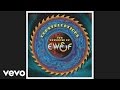
Earth, Wind & Fire's long-term home label, Columbia, offered Bailey a solo deal, and in 1983 the singer made his debut as a headliner with the George Duke-produced Continuation. The album reached number 19 on the R&B chart, supported by "I Know," a number ten hit on the corresponding singles chart. The singer branched out again the next year with his first gospel recording for the Myrrh/Word family, The Wonders of His Love, and also returned to Columbia and the pop-R&B market with Chinese Wall, produced by Phil Collins. Chinese Wall became Bailey's most successful solo LP. It peaked at number ten on the Billboard 200 with help from the Collins duet "Easy Lover," a crossover smash that reached the third and second positions on the R&B and pop charts. Bailey soon had Grammy nominations in three fields. The Wonders of His Love was nominated for Best Inspirational Performance. Chinese Wall and "Easy Lover" were respectively up for Best R&B Performance and Best Pop Performance. Bailey issued albums in multiple idioms again in 1986 with the mostly self-produced Triumph (for Word/Horizon) and Inside Out (for Columbia). The former earned Bailey a Grammy for Best Gospel Performance. For the latter, a Top 30 R&B entry, Bailey worked closely with Nile Rodgers and was aided by the likes of Duke, Collins, and Ray Parker, Jr. A third charting religious LP, Family Affair, closed out the decade, by which point Bailey's name could be spotted on sleeves of albums by Deniece Williams, Kenny Loggins, Stevie Wonder, and Nancy Wilson.
Bailey continued to balance solo and group activity throughout the '90s and into the following decade. In 1992, he was part of the star-filled ensemble that met for Pride of Lions, a categorization-defying session arranged and conducted by James Mack. From 1994 through the decade's end, Bailey added three albums (on as many labels) to his solo discography. First was the contemporary R&B-oriented Philip Bailey, co-executive produced by Mack with input from Chuckii Booker, Brian McKnight, and P.M. Dawn. Three years later -- after Maurice White retired from touring, making Bailey the on-stage leader of EWF -- the singer resumed his solo career with Life and Love, containing collaborations with Incognito's Jean-Paul Maunick and Graham Harvey. Bailey then inched more toward jazz on Dreams, a 1999 release with versions of "The Masquerade Is Over" and Pat Metheny and Lyle Mays' "Something to Remind You." Soul on Jazz followed in 2002 and was even more jazz-oriented with updates of compositions such as "Compared to What," "Nature Boy," and "Tell Me a Bedtime Story."
Highlighted by inductions into the Rock & Roll Hall of Fame (2000) and the Songwriters Hall of Fame (2010), Earth, Wind & Fire collected numerous honors as they remained a steady live draw and released a few more albums during the next couple decades. In 2019, the year the band hit the half-century mark, Bailey also released his 11th solo album. Issued on Verve, Love Will Find a Way saw him alternate between originals and interpretations with a multi-generational cast of jazz musicians -- Chick Corea, Robert Glasper, and Kamasi Washington among it. The expansive recording entered Billboard's Jazz Albums chart at the top. ~ Andy Kellman, Rovi
Viberate is a music analytics platform built for A&Rs, artist managers, labels, booking agents, marketers, and artists.
It helps music professionals track artist growth, analyze audience data, monitor playlist activity, compare artists, follow song performance, and identify opportunities across the music market.
Public artist pages provide a free preview of selected artist data. Paid plans provide access to deeper analytics, historical data, charts, comparisons, playlist tools, exports, alerts, reports, and additional professional features.
Yes. Public Viberate artist pages provide selected artist analytics and music data for free.
Viberate also offers a 7-day free trial of the full platform. A credit card is required to start the trial. The trial includes access to the complete product so users can test deeper artist analytics, historical views, playlist insights, comparisons, charts, exports, alerts, and reporting features before choosing a paid plan.
Viberate provides artist analytics across streaming, playlists, social media, video, radio airplay, songs, and audience markets.
Users can analyze Spotify performance, Spotify and Apple Music playlists, YouTube activity, TikTok and Instagram growth, radio spins, song performance, audience locations, demographics, rankings, and overall artist momentum.
Artist profiles also connect to music charts, similar artists, and comparison tools, helping users benchmark performance and evaluate artists in context.
Viberate updates key artist and track data daily.
For followed artists and tracks, selected data is refreshed multiple times per day. This helps teams monitor playlist changes, streaming movement, audience growth, releases, and campaign performance with more current data.
Update frequency can vary depending on the metric and data source.
Yes. Viberate lets users compare up to five artists side by side across streaming, social media, audience, and engagement metrics.
Users can compare fanbase growth, audience demographics, locations, Spotify performance, social metrics, and other artist data over selected time periods.
Artist comparison can be used for A&R scouting, benchmarking, booking decisions, campaign planning, and evaluating artists with similar audiences or market positions.