 Viberate
Philharmonia Hungarica
 DEUClassical, Orchestral, Chamber Music
N/A monthly listeners
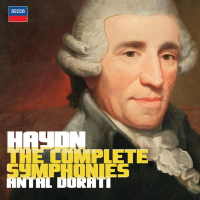 DEUClassical, Orchestral, Chamber Music

Famous classical ensemble Philharmonia Hungarica is from Marl, Germany. Their use of symphonic instruments and the intricate, rich interplay between them are characteristics of their music. Philharmonia Hungarica, which specializes in symphonic music, has developed a reputation for creating intense and moving performances that enthrall audiences around.
Their music is an emotional tapestry with a great variety of soundscapes. The sound of Philharmonia Hungarica is a monument to the strength of classical music, from the majesty of their string section to the exquisite intricacy of their woodwinds. Their music carries listeners away to a world of wonder and beauty where the orchestra's sounds converge to produce something absolutely extraordinary.
In conclusion, Philharmonia Hungarica is a classical ensemble that has won over listeners all over the world. Their work is proof of the potency of symphonic music and its capacity to arouse strong emotions and carry listeners into an other realm. Philharmonia Hungarica's music is likely to make an impression, whether you're an experienced classical music fan or a newbie to the field.
German classical and orchestral music performer Philharmonia Hungarica has a number of well-known tunes that have connected with listeners over time. Their best songs include "Dance Suite, Sz. 77: 4. Molto tranquillo," "Symphony in D, H.I No.6 - 'Le Matin': 1. Adagio - Allegro," and "Symphony in G major, H.I No.3: 2. Andante moderato."
"Dance Suite, Sz. 77: I. Molto Tranquillo" is a notable track. This composition demonstrates how well the orchestra can evoke a quiet and serene environment with their music. Strings and woodwinds are used to create a meditative atmosphere that carries listeners away to another place.
The song "Symphony in D, H.I No.1: 1. Presto" is another well-known tune. This composition, which is bright and joyful, highlights the orchestra's capacity for playing with a lot of vigor. The piece is appropriate for any occasion because to the upbeat ambiance that the horns and trumpets generate.
Other well-known compositions of Philharmonia Hungarica include "Symphony in C, H.I No.2: 3. Finale - Presto," "Symphony in D, H.I No.1: 2. Andante," and "Symphony in C, H.I No.2: 1. Allegro." These compositions highlight the orchestra's diversity and capacity to convey a variety of feelings and moods through their music.
Overall, Philharmonia Hungarica contains a number of well-known tunes that have endured and still resonate with listeners today. Their expertise and commitment to their profession are evident in their ability to evoke a wide range of emotions through their music.
German orchestral and classical music ensemble Philharmonia Hungarica has recently published some lovely compositions. Remastered from a 1958 recording by Antal Dorati, their most recent album, "Respighi: Ancient Dances and Airs for Lute by Antal Dorati (Remastered 2023, Studio 1958) (2023)" The album includes orchestral arrangements by Respighi of lute music from the Renaissance and Baroque periods, showing the Philharmonia Hungarica's interpretation of these antiquated works. Furthermore, their recording "Blue Edition - Mozart: Symphony No. 36 'Linz Symphony' & Piano Concerto No. 8 'Lutzow' (2021)" offers a novel interpretation of Mozart's compositions, with the orchestra's own style mixing flawlessly with the composer's iconic pieces.
The most recent single released by Philharmonia Hungarica, "Tchaikovsky: Serenade for String Orchestra, Op. 48 by Antal Dorati (Remastered 2023, Vienna 1958) (2022)", is a remastered version of a recording made in Vienna in 1958 by Antal Dorati. It is a lovely rendition of Tchaikovsky's composition and demonstrates the orchestra's skill at evoking a romantic and sentimental ambiance. The group's previous singles, "Mozart: Symphonie No. 40 und 41 (2021)" and "Mozart: Symphonie No. 27, 30 und 36 (2021)," showcase their masterful and exacting performance of Mozart's symphonies. Last but not least, the group's 2013 release of "Rubinstein: Symphony No. 6" demonstrates how adaptable they are to addressing many composers and styles.
In general, Philharmonia Hungarica never ceases to dazzle with their performances, demonstrating their aptitude to reinterpret orchestral and classical music with a special flair. Their most recent works are evidence of their talent and commitment to their craft.
Over the course of their existence, Philharmonia Hungarica cooperated with numerous musicians. One of their most prominent collaborations was on the song "Dance Suite, Sz. 77: 4. Molto tranquillo" with Bela Bartok and Antal Dorati. The distinctive musical idioms of Bartok and Dorati were combined in this collaboration, creating a stunning work of harmony that highlighted both composers' abilities. The song's strong orchestral accompaniment and lovely melody are guaranteed to attract listeners.
A further noteworthy partnership is that of Philharmonia Hungarica and Antal Dorati on the song "Symphony in D, H.I No.6 - "Le Matin": 1. Adagio - Allegro." This song is a magnificent classic that displays the extraordinary talent of both Dorati and Philharmonia Hungarica. The tune has a lovely melody, which the orchestra brilliantly complements, making for an absolutely breathtaking listening experience.
The Philharmonia Hungarica's recordings with Bela Bartok and Antal Dorati collectively rank among the most significant and influential orchestral and classical music collaborations ever made. Some of the most beautiful and harmonious songs ever produced were the product of these partnerships, which brought together some of the finest minds in music. These collaborations are unquestionably worth listening to, whether you enjoy classical music or just enjoy good music in general.
Viberate is a professional music analytics service that provides a complete data overview of Philharmonia Hungarica, covering audience data, Spotify playlists and stats, individual track performance, and cross-platform metrics including Spotify, YouTube, streaming, and radio airplay analytics. The platform also includes full social media analytics across Instagram, TikTok, and Facebook, as well as insights from Apple Music playlists, SoundCloud, Beatport, Shazam, and Deezer, alongside artist charts, streaming charts, genre charts, and genre analytics to support A&R discovery, benchmarking, and strategic decision-making.
