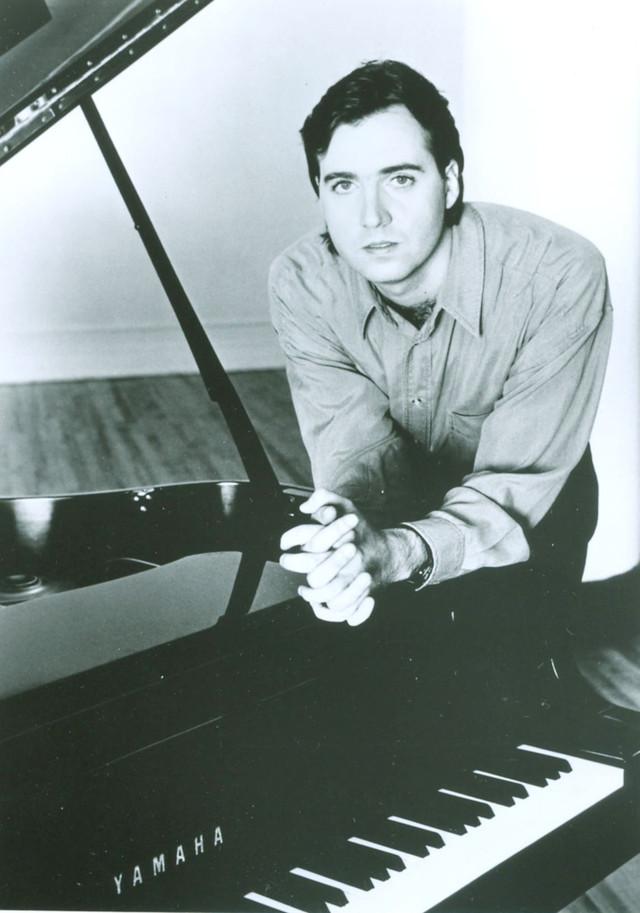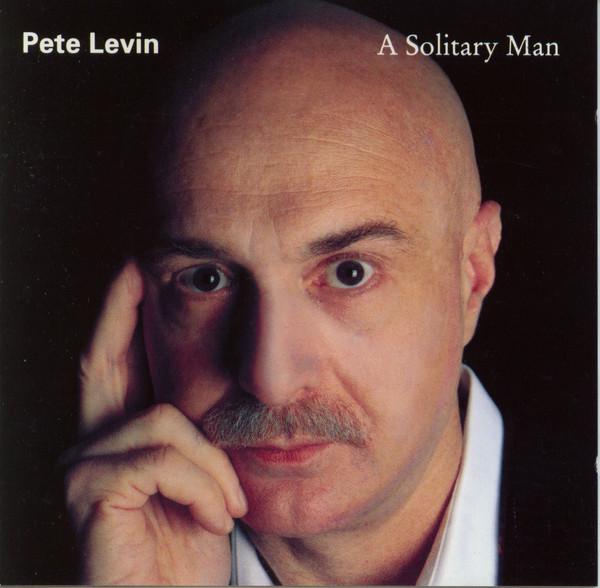
Pete Levin

Jazz
Smooth Jazz
Downtempo
 Viberate Rank: 541185
 Viberate Rank: 541185
 Monthly ListenersFollowers
 Subscribers
 Followers
 Followers
 FansTop Spotify Songs
| Track | 7-Day Streams | |
|---|---|---|
1 | 129 | |
2 | 124 | |
3 | 70 | |
4 | 55 | |
5 | 31 |
Top YouTube VideosMonthly ListenersFeatured in Playlists| Playlist | Followers | |
|---|---|---|
1 | Burning Jazz-rock Fusion fusionprogguy | 8.92K |
2 | Recommended performances from Ted Gioia's book 'The Jazz Standards' jhiggy58 | 8.57K |
3 |  Jazz-Rock Fusion Morgan Roussel | 7.54K |
4 |  Soft Jazz, So Sweet Arkadia Records | 6.80K |
5 |  The Sound of Progressive Rock The Sounds of Spotify | 3.64K |
Audience| City | Monthly Listeners | |
|---|---|---|
1 | | 60 |
2 |  | 18 |
3 |  | 13 |
4 |  | 11 |
5 |  | 7 |
See full performance history, audience data, playlist activity, rankings, comparisons, and more in Viberate music analytics. Start with a free trial, then continue with a paid plan.
Pete Levin’s Spotify BioThere may not be another performer quite like keyboardist Pete Levin, who has not only played a wide range of sounds in and out of popular music, but made his mark as a substantial jazz player. Levin was born December 20, 1942, in Boston, and his parents were not musicians but loved music and shared that. His brother is Tony Levin, a renowned jazz and rock electric bass guitarist and master of the Chapman stick, who has also played with many well-known artists. The Levin siblings came up through a public school system in Brookline, MA, that was very supportive of music. Early influences included Julius Watkins, Art Tatum, Spike Jones, Stan Freberg, Bill Evans, Richard Tee, Herbie Hancock, Billy Preston, Ray Charles, Larry Young, and Jimmy Smith. Pete Levin came into music playing the French horn, and his school department head, John Corley, also directed the concert band at the Massachusetts Institute of Technology and played with the MIT band as a ringer for two years. Corley and… Osbourne McConathy, the second horn with the Boston Symphony and conductor of the Sarah Caldwell Opera Company, inspired Levin to enroll at the Juilliard School of Music and begin a professional career. The Levin brothers produced an early claim to fame along with drummer Steve Gadd with the Top 40 hit single "Close to You" by the Clams, a Spike Jones tribute band.
Upon moving to New York City in the '70s, he met Gil Evans and recorded and performed with his renowned progressive jazz orchestra for over 15 years, first as a French horn player but eventually on electric keyboards. When Levin brought a Moog synthesizer to a performance at New York's Village Vanguard, Evans embraced the new tone colors. It was then that Levin's role was permanently changed as the big band transformed itself into an electric-acoustic hybrid ensemble that captivated audiences, and the group also received two Grammy awards along the way. Levin added Clavinet, and eventually Evans brought John Clark into the band to play French horn so Levin could concentrate on electric keyboards. In 1990, Levin signed with Gramavision Records to release his first solo jazz album, Party in the Basement, followed by Solitary Man in 1991. Collaborating with drummer Danny Gottlieb, he released The New Age of Christmas on the Atlantic label and Masters in This Hall, again for Gramavision. In the years to follow, he released four new age CDs for Alternate Mode Productions. Becoming an in-demand New York session keyboardist, Levin has also created electronic realizations for hundreds of TV commercials, dramatic series, and feature films, including Missing in Action, Lean on Me, Silver Bullet, Red Scorpion, The Color of Money, Maniac, Spin City, America's Most Wanted, and contemporary versions of the Star Trek series. Levin also composed orchestral scores for the feature film Zelimo and a stage production of The Dybbuk, and wrote the anthem for the 1992 United Nations Earth Summit. He is the co-composer/orchestrator for the Discovery Channel TV film Secrets of the Humpback Whale and a composer/arranger for the TV series America's Most Wanted and the long-running soap opera The Guiding Light.
A truncated list of the dozens of musicians Levin has worked with includes Terence Blanchard, Carla Bley, Donald Byrd, Miles Davis, Liza Minnelli, and Gregg Allman on his final tours and albums. After the death of Gil Evans, Levin moved to upstate New York in Woodstock. Returning to his first love of instruments, he played the B-3 and Nord Clavia organ in a contemporary soul-jazz mode, and Motema Records issued Deacon Blues in 2007, which was followed by Levin's independent release Certified Organic in 2008. He also runs the Pete Levin Band that plays a unique blend of blues inspired funk and soul music. Levin also writes, records, and produces his band at his own Moon Palace NYC studio in Brooklyn. His production credits there include albums by Public Enemy, Korn, the Beastie Boys, and the Blind Boys of Alabama.
He self-released Live in Foggia: Pete Levin Trio in 2009 and followed by Jump! a year later. He spent 2011 appearing on collaborative albums with European artists including Paul Dunmall, Conrad Bauer, and others. A 2012 festival concert was released as Iridium Live 008: 4-8-2012. That same year he received a gold record for his production assistance on the Gym Class Heroes' The Papercut Chronicles II. The Levin Brothers' self-titled offering was issued by Lazy Bones Recordings in 2014, the same year he received a platinum record for his collaboration with Train on the album Save Me, San Francisco. In 2015, Levin was featured prominently on Mamadou Kelly's Djamila. His touring and production work took precedence the following year, but 2017 saw him reappear on three albums: His own Mobius, on which he was backed by an octet; the Levin Brothers' Special Delivery, and Kathy Ingraham's Cool Night. Mobius was picked up by Audio & Video Labs, Inc. for re-release in March of 2018. ~ Michael G. Nastos, Rovi
Viberate is a music analytics platform built for A&Rs, artist managers, labels, booking agents, marketers, and artists.
It helps music professionals track artist growth, analyze audience data, monitor playlist activity, compare artists, follow song performance, and identify opportunities across the music market.
Public artist pages provide a free preview of selected artist data. Paid plans provide access to deeper analytics, historical data, charts, comparisons, playlist tools, exports, alerts, reports, and additional professional features.
Yes. Public Viberate artist pages provide selected artist analytics and music data for free.
Viberate also offers a 7-day free trial of the full platform. A credit card is required to start the trial. The trial includes access to the complete product so users can test deeper artist analytics, historical views, playlist insights, comparisons, charts, exports, alerts, and reporting features before choosing a paid plan.
Viberate provides artist analytics across streaming, playlists, social media, video, radio airplay, songs, and audience markets.
Users can analyze Spotify performance, Spotify and Apple Music playlists, YouTube activity, TikTok and Instagram growth, radio spins, song performance, audience locations, demographics, rankings, and overall artist momentum.
Artist profiles also connect to music charts, similar artists, and comparison tools, helping users benchmark performance and evaluate artists in context.
Viberate updates key artist and track data daily.
For followed artists and tracks, selected data is refreshed multiple times per day. This helps teams monitor playlist changes, streaming movement, audience growth, releases, and campaign performance with more current data.
Update frequency can vary depending on the metric and data source.
Yes. Viberate lets users compare up to five artists side by side across streaming, social media, audience, and engagement metrics.
Users can compare fanbase growth, audience demographics, locations, Spotify performance, social metrics, and other artist data over selected time periods.
Artist comparison can be used for A&R scouting, benchmarking, booking decisions, campaign planning, and evaluating artists with similar audiences or market positions.