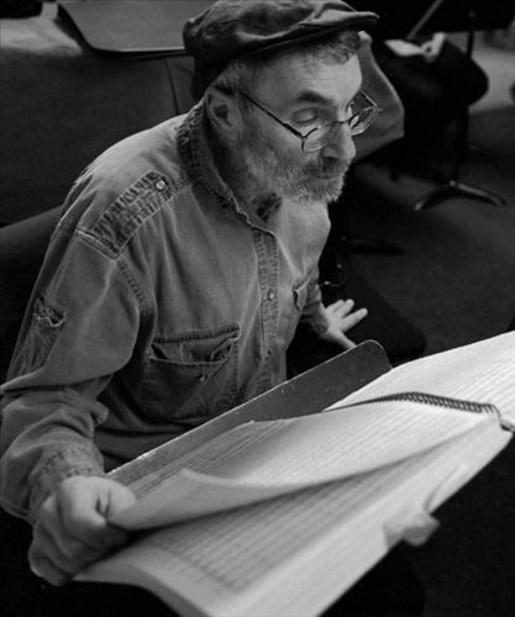
Paul Schoenfield

Classical
Chamber Music
 Viberate Rank: 551315
 Viberate Rank: 551315
 Monthly ListenersFollowers
 Subscribers
 Followers
 Followers
 FansTop Spotify SongsTop YouTube VideosMonthly ListenersFeatured in Playlists
| Playlist | Followers | |
|---|---|---|
1 |  NPR Classical NPR Music | 14.44K |
2 |  Solo Violin Modern Classical X | 12.22K |
3 |  pinpinjo’s instagram pinpinjo | 6.92K |
4 |  Chamber Music for Self-Renewal synergy555 | 4.21K |
5 | Cheerful Classical Music MJ | 2.00K |
Audience| City | Monthly Listeners | |
|---|---|---|
1 |  | 80 |
2 | | 48 |
3 | | 44 |
4 | | 30 |
5 |  | 28 |
See full performance history, audience data, playlist activity, rankings, comparisons, and more in Viberate music analytics. Start with a free trial, then continue with a paid plan.
Paul Schoenfield’s Spotify BioThe music of composer Paul Schoenfield reflects folk -- specifically Jewish -- and popular influences. He was also a noted educator.
Schoenfield was born in Detroit, Michigan, in 1947. He took up the piano at age six and was writing music of his own within a year. Schoenfield studied both piano and composition during his formative years; among his teachers on the former was Rudolf Serkin, and in the latter field Robert Muczynski. He attended Converse College in South Carolina but transferred to Carnegie Mellon University in Pittsburgh and earned a B.A. degree there. He went on for a doctorate at the University of Arizona. Schoenfield taught music in Toledo, Ohio, for some years, moved to a kibbutz in Israel and taught mathematics there, worked as a freelance composer and pianist in the Twin Cities, Minnesota, area (a regular gig at a steakhouse inspired his later composition Café Music), and returned to Israel, living in the city of Migdal Ha'emek during the 1990s. Later he joined the… composition faculty of the University of Michigan, retiring in the 2010s.
For the first part of his career, Schoenfield was active as a concert pianist, and in 1987, he made his recording debut, backing violinist Robert Davidovici on the latter's self-titled album. His turn toward composition came later in life, with his Three Country Fiddle pieces for electric violin, percussion, and amplified piano appearing in 1980 as one of his first mature compositions. That was one of many Schoenfield works to show vernacular musical influences. Schoenfield often performed his own works that featured a piano, but they were widely played by other performers as well; he premiered his Four Parables piano concerto with the Toledo Symphony Orchestra in 1983, and that work was recorded in 1994 by the New World Symphony and played in Germany by the Dresden Symphony and recorded again in 2007 by the Prague Philharmonia. Other major Schoenfield works include the opera The Merchant and the Pauper (1999), one of a number of Schoenfield works that draw on Jewish materials. His Camp Songs (2003) brought a finalist nod for the 2003 Pulitzer Prize in Music. Violinist Cho-Liang Lin and pianist Jon Kimura Parker premiered Schoenfield's Sonata for violin and piano at New York's Lincoln Center in 2010. As of the early 2020s, more than 30 of Schoenfield's works had been recorded. ~ James Manheim, Rovi
Viberate is a music analytics platform built for A&Rs, artist managers, labels, booking agents, marketers, and artists.
It helps music professionals track artist growth, analyze audience data, monitor playlist activity, compare artists, follow song performance, and identify opportunities across the music market.
Public artist pages provide a free preview of selected artist data. Paid plans provide access to deeper analytics, historical data, charts, comparisons, playlist tools, exports, alerts, reports, and additional professional features.
Yes. Public Viberate artist pages provide selected artist analytics and music data for free.
Viberate also offers a 7-day free trial of the full platform. A credit card is required to start the trial. The trial includes access to the complete product so users can test deeper artist analytics, historical views, playlist insights, comparisons, charts, exports, alerts, and reporting features before choosing a paid plan.
Viberate provides artist analytics across streaming, playlists, social media, video, radio airplay, songs, and audience markets.
Users can analyze Spotify performance, Spotify and Apple Music playlists, YouTube activity, TikTok and Instagram growth, radio spins, song performance, audience locations, demographics, rankings, and overall artist momentum.
Artist profiles also connect to music charts, similar artists, and comparison tools, helping users benchmark performance and evaluate artists in context.
Viberate updates key artist and track data daily.
For followed artists and tracks, selected data is refreshed multiple times per day. This helps teams monitor playlist changes, streaming movement, audience growth, releases, and campaign performance with more current data.
Update frequency can vary depending on the metric and data source.
Yes. Viberate lets users compare up to five artists side by side across streaming, social media, audience, and engagement metrics.
Users can compare fanbase growth, audience demographics, locations, Spotify performance, social metrics, and other artist data over selected time periods.
Artist comparison can be used for A&R scouting, benchmarking, booking decisions, campaign planning, and evaluating artists with similar audiences or market positions.