Paul Hession

Jazz
Smooth Jazz
Free Jazz
 Viberate Rank: 1003865
 Viberate Rank: 1003865
 Monthly ListenersFollowers
 Subscribers
 Followers
 Followers
 FansTop Spotify SongsTop YouTube VideosMonthly ListenersFeatured in PlaylistsAudience
| City | Monthly Listeners | |
|---|---|---|
1 | | 3 |
See full performance history, audience data, playlist activity, rankings, comparisons, and more in Viberate music analytics. Start with a free trial, then continue with a paid plan.
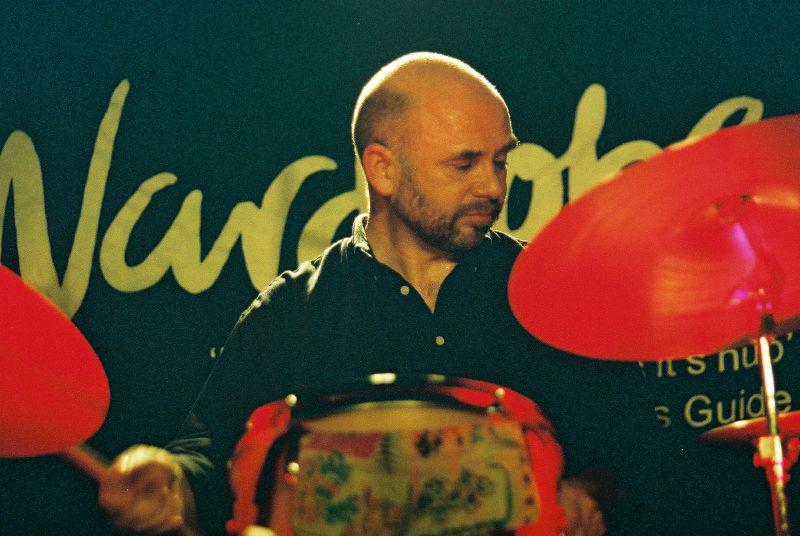
Paul Hession’s Spotify BioWhen it comes to British Free Improv drummers, if Paul Hession's name has circulated less than, say Paul Lytton, Tony Levin, or Mark Sanders, it is mostly due to the fact that he worked hard to nurture an avant-garde scene in his hometown of Leeds instead of moving to London. His loquacious, effervescent playing and high listening skills deserve as much attention and recognition as the aforementioned artists. Hession is best known for his participation to George Haslam's Siger Band, the Hession/Wilkinson/Fell trio, and his various projects with Simon H. Fell and Mick Beck.
Hession's first musical experiences go back to his childhood. At age 7 he began to play the guitar and sing in a church choir. He sat behind the drums for the first time at age 15. Self-taught like most rock drummers, he played the usual cover bands in Leeds' club circuit. Gradually he veered toward jazz and by the late ‘70s had developed an interest for the free improvisation happening in London. In 1979 he formed… his first free improv group, Art Bart & Fargo with saxophonists Pete Malham and Alan Wilkinson -- the latter would remain a lifelong collaborator.
In the ‘80s Hession was involved in the construction and maintenance of an avant-garde music scene in the Leeds and Sheffield areas of England, together with other regional-minded musicians like Simon H. Fell and Martin Archer. He co-managed the Termite Club in Leeds during the late ‘80s and early ‘90s, taught drumming in local schools and established the Improvised Music Workshop. Meanwhile, after being introduced to George Haslam by trombonist Paul Rutherford, he joined The Siger Band with which he made some of his first recordings. In 1989 he formed a long-lasting trio with Wilkinson and Fell that went on to release half a dozen albums and perform throughout Europe and America, including the Newfoundland Sound Symposium (St. John's, Canada) in 1994 and the Freedom of the City Festival (London, England) in 2001. Also in 1989 he recorded his first sessions for Fell's label Bruce's Fingers. He would later be included in most of the bassist's projects, including the trio Something Else with bassoonist Mick Beck. He recorded his first solo album, Giant Soft Drum Set, in 1996. In 2001 he toured England and Argentina with the Anglo-Argentine Jazz Quartet with which he recorded Live at the Red Rose. ~ François Couture, Rovi
Viberate is a music analytics platform built for A&Rs, artist managers, labels, booking agents, marketers, and artists.
It helps music professionals track artist growth, analyze audience data, monitor playlist activity, compare artists, follow song performance, and identify opportunities across the music market.
Public artist pages provide a free preview of selected artist data. Paid plans provide access to deeper analytics, historical data, charts, comparisons, playlist tools, exports, alerts, reports, and additional professional features.
Yes. Public Viberate artist pages provide selected artist analytics and music data for free.
Viberate also offers a 7-day free trial of the full platform. A credit card is required to start the trial. The trial includes access to the complete product so users can test deeper artist analytics, historical views, playlist insights, comparisons, charts, exports, alerts, and reporting features before choosing a paid plan.
Viberate provides artist analytics across streaming, playlists, social media, video, radio airplay, songs, and audience markets.
Users can analyze Spotify performance, Spotify and Apple Music playlists, YouTube activity, TikTok and Instagram growth, radio spins, song performance, audience locations, demographics, rankings, and overall artist momentum.
Artist profiles also connect to music charts, similar artists, and comparison tools, helping users benchmark performance and evaluate artists in context.
Viberate updates key artist and track data daily.
For followed artists and tracks, selected data is refreshed multiple times per day. This helps teams monitor playlist changes, streaming movement, audience growth, releases, and campaign performance with more current data.
Update frequency can vary depending on the metric and data source.
Yes. Viberate lets users compare up to five artists side by side across streaming, social media, audience, and engagement metrics.
Users can compare fanbase growth, audience demographics, locations, Spotify performance, social metrics, and other artist data over selected time periods.
Artist comparison can be used for A&R scouting, benchmarking, booking decisions, campaign planning, and evaluating artists with similar audiences or market positions.