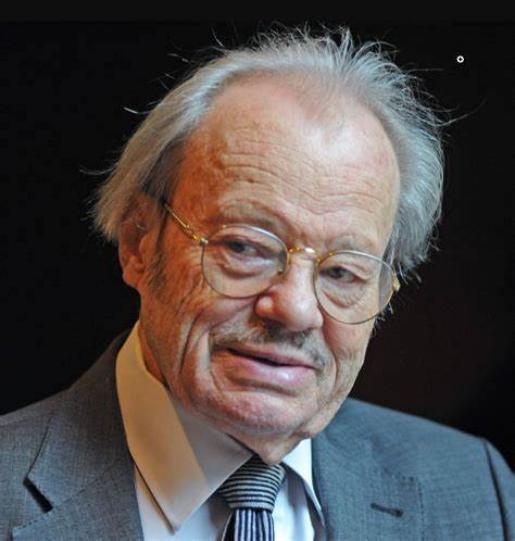
Pascal Dusapin

Classical
Classical Crossover
 Viberate Rank: 600039
 Viberate Rank: 600039
 Monthly ListenersFollowers
 Subscribers
 Followers
 Followers
 FansTop Spotify Songs
| Track | 7-Day Streams | |
|---|---|---|
1 | 44 | |
2 | 32 | |
3 | 24 | |
4 | 19 | |
5 | 17 |
Top YouTube VideosMonthly ListenersFeatured in Playlists| Playlist | Followers | |
|---|---|---|
1 | Traditional Indigenous Music playtime123456 | 2.99K |
2 |  The Sound of 21st Century Classical The Sounds of Spotify | 2.37K |
3 |  classical avant-garde Marçal Cuberta Juncà | 1.57K |
Audience| City | Monthly Listeners | |
|---|---|---|
1 | | 20 |
2 |  | 12 |
3 |  | 10 |
4 |  | 8 |
5 |  | 8 |
See full performance history, audience data, playlist activity, rankings, comparisons, and more in Viberate music analytics. Start with a free trial, then continue with a paid plan.
Pascal Dusapin’s Spotify BioBorn in 1955 in Nancy, France, Pascal Dusapin has become one of the most important and acclaimed composers in France and beyond. In his youth, he played the organ, studied music at the Sorbonne, and was interested in jazz. As a composer, however, he is essentially self-taught, though he acknowledges the influence of Iannis Xenakis, whose seminar he attended at the Université de Paris between 1974 - 1978, and Italian composer Franco Donatoni, who was at the Sorbonne in 1976. An award from the Fondation de la Vocation in 1977 enabled the young Dusapin to devote himself to composition, followed by a residency at the Villa Medicis in Rome in 1981 - 1983. He has been composing ever since, at a remarkably prolific rate.
The music of Dusapin is intensely lyrical, but in a thoroughly original style. The lines tend to be supple and elaborate, built from glissandi (sliding tones), microtones, and other coloristic techniques. His ear for texture is finely tuned, as is his architectural sensitivity… to contrasts and balance of density, register, volume, and color. The melodic fluidity of his music indicates a strong attraction to the human voice, while at the same time, he has written virtually no music for piano or percussion. Dusapin's first large-scale work, Niobé, an oratorio for soprano, choir, and ensemble, dates from 1982. It has been followed by a succession of operatic projects, including Roméo & Juliette (1988), Medeamaterial (1990), La Melancholia (1991), and To Be Sung (1993). In 1994, he was named as composer-in-residence to the Orchestre National de Lyon, for whom he has written Extenso (1994) and Apex (1995). He has also composed concertos for flute, trombone, and cello, and has worked closely with chamber ensembles such as Accroche Note and Ensemble 2e2m.
Viberate is a music analytics platform built for A&Rs, artist managers, labels, booking agents, marketers, and artists.
It helps music professionals track artist growth, analyze audience data, monitor playlist activity, compare artists, follow song performance, and identify opportunities across the music market.
Public artist pages provide a free preview of selected artist data. Paid plans provide access to deeper analytics, historical data, charts, comparisons, playlist tools, exports, alerts, reports, and additional professional features.
Yes. Public Viberate artist pages provide selected artist analytics and music data for free.
Viberate also offers a 7-day free trial of the full platform. A credit card is required to start the trial. The trial includes access to the complete product so users can test deeper artist analytics, historical views, playlist insights, comparisons, charts, exports, alerts, and reporting features before choosing a paid plan.
Viberate provides artist analytics across streaming, playlists, social media, video, radio airplay, songs, and audience markets.
Users can analyze Spotify performance, Spotify and Apple Music playlists, YouTube activity, TikTok and Instagram growth, radio spins, song performance, audience locations, demographics, rankings, and overall artist momentum.
Artist profiles also connect to music charts, similar artists, and comparison tools, helping users benchmark performance and evaluate artists in context.
Viberate updates key artist and track data daily.
For followed artists and tracks, selected data is refreshed multiple times per day. This helps teams monitor playlist changes, streaming movement, audience growth, releases, and campaign performance with more current data.
Update frequency can vary depending on the metric and data source.
Yes. Viberate lets users compare up to five artists side by side across streaming, social media, audience, and engagement metrics.
Users can compare fanbase growth, audience demographics, locations, Spotify performance, social metrics, and other artist data over selected time periods.
Artist comparison can be used for A&R scouting, benchmarking, booking decisions, campaign planning, and evaluating artists with similar audiences or market positions.