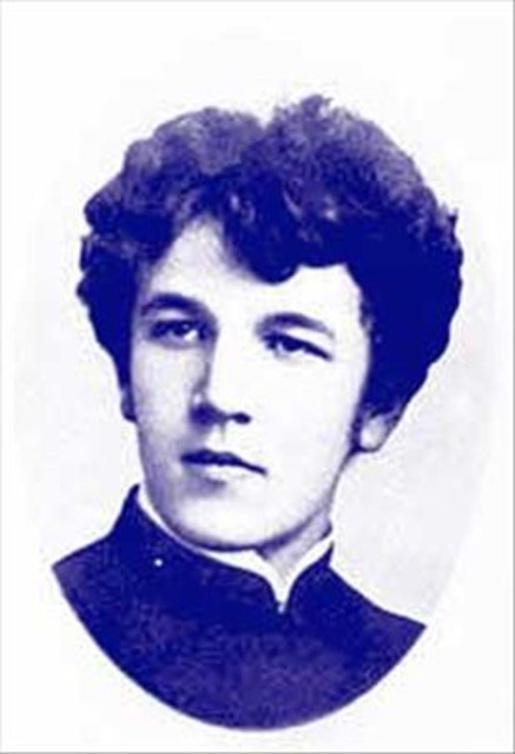
Nikolai Medtner

Classical
Classical Crossover
 Viberate Rank: 223330
 Viberate Rank: 223330
 Monthly ListenersFollowers
 Subscribers
 Followers
 Followers
 FansTop Spotify Songs
| Track | 7-Day Streams | |
|---|---|---|
1 | 3.21K | |
2 | 2.45K | |
3 | 1.82K | |
4 | 1.82K | |
5 | 1.44K |
Top YouTube VideosMonthly ListenersFeatured in Playlists| Playlist | Followers | |
|---|---|---|
1 |  Relaxing Classical Piano 🎹 ATMA Classique | 71.21K |
2 |  Música clásica para sentirme un villano del siglo XVII JFueyo | 61.77K |
3 |  Year of Wonder : Classical Music for Every Day - Clemency Burton-Hill lilham | 16.11K |
4 |  Piano Relaxation 🎹 Musique douce et calme Filtr France | 15.75K |
5 |  Sad,very sad, classical music Peer Wijntjes | 12.86K |
Audience| City | Monthly Listeners | |
|---|---|---|
1 |  | 575 |
2 |  | 547 |
3 |  | 465 |
4 |  | 463 |
5 |  | 432 |
See full performance history, audience data, playlist activity, rankings, comparisons, and more in Viberate music analytics. Start with a free trial, then continue with a paid plan.
Nikolai Medtner’s Spotify BioRussian composer Nikolai Karlovich Medtner (or Metner) was born to parents of German descent who had lived in Russia for several generations. The family background was musical; his mother's brother was Fedor Gedike (Theodore Goedicke), a minor Romantic composer and professional pianist. He received early piano lessons from his mother and was entered into the Moscow Conservatory's junior classes at the age of twelve, winning a gold medal when he completed his keyboard training in 1900. He studied privately with Sergei Taneyev, but largely taught himself composition. Taneyev encouraged him to consider composition as a career.
Nevertheless he went on tour as a pianist and received the Rubinstein Medal in Vienna. He gradually devoted more time to composition, but still performed, and in 1909 he was invited to join the conservatory faculty as a piano professor. A quiet person, he did not enjoy teaching, and resigned after a year, partly for that reason and partly to have more time for… composition. In 1910, the wealthy conductor Sergei Koussevitzky invited Medtner to join the editorial board of his new music publishing firm, Editions Russe. He also made the acquaintance of Sergei Rachmaninov the same year. The two composer-pianists became close friends.
Medtner moved to Germany, but was repatriated when World War I broke out, with Russia and Germany on opposite sides. He felt it necessary to accept another teaching post in Moscow. In 1919 he married Anna Medtner (née Bratenshi), who had been the wife of his brother; the two of them suffered during the civil war and repression that followed the Bolshevik coup of 1917. In 1921 they were granted permission to tour abroad. They landed in Germany; aside from a 1927 tour they would never see Russia again. After a tour of the United States in 1925, they settled in Paris, which had the most important Russian emigré colony in Europe.
Medtner's music was harmonically adventurous, but had a Romantic aesthetic that was out of fashion in trendy Paris. Other locales welcomed his music more readily: he was acclaimed in the United States and Canada, and especially in England. His 1935 book The Muse and Fashion, published by Rachmaninov in Paris, expressed his disillusionment with modern music. The same year, Medtner moved to England. Failing health compelled him to give up concertizing in 1944, but he was able to make some classic recordings of his piano music through an arrangement set up by a newly formed Medtner Society, supported by the Maharajah of Mysore. These are outstanding examples of his superb playing technique and of his compositional intentions. He also made recordings of his songs, accompanying soprano Elisabeth Schwarzkopf. Medtner died at the end of a series of the heart attacks that gradually incapacitated him.
His output includes a few pieces of chamber music, over a hundred songs, and a large quantity of piano music, including a "Concert-Piece" and three concertos for piano and orchestra, his only works with orchestra. While there is a Russian flavor to his music, it really falls into the line of Schumann and Brahms, and he adopted the latter's interest in thematic unity. His canons and other contrapuntal works were well-planned, with inventive rhythms distinguishing the different lines. His harmonies tend to be low in the keyboard, giving his music a dark, brooding quality. He had strong opinions about the role of art, assigning it an almost religious role, and there is perhaps a spiritual purity to his music.Medtner was largely overlooked during the largely anti-Romantic twentieth century, but his music has recently enjoyed a sudden resurgence of interest.
Viberate is a music analytics platform built for A&Rs, artist managers, labels, booking agents, marketers, and artists.
It helps music professionals track artist growth, analyze audience data, monitor playlist activity, compare artists, follow song performance, and identify opportunities across the music market.
Public artist pages provide a free preview of selected artist data. Paid plans provide access to deeper analytics, historical data, charts, comparisons, playlist tools, exports, alerts, reports, and additional professional features.
Yes. Public Viberate artist pages provide selected artist analytics and music data for free.
Viberate also offers a 7-day free trial of the full platform. A credit card is required to start the trial. The trial includes access to the complete product so users can test deeper artist analytics, historical views, playlist insights, comparisons, charts, exports, alerts, and reporting features before choosing a paid plan.
Viberate provides artist analytics across streaming, playlists, social media, video, radio airplay, songs, and audience markets.
Users can analyze Spotify performance, Spotify and Apple Music playlists, YouTube activity, TikTok and Instagram growth, radio spins, song performance, audience locations, demographics, rankings, and overall artist momentum.
Artist profiles also connect to music charts, similar artists, and comparison tools, helping users benchmark performance and evaluate artists in context.
Viberate updates key artist and track data daily.
For followed artists and tracks, selected data is refreshed multiple times per day. This helps teams monitor playlist changes, streaming movement, audience growth, releases, and campaign performance with more current data.
Update frequency can vary depending on the metric and data source.
Yes. Viberate lets users compare up to five artists side by side across streaming, social media, audience, and engagement metrics.
Users can compare fanbase growth, audience demographics, locations, Spotify performance, social metrics, and other artist data over selected time periods.
Artist comparison can be used for A&R scouting, benchmarking, booking decisions, campaign planning, and evaluating artists with similar audiences or market positions.