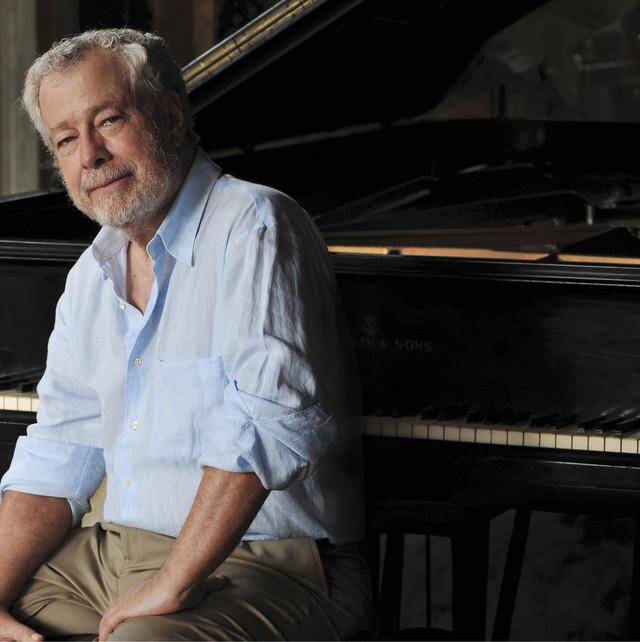
Nelson Freire

Classical
Orchestral
Chamber Music
 Viberate Rank: 98861
 Viberate Rank: 98861
 Monthly ListenersFollowers
 Subscribers
 Followers
 Followers
 FansTop Spotify SongsTop YouTube Videos
| Video | 7-Day Views | |
|---|---|---|
1 | 474 | |
2 | 254 | |
3 | 143 | |
4 | 109 | |
5 | 107 |
Monthly ListenersFeatured in Playlists| Playlist | Followers | |
|---|---|---|
1 |  This Is Beethoven Spotify | 787.36K |
2 |  DID YOU SAY CLASSICAL MUSIC IS BORING?!? KALOYYYY | 217.22K |
3 |  Chopin Nocturnes Spotify | 164.75K |
4 |  This Is Liszt Spotify | 138.88K |
5 |  Focus Music - Work | Studying | Concentration Kroschi | 112.12K |
Audience| City | Monthly Listeners | |
|---|---|---|
1 | | 3.26K |
2 |  | 2.90K |
3 |  | 2.66K |
4 |  | 2.35K |
5 |  | 2.04K |
See full performance history, audience data, playlist activity, rankings, comparisons, and more in Viberate music analytics. Start with a free trial, then continue with a paid plan.
Nelson Freire’s Spotify BioNelson Freire was among the most admired pianists of his generation, having played with the leading orchestras and conductors in the most prestigious recital halls, and in collaboration with the finest violinists, cellists, and fellow pianists. He also recorded extensively in a wide range of repertoire for numerous major labels, including Deutsche Grammophon, Sony, and Decca. On the latter, Freire issued an album of encores in 2019.
Freire was born in Boa Esperança, Brazil, on October 8, 1944. He was amazingly precocious, taking his first piano lessons from his older sister at age three and giving his first public recital, where he played Mozart's A major Sonata, K. 331, at five. Among his earliest important piano teachers were Nise Obino and Lucia Branco. At the age of 12, he won the prestigious Rio de Janeiro International Piano Competition (1957). There, he performed, among other challenging pieces, the Beethoven Concerto No. 5 (the "Emperor") before a jury consisting of Lili Kraus, …Marguerite Long, Guiomar Novaes, and other prominent pianists. He continued piano studies with Bruno Seidlhofer in Vienna with scholarship funds earned from his competition victory. In 1959, he launched his international career, touring Europe, South America, and East Asia, appearing with many of the world's leading orchestras and conductors.
Not satisfied with his credentials, Freire entered the Lisbon-based Vianna da Motta International Piano Competition in 1964 and took first prize. His London debut took place in 1968 and his American debut in 1970, when he played Rachmaninov's Fourth Piano Concerto with the New York Philharmonic under Rudolf Kempe, a conductor with whom he made several successful tours, but typically with the Royal Philharmonic Orchestra.
By the 1970s, Freire was a successful recording artist who would draw particular critical acclaim for his Chopin. He soon turned to piano duo repertory, often appearing and recording with Martha Argerich. The team's first recording -- Rachmaninov's Suite No. 2, Op. 17, and Lutoslawski's Variations on a Theme of Paganini -- was released on Philips in 1982. Subsequent recordings of works by Bartók, Ravel, and others appeared over the next two decades. Freire also collaborated with violinist Gidon Kremer and cellist Mischa Maisky, and he remained active in the new century both as a soloist and duo player. In 2005, he scored critical successes at the BBC Proms in London, in Tokyo, and on tour with Riccardo Chailly and the Leipzig Gewandhausorchester. Later releases included Chopin Adagios (2008), a Debussy album (2009), and Harmonies du Soir, featuring an all-Liszt program. In 2019, he issued an album of encores on Decca. Freire died on November 1, 2021, in Rio de Janeiro, at the age of 77. ~ Robert Cummings, Rovi
Viberate is a music analytics platform built for A&Rs, artist managers, labels, booking agents, marketers, and artists.
It helps music professionals track artist growth, analyze audience data, monitor playlist activity, compare artists, follow song performance, and identify opportunities across the music market.
Public artist pages provide a free preview of selected artist data. Paid plans provide access to deeper analytics, historical data, charts, comparisons, playlist tools, exports, alerts, reports, and additional professional features.
Yes. Public Viberate artist pages provide selected artist analytics and music data for free.
Viberate also offers a 7-day free trial of the full platform. A credit card is required to start the trial. The trial includes access to the complete product so users can test deeper artist analytics, historical views, playlist insights, comparisons, charts, exports, alerts, and reporting features before choosing a paid plan.
Viberate provides artist analytics across streaming, playlists, social media, video, radio airplay, songs, and audience markets.
Users can analyze Spotify performance, Spotify and Apple Music playlists, YouTube activity, TikTok and Instagram growth, radio spins, song performance, audience locations, demographics, rankings, and overall artist momentum.
Artist profiles also connect to music charts, similar artists, and comparison tools, helping users benchmark performance and evaluate artists in context.
Viberate updates key artist and track data daily.
For followed artists and tracks, selected data is refreshed multiple times per day. This helps teams monitor playlist changes, streaming movement, audience growth, releases, and campaign performance with more current data.
Update frequency can vary depending on the metric and data source.
Yes. Viberate lets users compare up to five artists side by side across streaming, social media, audience, and engagement metrics.
Users can compare fanbase growth, audience demographics, locations, Spotify performance, social metrics, and other artist data over selected time periods.
Artist comparison can be used for A&R scouting, benchmarking, booking decisions, campaign planning, and evaluating artists with similar audiences or market positions.