Ned Rorem

Classical
Opera
Neoclassical
 Viberate Rank: 490981
 Viberate Rank: 490981
 Monthly ListenersFollowers
 Subscribers
 Followers
 Followers
 FansTop Spotify SongsTop YouTube VideosMonthly ListenersFeatured in Playlists
| Playlist | Followers | |
|---|---|---|
1 |  The Sound of Everything The Sounds of Spotify | 53.81K |
2 |  NPR Classical NPR Music | 14.43K |
3 |  Neo Classicals Alen Golpashin | 7.79K |
4 |  Chamber Music for Self-Renewal synergy555 | 4.21K |
5 | Choir Music Eden | 4.01K |
Audience| City | Monthly Listeners | |
|---|---|---|
1 | | 63 |
2 |  | 59 |
3 | | 36 |
4 | | 34 |
5 | | 26 |
See full performance history, audience data, playlist activity, rankings, comparisons, and more in Viberate music analytics. Start with a free trial, then continue with a paid plan.
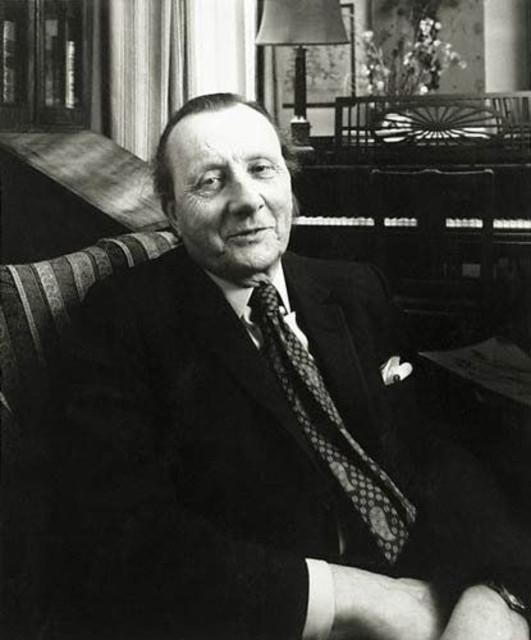
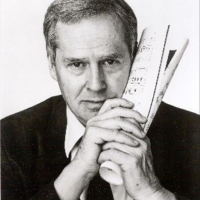
Ned Rorem’s Spotify Bio"Anyone can be drunk, anyone can be in love, anyone can waste time and weep, but only I can pen my songs in the remaining years or minutes," wrote Ned Rorem. Known both as a writer and a composer, Rorem was intriguing as both a musical figure and as a personality. He was self-described as a profoundly diatonic composer, and his music language betrayed the influence of his French impressionist idols Debussy and Ravel. Rorem's harmonic palette was generally characterized by vertical extrapolations: through modality, polymodality, and chordal alterations, of an essentially tonal framework. Some works conduct innovative experiments in the song cycle form; Poems of Love and Rain, for example, set eight different poems to music, then set them again in reverse order to contrasting music. Many of his works juxtaposed passages of harmonic and rhythmic complexity with moments of elegance and repose.
Rorem was the second of two children of Clarence Rufus Rorem, one of the founders of the Blue… Cross, and Gladys Miller Rorem, a peace activist. The family soon moved to Chicago, where Rorem began studying piano and where he heard such famous performers live as Josef Hofmann, Sergey Rachmaninov, and the Ballets Russes. An early teacher exposed him to Debussy and the impressionists. Subsequent teachers taught him about American contemporary composers like Griffes and John Alden Carpenter, as well as the blues of Billie Holiday, and Rorem learned to notate the little tunes he had composed.
By the age of 16, he had graduated from high school and already performed a concerto with the American Concerto Orchestra. He studied music theory with Leo Sowerby at the American Conservatory for a brief period before entering Northwestern University, where his time was largely spent absorbing a piano repertoire. In 1943, he accepted a scholarship from the Curtis Institute in Philadelphia, where he would study counterpoint with Rosario Scalero and musical-dramatic forms with Gian Carlo Menotti. After only a year there, Rorem moved to New York City, where he worked as Virgil Thomson's copyist in exchange for $20 a week plus composition lessons. Rorem also worked as rehearsal accompanist for Martha Graham and Eva Gauthier. Eventually, he entered Juilliard, where he completed his bachelor's (1946) and master's (1948) degrees. He also studied with Aaron Copland during two summers at Tanglewood.
An award allowed Rorem to travel to France. What was intended to be a three-month visit ended up lasting 12 years. However, the first portion of his stay was largely spent in Morocco at the home of a friend, where he had the peace and quiet requisite for the 20 or so large-scale works he produced during this period. His work earned more honors, including the Lili Boulanger Award in 1950 and a Fulbright Fellowship the following year. At this point, Rorem went on to Paris to study with Honegger. Through the influence of the Vicomtesse Marie-Laure de Noailles, he entered a social circle that included Jean Cocteau, Francis Poulenc, and Georges Auric. During this time, he also wrote several rather explicit diaries that were published a decade later, to the shock and delight of many.
Rorem returned to New York in 1958 and, during the next few decades, held teaching positions at the University of Buffalo (1959-1960), the University of Utah (1965-1966), and the Curtis Institute (1980-1986). He remained more of a composer than pedagogue and was widely revered as a modern master of the art song genre. He received a Pulitzer Prize in 1976 for Air Music, two Guggenheim Fellowships, and commissions from several major symphony orchestras. Rorem also earned the Composer of the Year award from Musical America in 1998 and the American Society of Composers, Authors, and Publishers (ASCAP) Lifetime Achievement Award in 2003. He continued composing well into the 21st century, penning the opera Our Town in 2005, Four Sonnets of Shakespeare for tenor Andrew Kennedy in 2008, and the 2014 organ work Recalling Nadia. Rorem died at his home in Manhattan on November 18, 2022, at the age of 99. ~ Jeremy Grimshaw, Rovi
Viberate is a music analytics platform built for A&Rs, artist managers, labels, booking agents, marketers, and artists.
It helps music professionals track artist growth, analyze audience data, monitor playlist activity, compare artists, follow song performance, and identify opportunities across the music market.
Public artist pages provide a free preview of selected artist data. Paid plans provide access to deeper analytics, historical data, charts, comparisons, playlist tools, exports, alerts, reports, and additional professional features.
Yes. Public Viberate artist pages provide selected artist analytics and music data for free.
Viberate also offers a 7-day free trial of the full platform. A credit card is required to start the trial. The trial includes access to the complete product so users can test deeper artist analytics, historical views, playlist insights, comparisons, charts, exports, alerts, and reporting features before choosing a paid plan.
Viberate provides artist analytics across streaming, playlists, social media, video, radio airplay, songs, and audience markets.
Users can analyze Spotify performance, Spotify and Apple Music playlists, YouTube activity, TikTok and Instagram growth, radio spins, song performance, audience locations, demographics, rankings, and overall artist momentum.
Artist profiles also connect to music charts, similar artists, and comparison tools, helping users benchmark performance and evaluate artists in context.
Viberate updates key artist and track data daily.
For followed artists and tracks, selected data is refreshed multiple times per day. This helps teams monitor playlist changes, streaming movement, audience growth, releases, and campaign performance with more current data.
Update frequency can vary depending on the metric and data source.
Yes. Viberate lets users compare up to five artists side by side across streaming, social media, audience, and engagement metrics.
Users can compare fanbase growth, audience demographics, locations, Spotify performance, social metrics, and other artist data over selected time periods.
Artist comparison can be used for A&R scouting, benchmarking, booking decisions, campaign planning, and evaluating artists with similar audiences or market positions.