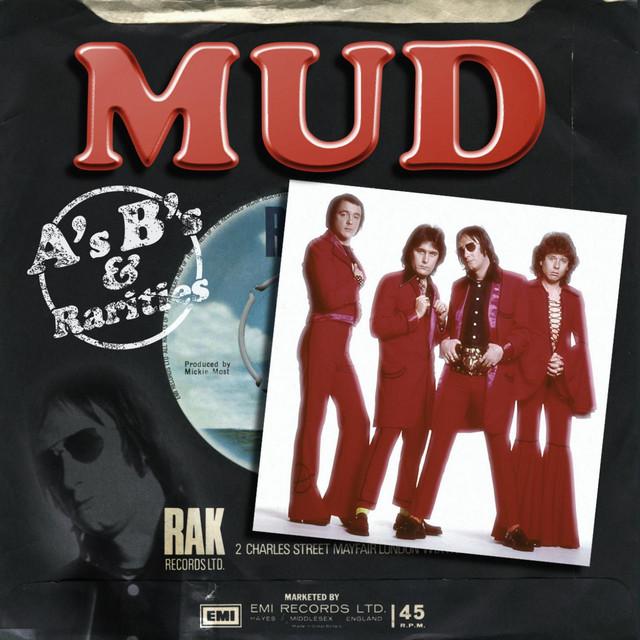
Mud

Rock
Pop Rock
Rockabilly
 Viberate Rank: 48143
 Viberate Rank: 48143
 Monthly ListenersFollowers
 Subscribers
 Followers
 Followers
 FansTop Spotify Songs
| Track | 7-Day Streams | |
|---|---|---|
1 | 42.66K | |
2 | 15.01K | |
3 | 11.96K | |
4 | 11.87K | |
5 | 6.29K |
Top YouTube VideosMonthly ListenersFeatured in Playlists| Playlist | Followers | |
|---|---|---|
1 |  Classic Rock Songs 60s 70s 80s 90s Music-Hits_. | 788.49K |
2 |  70er Hits Spotify | 783.47K |
3 |  Glam Rock Spotify | 182.88K |
4 |  Era Dorada del Rock 🎸 Lo Mejor del Rock de los 60s 70s 80s & 90s 🔥 ⚡ | 79.91K |
5 |  Best Rock Songs from the 60s 70s 80s & 90s 🎸 Golden Rock Era Jessy Andersen | 56.94K |
Audience| City | Monthly Listeners | |
|---|---|---|
1 | | 45.52K |
2 | | 25.79K |
3 | | 14.26K |
4 | | 13.58K |
5 |  | 12.20K |
See full performance history, audience data, playlist activity, rankings, comparisons, and more in Viberate music analytics. Start with a free trial, then continue with a paid plan.
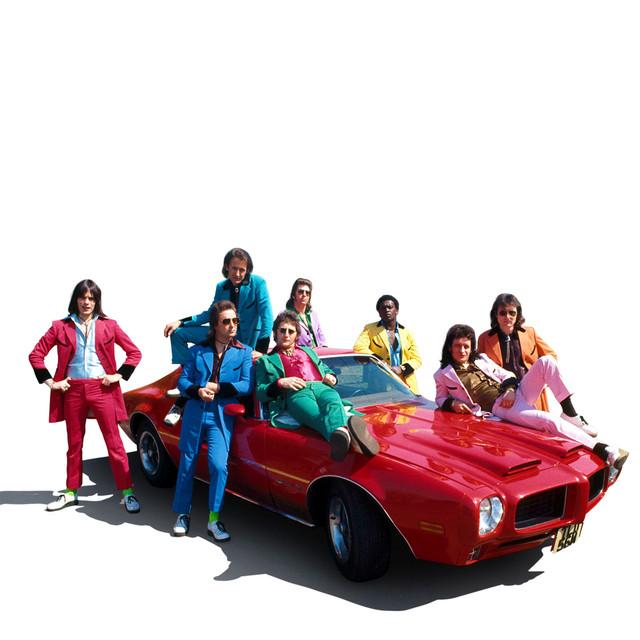
Mud’s Spotify BioMention the name Mud to most Americans -- even those neck-deep in the '70s revival -- and the likely result will be a blank stare. In England, however, between 1974 and 1976, Mud was one of the hottest rock & roll acts there was, charting a series of monster hit singles and recording a pair of delightful oldies-oriented albums. They were never a profoundly philosophical band, and never pretended to be. The group played music to have a good time, and merely asked that others join in, which millions of Brits did for a few years.
Their history extended back to the middle of the previous decade. Singer Les Gray and drummer-vocalist Dave Mount had come out of separate groups in the Carshalton section of South London during the mid-'60s, when they hooked up together to form a new band of their own, which they christened Mud. Ray Stiles (bass, vocals) and Rob Davis (lead guitar, vocals) came aboard in 1966 and the quartet was signed to the then fledgling CBS label (Columbia Records having only… founded its U.K. division in 1965, with the acquisition of the Oriole label), for which a pair of novelty singles, "Flower Power" and "Up the Air Mountain," stiffed on the charts. Mud continued to play local gigs and had enough of a following to make a living off its concert work. They were a solid rock & roll band with a good attack and a clean, unpretentious sound that made for great live performances but was difficult to translate on record. Their stage act included a fair number of rock & roll classics, which made them fairly unusual in a British music scene populated by acts bent on creating a psychedelic experience from the stage. They tried again with a pair of singles on the Philips label in 1969-1970, but neither of these attempts found an audience.
Fate, in the guise of producer Mickie Most, took a hand in the early '70s. Most was impressed with their stage presentation and hooked them up with the songwriting- producer team of Nicky Chinn and Mike Chapman (known corporately as Chinnichap). They came up with "Crazy" and "Hypnosis," a pair of singles that made the Top 20 for the group in 1973 on Most's RAK label; this did better than any of their previous singles had done, but still wasn't representative of the group's sound.
Lightning struck a third time late 1973 when Mud inherited a Chinn/Chapman song that had been rejected by the Sweet called "Dyna-Mite." Driven by a crunchy "Long Cool Woman"-type guitar intro, "Dyna-Mite" was a catchy rocker that became a Top Five British hit, but it also had a profound effect on the direction of the band. It required Les Gray to sing in a style akin to that of Elvis Presley, and a sound and direction were beginning to be established for the group. Their next single, "Tiger Feet," topped the English charts in early 1974, riding the number one spot for a month, and they followed this with "The Cat Crept In," a Top Three British hit. "The Cat Crept In," in particular, was written to exploit Les Gray's propensity to imitate Elvis Presley, and the band was quite obviously having the time of its life joining in the proceedings, as Chapman continued returning to the formula. The group treated all of this as a lark. They were grateful for the hits, and didn't feel compelled to worry over their artistic development in the way of a lot of other acts. They'd started out in music to have a good time, and they were having it. Their musical competency and visual presentation -- particularly Rob Davis' willingness to ornament himself with dangling jewelry -- positioned them perfectly for the glam rock boom, and the Chinn-Chapman songs made for catchy singles.
After three hit singles, an album seemed a logical next step, and one was knocked off in mid-1974, called Mud Rock, done as a fake live performance which included a medley of the three hits and a series of covers of classic rock & roll, everything from the Contours' "Do You Love Me" and Chuck Berry's "Bye Bye Johnny" to a Marcels-style rendition of Rodgers & Hart's "Blue Moon," with a nod to big-band music in the form of "In the Mood." Mud Rock sold well, and the band might've gone on perfectly well this way, cutting hit singles and doing an LP once a year, but for a problem that came up late in 1974, when Mud was persuaded to sign a contract with the new Private Stock label.
They were still under contract to Mickie Most, and the Chinn-Chapman songwriting team kept providing the band with retro-style songs, including "The Secrets That You Keep," another Top Three British single in early 1975. Their next single, a cover of Buddy Holly's "Oh Boy!" that made number one in England, was an outgrowth of the session that yielded "Blue Moon" -- the Holly song was suggested as a follow-up at the time, cut for the second album, and then culled as a single. By then, the band had left RAK, and suddenly, they found themselves in the awkward position of competing with themselves -- before they could get anything out on Private Stock, RAK had a succession of hit singles (including a version of "One Night," a direct Elvis Presley cover). Their second album, rather unimaginatively titled Mud Rock, Vol. 2, yielded over a million sales in singles drawn from its lineup of songs.
They ultimately did get a succession of hit singles out on Private Stock, and for another year, Mud were a fixture on the U.K. charts (and non-existent as a presence in America), before their appeal faded. Glam rock faded as punk and disco came to dominate the airwaves and the charts. They continued to record for Private Stock and RCA-U.K. until 1980, but nothing they did ever sold in numbers resembling their past glories. Mud's ride at the top was a short one, not even three years from start to finish before they disappeared from the charts, but they never intended to have a long or lasting impact on music, they just wanted to help people have a good time. ~ Bruce Eder, Rovi
Viberate is a music analytics platform built for A&Rs, artist managers, labels, booking agents, marketers, and artists.
It helps music professionals track artist growth, analyze audience data, monitor playlist activity, compare artists, follow song performance, and identify opportunities across the music market.
Public artist pages provide a free preview of selected artist data. Paid plans provide access to deeper analytics, historical data, charts, comparisons, playlist tools, exports, alerts, reports, and additional professional features.
Yes. Public Viberate artist pages provide selected artist analytics and music data for free.
Viberate also offers a 7-day free trial of the full platform. A credit card is required to start the trial. The trial includes access to the complete product so users can test deeper artist analytics, historical views, playlist insights, comparisons, charts, exports, alerts, and reporting features before choosing a paid plan.
Viberate provides artist analytics across streaming, playlists, social media, video, radio airplay, songs, and audience markets.
Users can analyze Spotify performance, Spotify and Apple Music playlists, YouTube activity, TikTok and Instagram growth, radio spins, song performance, audience locations, demographics, rankings, and overall artist momentum.
Artist profiles also connect to music charts, similar artists, and comparison tools, helping users benchmark performance and evaluate artists in context.
Viberate updates key artist and track data daily.
For followed artists and tracks, selected data is refreshed multiple times per day. This helps teams monitor playlist changes, streaming movement, audience growth, releases, and campaign performance with more current data.
Update frequency can vary depending on the metric and data source.
Yes. Viberate lets users compare up to five artists side by side across streaming, social media, audience, and engagement metrics.
Users can compare fanbase growth, audience demographics, locations, Spotify performance, social metrics, and other artist data over selected time periods.
Artist comparison can be used for A&R scouting, benchmarking, booking decisions, campaign planning, and evaluating artists with similar audiences or market positions.