Mitsuko Uchida

Classical
Orchestral
Chamber Music
 Viberate Rank: 74416
 Viberate Rank: 74416
 Monthly ListenersFollowers
 Subscribers
 Followers
 Followers
 FansTop Spotify Songs
| Track | 7-Day Streams | |
|---|---|---|
1 | 32.94K | |
2 | 26.13K | |
3 | 12.77K | |
4 | 11.75K | |
5 | 10.46K |
Top YouTube Videos| Video | 7-Day Views | |
|---|---|---|
1 | 293 | |
2 | 145 | |
3 | 101 | |
4 | 100 | |
5 | 76 |
Monthly ListenersFeatured in Playlists| Playlist | Followers | |
|---|---|---|
1 |  Dark Academia Classical Spotify | 1.01M |
2 |  Best Classical Music Peaceful Classics | 857.62K |
3 |  This Is Beethoven Spotify | 787.35K |
4 |  This Is Chopin Spotify | 684.59K |
5 |  This Is Debussy Spotify | 260.71K |
Audience| City | Monthly Listeners | |
|---|---|---|
1 | | 5.55K |
2 |  | 5.22K |
3 |  | 4.35K |
4 |  | 3.96K |
5 |  | 3.88K |
See full performance history, audience data, playlist activity, rankings, comparisons, and more in Viberate music analytics. Start with a free trial, then continue with a paid plan.
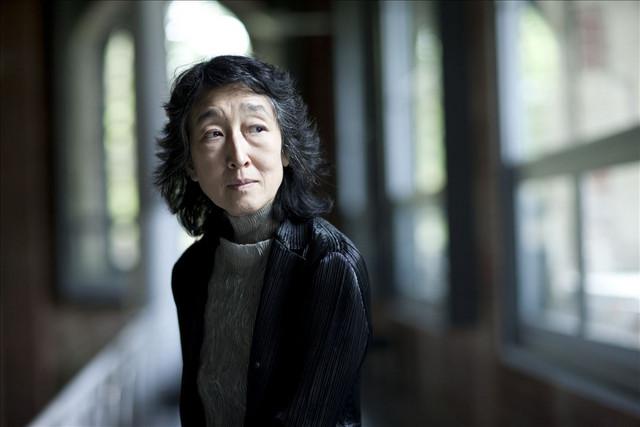
Mitsuko Uchida’s Spotify BioMitsuko Uchida is a thoughtful and iconoclastic pianist who has also found success as a conductor. Highly esteemed for her interpretations, her repertoire spans the Classical to Modern periods. While Uchida's interpretations generally sound fresh and spontaneous, these characteristics arise from reasoned and deliberate musical choices. Far from prolific, she is always thought-provoking. She is active as a recitalist, accompanist, and chamber musician, and she has been a soloist and guest conductor with orchestras throughout the world.
Uchida was born in Atami, Japan, near Tokyo, on December 20, 1948. She began her piano studies during childhood. Her parents, who were diplomats, moved to Austria when Uchida was 12, and she enrolled at the Vienna Academy of Music, where she studied with Richard Hauser, Wilhelm Kempff, and Stefan Askenase. Staying in Vienna after her father returned to Japan, Uchida gave her first recital in that city at 14. She continued her studies with Maria Curcio.… Even at this young age, Uchida rebelled against the conventional wisdom her teachers tried to impart. She wished to exercise her own judgment in performance, and the academy did not want to let her. Judges at competitions, on the other hand, liked her decisions, giving her first prize at the 1969 Beethoven Competition in Vienna and second prize at the prestigious International Chopin Piano Competition in 1970. Uchida, however, was dissatisfied with her playing and retired from the competition circuit. Her career was built mostly through word of mouth during the 1970s.
During the '80s, Uchida earned a particular reputation as a Mozart interpreter, ironic for someone who did not like Mozart's music when studying it at the Vienna Academy. She received notice for outstanding performances of the Mozart sonatas in London and Tokyo in 1982 and recorded a universally acclaimed set of the complete sonatas for Philips. Uchida also appeared as soloist and conductor with the English Chamber Orchestra in a cycle of the complete Mozart concerti during the 1985-1986 season. She later recorded these for Philips with the English Chamber Orchestra conducted by Jeffrey Tate. Uchida, never one to rest on her laurels, moved into different repertoires during the '90s, winning particular notice for her Debussy and Schubert solo piano recordings and her Beethoven concerti. She has also been a champion of the music of Schoenberg, Bartók, and Berg and often seeks to draw parallels between standard repertoire works and these modern masters.
Uchida became co-artistic director of the Marlboro Music Festival in 1999 following two stints as a senior artist for the festival and school; she served as sole director from 2013 until 2018 when Jonathan Biss became co-director. Uchida does not like to be pigeonholed and often strikes out on her own path; for example, she and a piano technician spent two years transforming a piano into something she felt she could use for Schubert. Uchida then insisted that Philips put the technician's name on the back of the album in an unusual gesture. While serving as artist-in-residence with the Cleveland Orchestra (2002 to 2007), she led the orchestra in performances of all of Mozart's piano concertos as soloist and conductor. Uchida earned a Grammy Award for her 2009 recording of Mozart's Piano Concertos Nos. 23 and 24, leading the Cleveland Orchestra from the keyboard. She also served as artist-in-residence with the Berlin Philharmonic in 2010, performing the Beethoven concertos with Simon Rattle. In 2017, Uchida earned a second Grammy Award for an album of music by Schumann and Berg, on which she accompanied Dorothea Röschmann. Uchida returned to Beethoven in 2022, issuing a recording of his Diabelli Variations.
Among Uchida's notable honors are the Golden Mozart Medal from the Salzburg Mozarteum, the Praemium Imperiale from the Japan Art Association, and the Gold Medal from the Royal Philharmonic Society. After becoming a British citizen, Uchida was named Dame Commander of the Order of the British Empire. ~ Andrew Lindemann Malone & Keith Finke, Rovi
Viberate is a music analytics platform built for A&Rs, artist managers, labels, booking agents, marketers, and artists.
It helps music professionals track artist growth, analyze audience data, monitor playlist activity, compare artists, follow song performance, and identify opportunities across the music market.
Public artist pages provide a free preview of selected artist data. Paid plans provide access to deeper analytics, historical data, charts, comparisons, playlist tools, exports, alerts, reports, and additional professional features.
Yes. Public Viberate artist pages provide selected artist analytics and music data for free.
Viberate also offers a 7-day free trial of the full platform. A credit card is required to start the trial. The trial includes access to the complete product so users can test deeper artist analytics, historical views, playlist insights, comparisons, charts, exports, alerts, and reporting features before choosing a paid plan.
Viberate provides artist analytics across streaming, playlists, social media, video, radio airplay, songs, and audience markets.
Users can analyze Spotify performance, Spotify and Apple Music playlists, YouTube activity, TikTok and Instagram growth, radio spins, song performance, audience locations, demographics, rankings, and overall artist momentum.
Artist profiles also connect to music charts, similar artists, and comparison tools, helping users benchmark performance and evaluate artists in context.
Viberate updates key artist and track data daily.
For followed artists and tracks, selected data is refreshed multiple times per day. This helps teams monitor playlist changes, streaming movement, audience growth, releases, and campaign performance with more current data.
Update frequency can vary depending on the metric and data source.
Yes. Viberate lets users compare up to five artists side by side across streaming, social media, audience, and engagement metrics.
Users can compare fanbase growth, audience demographics, locations, Spotify performance, social metrics, and other artist data over selected time periods.
Artist comparison can be used for A&R scouting, benchmarking, booking decisions, campaign planning, and evaluating artists with similar audiences or market positions.