Mike Cooper

Pop
Indie Pop
Swing
 Viberate Rank: 282516
 Viberate Rank: 282516
 Monthly ListenersFollowers
 Subscribers
 Followers
 Followers
 FansTop Spotify Songs
| Track | 7-Day Streams | |
|---|---|---|
1 | 468 | |
2 | 468 | |
3 | 241 | |
4 | 235 | |
5 | 182 |
Top YouTube VideosMonthly ListenersFeatured in Playlists| Playlist | Followers | |
|---|---|---|
1 | Jillian Nichols | 87.21K |
2 |  Girls | Official HBO | 48.74K |
3 |  Music from Girls (HBO) Soundtrack Yann Kerjan | 22.73K |
4 |  Girls on HBO (Seasons 1-6) Bands Under The Radar | 22.12K |
5 |  Twinkly Spotify | 15.26K |
Audience| City | Monthly Listeners | |
|---|---|---|
1 |  | 107 |
2 | | 65 |
3 | | 60 |
4 |  | 59 |
5 |  | 55 |
See full performance history, audience data, playlist activity, rankings, comparisons, and more in Viberate music analytics. Start with a free trial, then continue with a paid plan.
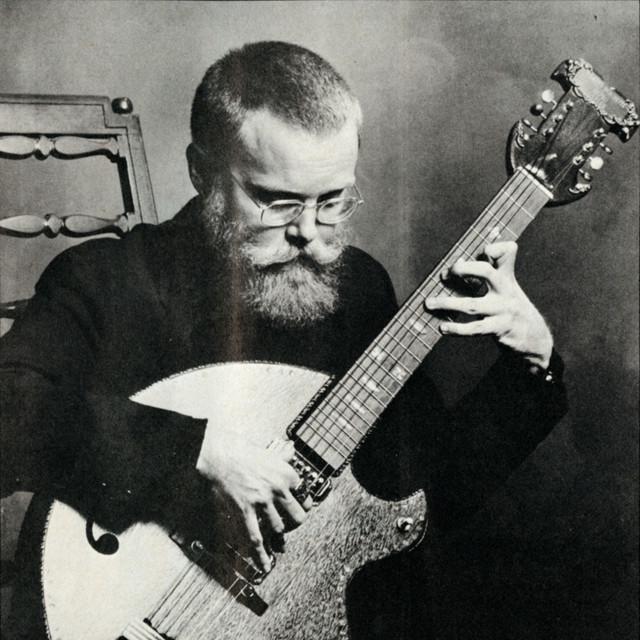
Mike Cooper’s Spotify BioInfluential British guitarist Mike Cooper is primarily regarded as a folk-blues guitarist and singer/songwriter, though his wide range of work cannot be so easily defined. He is also a celebrated improviser and electronic musician. In addition, he creates sound installations and radio art; he's a videographer, journalist, and music historian, and he performs scores for silent films.
Cooper was born in Reading, England in 1942. He began playing guitar at the age of 16. Initially inspired by New Orleans and Dixieland jazz, he played in skiffle groups during the late '50s. His life changed drastically in 1961 when he saw Sonny Terry & Brownie McGhee at Reading's town hall and later witnessed James Cotton playing with Chris Barber at a local music festival. Naturally, he began to play harmonica as well as guitar.
Cooper co-founded the band the Blues Committee, an R&B group based on the heady example set by Alexis Korner. Simultaneously, he was playing folk-blues as a solo artist in folk… clubs. His first formal recording date was an independently released four-track EP with guitarist Derek Hall, Out of the Shades, titled for an important Reading folk club. Other peers who played the venue included John Renbourn, Bert Jansch, Al Stewart, and Davy Graham. Cooper began opening for a host of traveling American bluesmen as well as British stars of the era. He met fellow folk-blues musician Ian A. Anderson in 1967. Between them, the pair recorded three four-track EPs for the SayDisc label. They released a full album of these tracks as well as new pieces entitled The Inverted World. Though assembled in early 1968, it wasn't released until 1970. His playing had developed exponentially, incorporating a wide variety of Delta and country styles in his technique. He also employed bottleneck slide and lap steel. Cooper traveled England and met many other British musicians, including Michael Chapman, John Martyn, Ralph McTell, and Roy Harper, and wandering American players such as Stefan Grossman, Dave Van Ronk, and "Spider" John Koerner.
With a burgeoning national reputation, he was signed to Pye Records in 1969, and that year recorded Oh Really!?, the first of five influential recordings for the label and its imprints Dawn and Fresh Air. It was released in November. Interestingly, while there were still solid audiences for folk-blues, Cooper and many of his peers had moved on and broadened their own horizons without forsaking the roots music that had nourished them. His 1970 offering, Do I Know You?, appeared on Dawn in 1970, and remains unique for its use of field recordings and the jazz bass playing of South African ex-pat Harry Miller. That experience opened Cooper up to an entire range of ideas about improvisation, which were put to use first on Trout Steel, one of his most enduring and influential recordings. Recorded and released in 1970, the other personnel included Miller, Grossman, and a host of players from Mike Westbrook's band. Pianist John Taylor also contributed to a track. Cooper's jazz explorations didn't mean he gave up blues entirely; he simply moved mercurially between the lines of genres and often combined them.
His third effort for Pye/Dawn was to have been a double album entitled Places I Know. The idea was that one recording would feature his folk side and the other his improv jazz-rock side. Dawn issued it as a single album in 1971 credited to Mike Cooper & the Machine Gun Co. (so-called after Peter Brötzmann's group) plus Michael Gibbs. The second album, released as The Machine Gun Company with Mike Cooper, didn't appear until a year and a half later. His final recording for the label group, this time under the Fresh Air imprint, was Life & Death in Paradise, issued in 1974. This date featured another South African expatriate, Louis Moholo, on drums. Other than the live Country Blues Guitar Festival as part of an offering that featured Cooper, Grossman, Son House, and Sam Mitchell, it was his final recording of that decade. Cooper was busy, though, playing live, improvising in bands, collaborating with other artists, and touring Europe. His 'Ave They Started Yet is a live album compiled from a continuous four-and-a-half-hour performance with dancer Joanna Pyne; it was released by Matchless in 1981, and was indicative of the entire period, which found him alternating between country blues records and more vanguard jazz recordings, including the sets Johnny Rondo Duo Plus Mike Cooper, which placed him in the free jazz company of Lol Coxhill and Dave Holland, and The Continuous Preaching Blues with Anderson. The most important recording from the era was the 1987 10" LP Aveklei Uptowns Hawaiians, with French slide guitarist Cyrille Lefebvre. Their sidemen for the session included Coxhill, Steve Beresford, and Max Eastley. It showcased Cooper's growing obsession with Polynesian music, which would inform his playing for decades to come and be chronicled in his writing, particularly about the many slack key guitar styles.
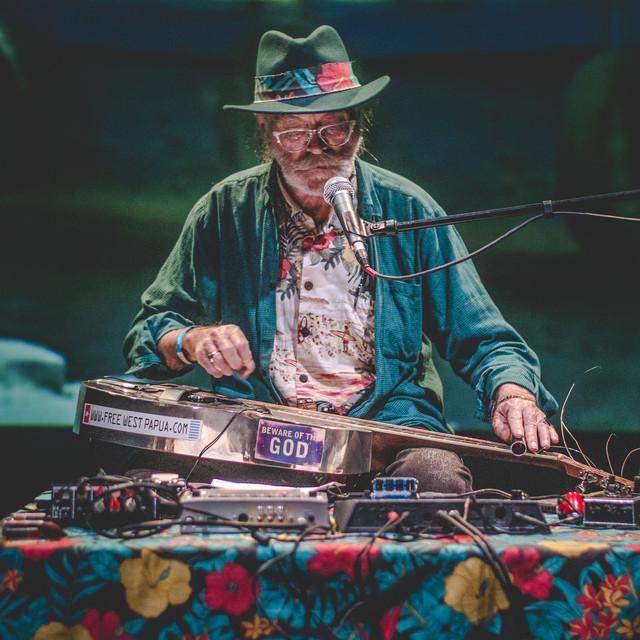
In the '90s, Cooper delved deeply into Hawaiian music. Avant Roots, a duo album with Viv Dogan Corringham, was issued in 1993, followed by the large-group effort Island Songs in 1996. The integration of Polynesian sounds, blues, and avant music put Cooper in a league of his own. It culminated in a genre he called ambient electronic exotica -- displayed by the acclaimed Rayon Hula released in 2004 -- which musically translated the patterned flora of aloha shirts (his signature garment) into looped samples of famed Hawaiian vibraphone player Arthur Lyman for a lively avant form of exotica -- and on subsequent recordings, like the large-band Beach Crossings/Pacific Footprints in 2006 and Oceanic Feeling-Like in 2008 with Chris Abrahams.
Improvisations and songs (some blues-related) were showcased on 2011's limited-edition Radio Paradise: Mike Cooper in Beirut and 2013's CD-R release Right (H)ear Side by Side, which put his electronics and slide guitar work in juxtaposition to Yan-Chiu Leung's traditional sheng playing. The same year, White Shadows in the South Seas (on Lawrence English's Room40 label) brought a completely solo take on his ambient electronic exotica, followed by the global and electronic experimentalism of New Globe Notes in 2014 (with liner notes by David Toop). In June, Paradise of Bachelors issued deluxe, remastered -- and the only artist-sanctioned -- versions of Trout Steel and the recombined Places I Know/The Machine Gun Co. as originally intended. They were followed a week later by Cantos de Lisboa, a duet recording between Cooper and guitarist Steve Gunn cut in Lisbon at Rafael Toral's studio. It appeared on RVNG Intl as part of its Frkwys series. In 2015, Italian label Backwards issued Light on a Wall, a limited-LP release of a live session Cooper recorded for Radio Beirut in Lebanon. He returned to Room40 that year with Fratello Mare, another album of experimental exotica, and the following year saw the Discrepant label issue a vinyl LP edition of Kiribati, originally released by Hipshot on CD-R in 1999. Cooper issued a vinyl version of 2010's limited-edition CD-R release Blue Guitar in 2017, the same year that Discrepant reissued the Hipshot CD-R Reluctant Swimmer/Virtual Surfer on vinyl LP. A similar vinyl reissue of Rayon Hula arrived in 2019, marking the album's 15th anniversary. ~ Thom Jurek, Rovi
Viberate is a music analytics platform built for A&Rs, artist managers, labels, booking agents, marketers, and artists.
It helps music professionals track artist growth, analyze audience data, monitor playlist activity, compare artists, follow song performance, and identify opportunities across the music market.
Public artist pages provide a free preview of selected artist data. Paid plans provide access to deeper analytics, historical data, charts, comparisons, playlist tools, exports, alerts, reports, and additional professional features.
Yes. Public Viberate artist pages provide selected artist analytics and music data for free.
Viberate also offers a 7-day free trial of the full platform. A credit card is required to start the trial. The trial includes access to the complete product so users can test deeper artist analytics, historical views, playlist insights, comparisons, charts, exports, alerts, and reporting features before choosing a paid plan.
Viberate provides artist analytics across streaming, playlists, social media, video, radio airplay, songs, and audience markets.
Users can analyze Spotify performance, Spotify and Apple Music playlists, YouTube activity, TikTok and Instagram growth, radio spins, song performance, audience locations, demographics, rankings, and overall artist momentum.
Artist profiles also connect to music charts, similar artists, and comparison tools, helping users benchmark performance and evaluate artists in context.
Viberate updates key artist and track data daily.
For followed artists and tracks, selected data is refreshed multiple times per day. This helps teams monitor playlist changes, streaming movement, audience growth, releases, and campaign performance with more current data.
Update frequency can vary depending on the metric and data source.
Yes. Viberate lets users compare up to five artists side by side across streaming, social media, audience, and engagement metrics.
Users can compare fanbase growth, audience demographics, locations, Spotify performance, social metrics, and other artist data over selected time periods.
Artist comparison can be used for A&R scouting, benchmarking, booking decisions, campaign planning, and evaluating artists with similar audiences or market positions.