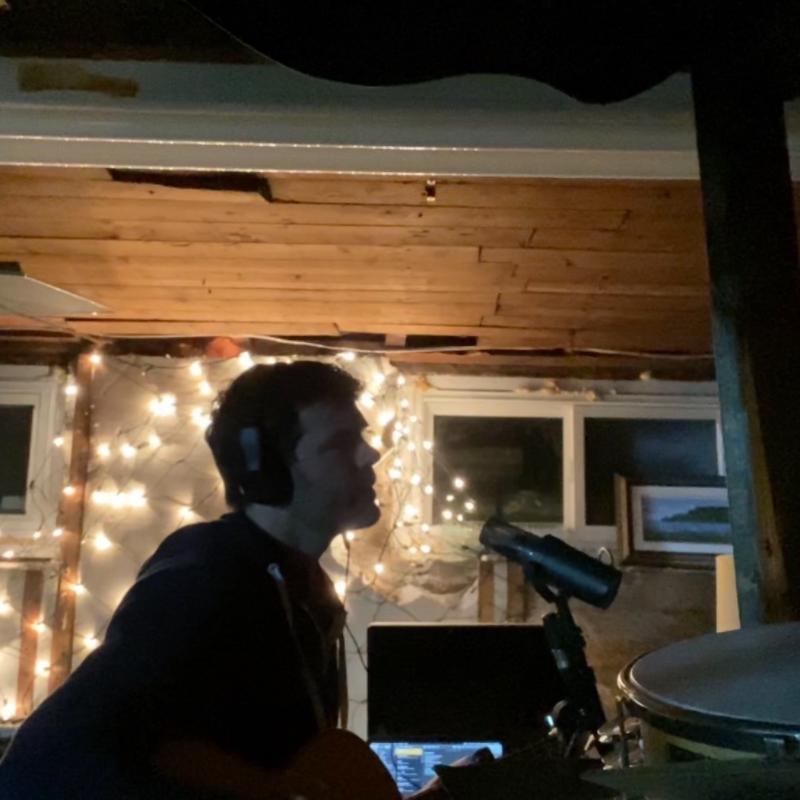
Michael Terrance

Rock
Alternative Rock
Indie Pop
 Viberate Rank: 961678
 Viberate Rank: 961678
 Monthly ListenersFollowers
 Subscribers
 Followers
 Followers
 FansTop Spotify Songs
| Track | 7-Day Streams | |
|---|---|---|
1 | 2 | |
2 | 1 |
Top YouTube Videos| Video | 7-Day Views | |
|---|---|---|
1 | 2 |
Monthly ListenersFeatured in Playlists| Playlist | Followers | |
|---|---|---|
1 |  Indie discoveries by Jai Agnish Jai Agnish | 5.91K |
Audience| City | Monthly Listeners | |
|---|---|---|
1 | | 3 |
See full performance history, audience data, playlist activity, rankings, comparisons, and more in Viberate music analytics. Start with a free trial, then continue with a paid plan.
Michael Terrance’s Spotify BioDepending on how you read it, Underneath Everything—the title of the debut record from Halifax’s Michael Terrance AKA Michael Murphy—could mean very different things. Through one lens, it suggests a crushing, suffocating pressure. Through another, it could read like an invitation: to look closer, to scratch the surface and dig for meaning. For Murphy, the point isn’t to pick one or the other. The point is that, like so many things in life, we’re not allowed to pick.
The title comes from the opening track “Good Money,” a throbbing, exultant alt-rock stomp that satirizes consumerist culture. It’s bright and bursting with energy, but rippling with dread, too. “Oh, but the money is good!/Tell me is it worth everything you pay for it?” Murphy calls on the chorus.
“It speaks to the feeling being worn down by forces beyond our control,” says Murphy, “And how we get trapped in a relationship with things like money.”
This is the heart of Underneath Everything: the sunny sensory experience and the… darkness often lurking beneath.
Based on a drawing by his daughter, the record’s artwork (by Jud Haynes) reflects this duality, with a spread of vaguely-eerie, nearly featureless figures rendered in light colours on a sharp red background.
Murphy recorded the songs in various basements with his brother Paul Murphy (Wintersleep , POSTDATA ), who produced, and performed on the record, with drums from Jordan Murphy (Walrus). Mixed by Michael Fong & mastered by Noah Mintz.
Viberate is a music analytics platform built for A&Rs, artist managers, labels, booking agents, marketers, and artists.
It helps music professionals track artist growth, analyze audience data, monitor playlist activity, compare artists, follow song performance, and identify opportunities across the music market.
Public artist pages provide a free preview of selected artist data. Paid plans provide access to deeper analytics, historical data, charts, comparisons, playlist tools, exports, alerts, reports, and additional professional features.
Yes. Public Viberate artist pages provide selected artist analytics and music data for free.
Viberate also offers a 7-day free trial of the full platform. A credit card is required to start the trial. The trial includes access to the complete product so users can test deeper artist analytics, historical views, playlist insights, comparisons, charts, exports, alerts, and reporting features before choosing a paid plan.
Viberate provides artist analytics across streaming, playlists, social media, video, radio airplay, songs, and audience markets.
Users can analyze Spotify performance, Spotify and Apple Music playlists, YouTube activity, TikTok and Instagram growth, radio spins, song performance, audience locations, demographics, rankings, and overall artist momentum.
Artist profiles also connect to music charts, similar artists, and comparison tools, helping users benchmark performance and evaluate artists in context.
Viberate updates key artist and track data daily.
For followed artists and tracks, selected data is refreshed multiple times per day. This helps teams monitor playlist changes, streaming movement, audience growth, releases, and campaign performance with more current data.
Update frequency can vary depending on the metric and data source.
Yes. Viberate lets users compare up to five artists side by side across streaming, social media, audience, and engagement metrics.
Users can compare fanbase growth, audience demographics, locations, Spotify performance, social metrics, and other artist data over selected time periods.
Artist comparison can be used for A&R scouting, benchmarking, booking decisions, campaign planning, and evaluating artists with similar audiences or market positions.