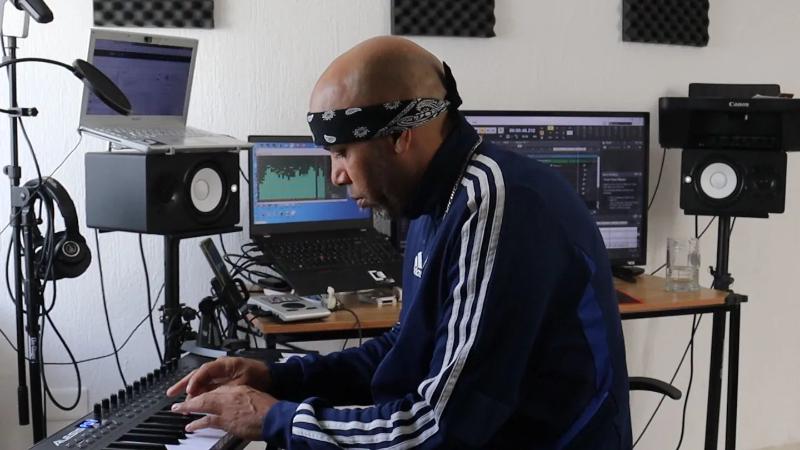
Mic Murphy

R&B
Contemporary R&B
 Viberate Rank: 466913
 Viberate Rank: 466913
 Monthly ListenersFollowers
 Subscribers
 Followers
 Followers
 FansTop Spotify Songs
| Track | 7-Day Streams | |
|---|---|---|
1 | 484 | |
2 | 132 | |
3 | 132 | |
4 | 7 | |
5 | 4 |
Top YouTube VideosMonthly ListenersFeatured in Playlists| Playlist | Followers | |
|---|---|---|
1 |  Popping Music Clarence Chang | 27.74K |
2 | Popping music 1242001450 | 4.64K |
3 |  Popping Dance Music Playlist Artūrs Babris | 4.04K |
4 | Popping Music (Boogie/Funk/GFunk/Beat) Quang Nguyễn | 2.44K |
5 |  FUNKY POPPING MUSIC Ronin | 2.04K |
Audience| City | Monthly Listeners | |
|---|---|---|
1 |  | 109 |
2 |  | 42 |
3 |  | 32 |
4 | | 28 |
5 | | 24 |
See full performance history, audience data, playlist activity, rankings, comparisons, and more in Viberate music analytics. Start with a free trial, then continue with a paid plan.
Mic Murphy’s Spotify BioSinger Mic Murphy was the singing half of '80s pioneering synth duo the System, who are best known for "Don't Disturb This Groove," a Top Five R&B and pop hit in 1987. In the driver's seat on the album cover of the same-named album, Murphy cuts loose as the cool, funky track fades, evoking delightful memories of Stevie Wonder's "Superwoman (Where Were You When I Needed You)." Their revolutionary single "You Are in My System" helped to usher in a new era of electronically based pop music. Far ahead of their time, Murphy and keyboardist David Frank rode the '80s wave of emerging synth/MIDI music technology to assist in paving the way for techno, electronica, and ambient dance music while combining thoughtful songwriting. Murphy, a veteran of numerous bands, was an early advocate of music technology, acknowledging the creative possibilities that it presented and how time-effective it was, as opposed to band situations that can sometimes be much too time-consuming and damaging to personal… and family quality time. The Raleigh, NC, native began singing in church and later rock bands. Moving to New York, Murphy became a member of the city's thriving rock scene. Becoming the road manager for the Atlantic Records R&B/funk band Kleer ("Winners," "Get Tough," "This Time It's for Real"), Murphy met David Frank, who was hired as the band's road keyboardist. Frank, who was born in Dayton, OH, and grew up in a Boston suburb, was classically trained and had won classical music composition awards as a child. He honed his skills playing in various rock, R&B, and jazz bands. Frank was also a devotee of the emerging MIDI music technology that enabled him to be his own electronic one-man band. While cashing in on some bartered studio time, Frank called Murphy about singing on a track that a pre-stardom Madonna was originally supposed to sing on but bowed out due to creative differences. The result of the all-night recording session was "It's Passion." Murphy knew an engineer friend who put the track on a 12" acetate record. The engineer suggested Murphy shop it to Jerry Greenburg's Mirage Records distributed by Atlantic. Murphy excitedly called Frank the next day, telling him that they had a record deal. "It's Passion" became a hit on dance music stations and in dance clubs. The duo's next single, "You Are in My System," broke through to urban radio and hit number ten R&B in early 1983. The debut album, Sweat, yielded the dance club favorites "I Won't Let Go," "Go for What U Know," and "Sweat." Other System LPs on Mirage were X-periment (1984) and their last Mirage album, The Pleasure Seekers (1985). With such an innovative sound, the System became in-demand songwriters/producers/musicians. They can be heard on Phil Collins' "Sussudio," Chaka Khan's "I Feel for You" its follow-up "This Is My Night," and Mtume's "Juicy Fruit." The System contributed tracks to two Eddie Murphy movie blockbusters, Beverly Hills Cop and Coming to America. The System performed title track from Coming to America, which went to number 23 R&B in summer 1988. They also appear on tracks by Angela Bofill, Pauli Carmen, Evelyn "Champagne" King, Ashford and Simpson, Jeff Lorber, Gavin Christopher, Howard Johnson, and former Labelle member Nona Hendryx. The System's "Baptize the Beat was featured in the Harry Belafonte-produced 1984 movie Beat Street. Murphy contributed to Earth, Wind & Fire member Philip Bailey's 1986 Columbia LP Inside Out. When the System were switched over to Atlantic Records after Mirage folded, their biggest single was released. "Don't Disturb This Groove" was a number one R&B/number three pop hit in spring 1987. There are even Muzak versions of the tune. The still in print Don't Disturb This Groove album (1987) included the follow-up single, "Nighttime Lover." The System's last album, 1989's Rhythm and Romance, was an update of the original System sound and less pop-oriented than the ...Groove LP. Murphy signed a solo deal with Atlantic subsidiary East-West with the album Touch, released in 1991. As expected, Touch had a lot of System overtones, but it also had a sprinkling of social consciousness. System fans welcomed Murphy's Touch, but the adventurous LP seemed to have gotten lost in the shuffle; new jack swing, hip-hop, and rap artists were on the rise around the time of it's release. Murphy and Frank reunited to record new System tracks. ~ Ed Hogan, Rovi
Viberate is a music analytics platform built for A&Rs, artist managers, labels, booking agents, marketers, and artists.
It helps music professionals track artist growth, analyze audience data, monitor playlist activity, compare artists, follow song performance, and identify opportunities across the music market.
Public artist pages provide a free preview of selected artist data. Paid plans provide access to deeper analytics, historical data, charts, comparisons, playlist tools, exports, alerts, reports, and additional professional features.
Yes. Public Viberate artist pages provide selected artist analytics and music data for free.
Viberate also offers a 7-day free trial of the full platform. A credit card is required to start the trial. The trial includes access to the complete product so users can test deeper artist analytics, historical views, playlist insights, comparisons, charts, exports, alerts, and reporting features before choosing a paid plan.
Viberate provides artist analytics across streaming, playlists, social media, video, radio airplay, songs, and audience markets.
Users can analyze Spotify performance, Spotify and Apple Music playlists, YouTube activity, TikTok and Instagram growth, radio spins, song performance, audience locations, demographics, rankings, and overall artist momentum.
Artist profiles also connect to music charts, similar artists, and comparison tools, helping users benchmark performance and evaluate artists in context.
Viberate updates key artist and track data daily.
For followed artists and tracks, selected data is refreshed multiple times per day. This helps teams monitor playlist changes, streaming movement, audience growth, releases, and campaign performance with more current data.
Update frequency can vary depending on the metric and data source.
Yes. Viberate lets users compare up to five artists side by side across streaming, social media, audience, and engagement metrics.
Users can compare fanbase growth, audience demographics, locations, Spotify performance, social metrics, and other artist data over selected time periods.
Artist comparison can be used for A&R scouting, benchmarking, booking decisions, campaign planning, and evaluating artists with similar audiences or market positions.