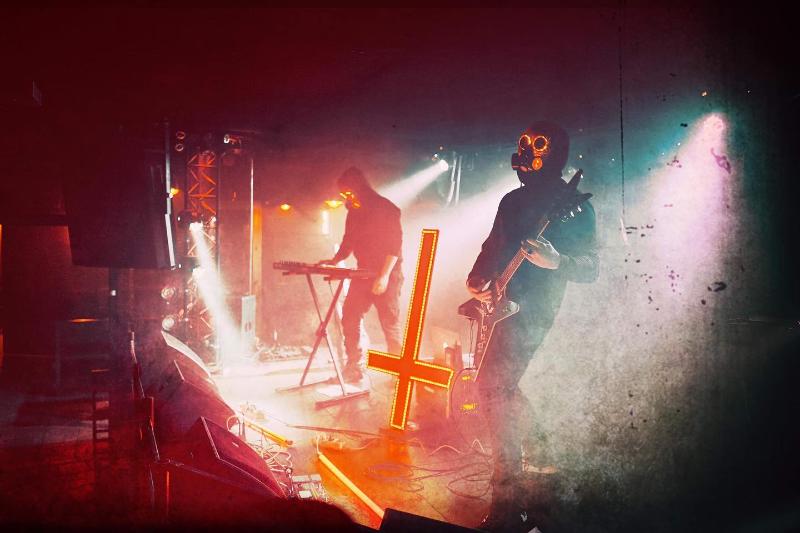
Masked

Metal
Metalcore/Deathcore
Synthwave
Dance
 Viberate Rank: 202224
 Viberate Rank: 202224
 Monthly ListenersFollowers
 Subscribers
 Followers
 Followers
 FansTop Spotify Songs
| Track | 7-Day Streams | |
|---|---|---|
1 | 920 | |
2 | 901 | |
3 | 559 | |
4 | 537 | |
5 | 520 |
Top YouTube VideosMonthly ListenersFeatured in Playlists| Playlist | Followers | |
|---|---|---|
1 |  Cyberpunk / Darksynth Cyberwave Music | 81.61K |
2 |  "Why do I hear boss music?" OnceJustAHero | 40.47K |
3 |  Dark Synthwave aveniner | 26.79K |
4 |  PuhJayJay's Ultimate Synth Catalog Pj Jossey | 23.47K |
5 |  JOHN WICK MODE SHADOW BAT JACK | 13.89K |
Audience| City | Monthly Listeners | |
|---|---|---|
1 |  | 143 |
2 |  | 129 |
3 | | 127 |
4 | | 127 |
5 |  | 123 |
See full performance history, audience data, playlist activity, rankings, comparisons, and more in Viberate music analytics. Start with a free trial, then continue with a paid plan.
Masked’s Spotify BioMarce Romero, aka MASKED, was born in November 1998 in Buenos Aires, Argentina, and raised on the sounds and culture of the '70s and '80s. His childhood was filled with classic horror films, action heroes and heavy metal. These influences shaped him into one of the most intense producers in the darksynth scene.
In 2015, MASKED found his true calling in Darksynth, drawing inspiration from legends like Carpenter Brut, Perturbator, and GosT. Armed with his passion for heavy music and retro aesthetics, he launched MASKED, paying tribute to his favorite characters from horror, video games, and music.
Over the next few years, MASKED released three albums (Welcome To Blindwich Valley, The Dying Cult, The Awakening) and a trilogy of EPs (Resistance EP). These projects led to his signing with Steel City Collective (SCC), where he released Bloodlust, an album featuring collaborations with Nexus-6, King Stephen, Contre-Attaque, and HUBRID.
By 2021, MASKED released UNHOLY, blending darksynth with… French house, dubstep, and hardcore punk. The album features Carnage, a track that best represents his sound.
And in 2024, he and Aeronexus released the sequel of their collaborative album, “Cosmic Calamity 2”.
In 2025, the release of Bloody Sweetheart concluded MASKED's journey through Darksynth with the story of Pretty Face, a young killer that made a bloodpath into love.
With eight albums, five EPs, and numerous soundtracks, MASKED continues to deliver brutal music.
Viberate is a music analytics platform built for A&Rs, artist managers, labels, booking agents, marketers, and artists.
It helps music professionals track artist growth, analyze audience data, monitor playlist activity, compare artists, follow song performance, and identify opportunities across the music market.
Public artist pages provide a free preview of selected artist data. Paid plans provide access to deeper analytics, historical data, charts, comparisons, playlist tools, exports, alerts, reports, and additional professional features.
Yes. Public Viberate artist pages provide selected artist analytics and music data for free.
Viberate also offers a 7-day free trial of the full platform. A credit card is required to start the trial. The trial includes access to the complete product so users can test deeper artist analytics, historical views, playlist insights, comparisons, charts, exports, alerts, and reporting features before choosing a paid plan.
Viberate provides artist analytics across streaming, playlists, social media, video, radio airplay, songs, and audience markets.
Users can analyze Spotify performance, Spotify and Apple Music playlists, YouTube activity, TikTok and Instagram growth, radio spins, song performance, audience locations, demographics, rankings, and overall artist momentum.
Artist profiles also connect to music charts, similar artists, and comparison tools, helping users benchmark performance and evaluate artists in context.
Viberate updates key artist and track data daily.
For followed artists and tracks, selected data is refreshed multiple times per day. This helps teams monitor playlist changes, streaming movement, audience growth, releases, and campaign performance with more current data.
Update frequency can vary depending on the metric and data source.
Yes. Viberate lets users compare up to five artists side by side across streaming, social media, audience, and engagement metrics.
Users can compare fanbase growth, audience demographics, locations, Spotify performance, social metrics, and other artist data over selected time periods.
Artist comparison can be used for A&R scouting, benchmarking, booking decisions, campaign planning, and evaluating artists with similar audiences or market positions.