Mashina Vremeni

Rock
Folk Rock
Other European Music
 Viberate Rank: 26275
 Viberate Rank: 26275
 Monthly ListenersFollowers
 Subscribers
 Followers
 Followers
 FansTop Spotify Songs
| Track | 7-Day Streams | |
|---|---|---|
1 | 52.54K | |
2 | 18.09K | |
3 | 16.05K | |
4 | 15.63K | |
5 | 10.86K |
Top YouTube Videos| Video | 7-Day Views | |
|---|---|---|
1 | 28.32K | |
2 | 26.33K | |
3 | 24.20K | |
4 | 17.29K | |
5 | 12.13K |
Monthly ListenersFeatured in Playlists| Playlist | Followers | |
|---|---|---|
1 |  vintage soviet music ☭ armitta⋆˚࿔ | 82.91K |
2 |  Rock Universe FamousMusic® | 23.26K |
3 | Annie Dark | 18.83K |
4 | Русские песни 80-х/90-х Lissookk | 17.02K |
5 |  Лучшие советские песни / Best Soviet songs Dan | 10.91K |
Audience| City | Monthly Listeners | |
|---|---|---|
1 |  | 8.83K |
2 |  | 6.19K |
3 |  | 5.35K |
4 |  | 5.14K |
5 | | 4.78K |
See full performance history, audience data, playlist activity, rankings, comparisons, and more in Viberate music analytics. Start with a free trial, then continue with a paid plan.
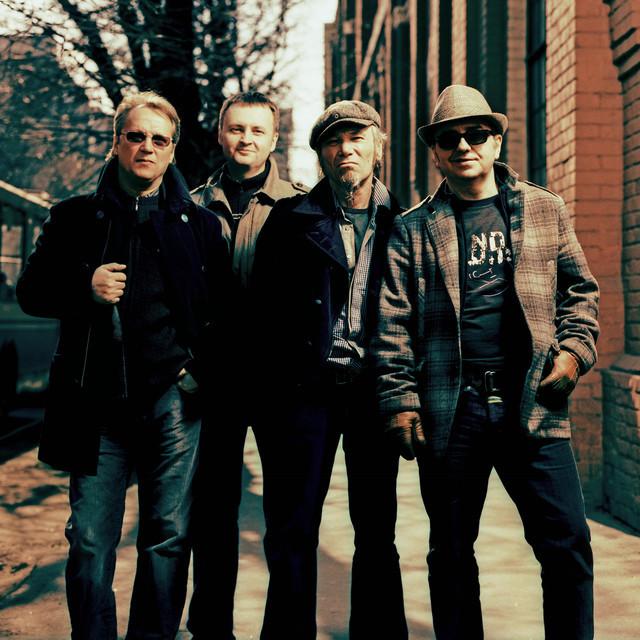
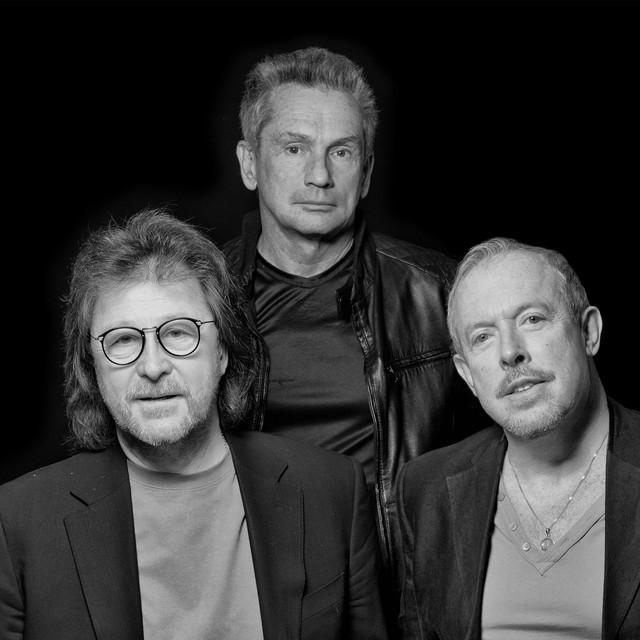
Mashina Vremeni’s Spotify BioDespite lead singer Andrei Makarevich's veneration of the Beatles, Mashina Vremeni (Time Machine) have experimented in many genres from blues to hard rock, rarely taking anything but inspiration from the British Invasion. A pluralistic ensemble whose only perpetual member is faithful leader Makarevich, the group found direction based on its lineup and irreverently amassing and trying out different styles of '70s rock. Resourcefulness was a necessity since music from outside the U.S.S.R. only sporadically penetrated the Iron Curtain, and then only in small doses. But their spontaneous approach became the groundwork of Russian rock, reiterated by countless groups of the '80s and '90s.
Makarevich, formerly of the fledgling English-language ensemble the Kids, formed Mashina Vremeni with the involvement of high-school friends, seeking to reproduce Western rock like the Beatles and the Rolling Stones. In 1969, the band's pioneering members, including Sergey Kavagoe and Alexei Romanov, played… school assemblies and dances, always in English. Their first recordings were covers of American folk songs by artists like Bob Dylan and the Mamas & the Papas. Until 1975, bass guitarist Alexander Kutikov helped the group come to fruition, steering it toward a more spirited rock & roll sound. Romanov soon left and formed Voskresenie (The Resurrection).
As the group's lineup stabilized, its reputation grew and the sound developed into a distinctive merger of country, blues, and Russian bard music, somewhat resembling Western roots rock. They began to appear regularly in concert venues in Leningrad alongside Boris Grebenshikov of Aquarium. In 1978, famed underground Soviet producer Artyom Troitzky recorded an album for the group titled Den Rozhdenya (Birthday). The band splintered in 1979, two longtime members departing in favor of Romanov's group, Voskresenie. But Makarevich persisted, and in 1980 was rewarded when cultural endeavors were briefly encouraged by the Soviet regime in preparation for that year's Olympics. In that small opening of tolerance, the group experienced its best year in history, with its optimistic song "Povorot" (The Turning Point) topping the charts for 18 months.
But repression soon set in via a 1982 article decrying the group for the non-ideological and dispiriting lyrics in another song, "Blue Bird." With Mashina Vremeni knocked out of orbit for a few years, 1986 brought a compilation, Luchshie Pesni 1979-1985 and V Dobriy Chas (Good Luck), the group's first studio record. The thaw of Gorbachev's perestroika began in 1987 and Mashina Vremeni finally "released" an album Reki i Mosty (Rivers and Bridges), rather than simply distributing it among a circle of friends and acquaintances. They also made TV appearances and in 1988 even toured the United States.
Throughout the '90s in the post-Soviet era, the band, still led by Makarevich, released albums every few years and played concerts frequently for large stadium audiences. Due to the group's ever-changing cast of musicians, the sound varies from year to year, sometimes taking on elements of Eastern music or perennial folk tunes. Through it all they have retained the lyrical quality of their work, and the simple guitar melodies adopted from their forefathers, the Russian bards. Bassist Alexander Kutikov founded Sintez Records, widely releasing some of Mashina Vremeni's early recordings, and many of their subsequent ones. This was essential, since a large part of the group's body of work had never been widely released under Communism. In 2004, Mashina Vremeni celebrated their 35th anniversary with a huge concert on Moscow's Red Square and in 2007 they finally released a self-titled album, Time Machine. Like a weathered sovereign, Makarevich continues to reign benevolently over the modern development of Russian music. ~ Sabrina Jaszi, Rovi
Viberate is a music analytics platform built for A&Rs, artist managers, labels, booking agents, marketers, and artists.
It helps music professionals track artist growth, analyze audience data, monitor playlist activity, compare artists, follow song performance, and identify opportunities across the music market.
Public artist pages provide a free preview of selected artist data. Paid plans provide access to deeper analytics, historical data, charts, comparisons, playlist tools, exports, alerts, reports, and additional professional features.
Yes. Public Viberate artist pages provide selected artist analytics and music data for free.
Viberate also offers a 7-day free trial of the full platform. A credit card is required to start the trial. The trial includes access to the complete product so users can test deeper artist analytics, historical views, playlist insights, comparisons, charts, exports, alerts, and reporting features before choosing a paid plan.
Viberate provides artist analytics across streaming, playlists, social media, video, radio airplay, songs, and audience markets.
Users can analyze Spotify performance, Spotify and Apple Music playlists, YouTube activity, TikTok and Instagram growth, radio spins, song performance, audience locations, demographics, rankings, and overall artist momentum.
Artist profiles also connect to music charts, similar artists, and comparison tools, helping users benchmark performance and evaluate artists in context.
Viberate updates key artist and track data daily.
For followed artists and tracks, selected data is refreshed multiple times per day. This helps teams monitor playlist changes, streaming movement, audience growth, releases, and campaign performance with more current data.
Update frequency can vary depending on the metric and data source.
Yes. Viberate lets users compare up to five artists side by side across streaming, social media, audience, and engagement metrics.
Users can compare fanbase growth, audience demographics, locations, Spotify performance, social metrics, and other artist data over selected time periods.
Artist comparison can be used for A&R scouting, benchmarking, booking decisions, campaign planning, and evaluating artists with similar audiences or market positions.